

Eat See Do: Riyadh
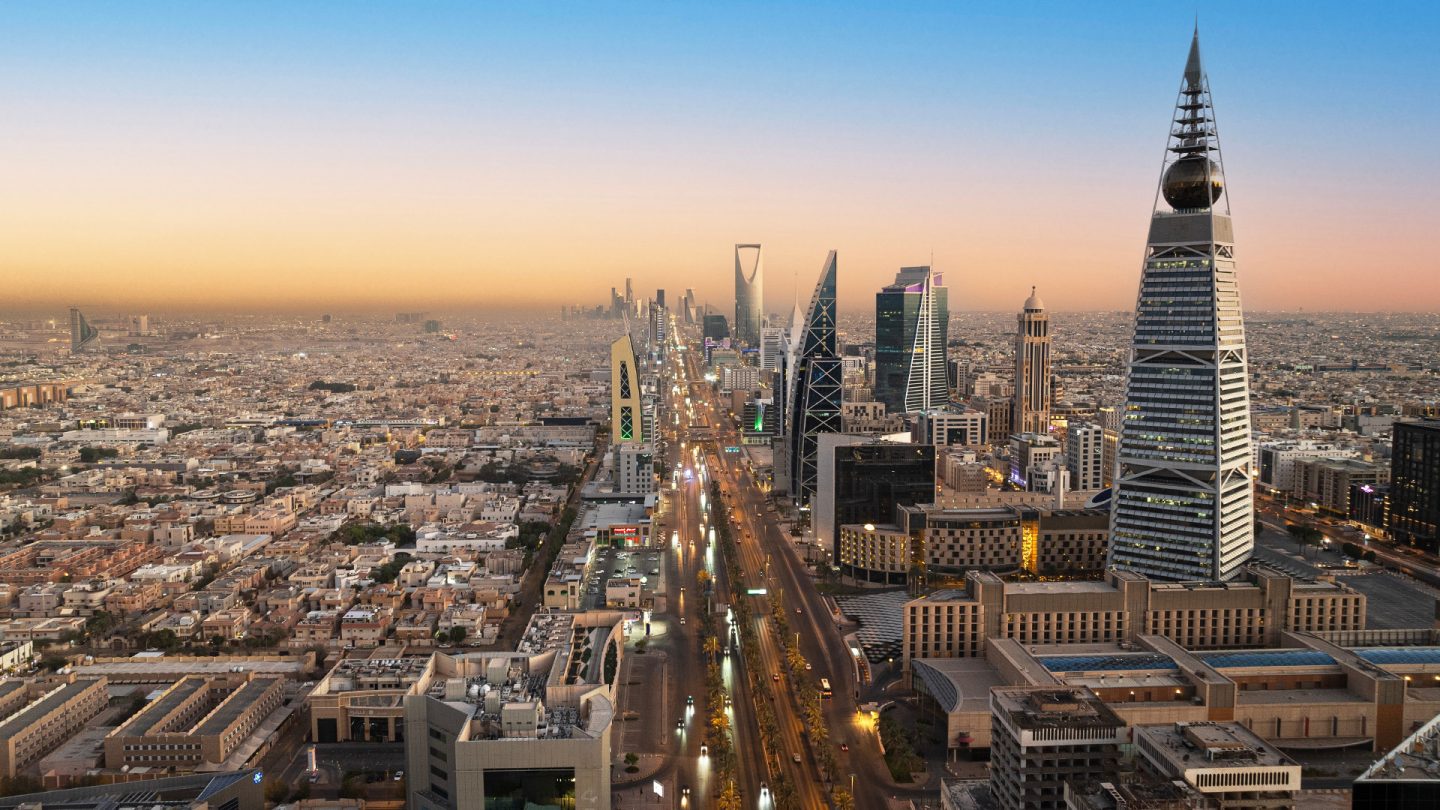
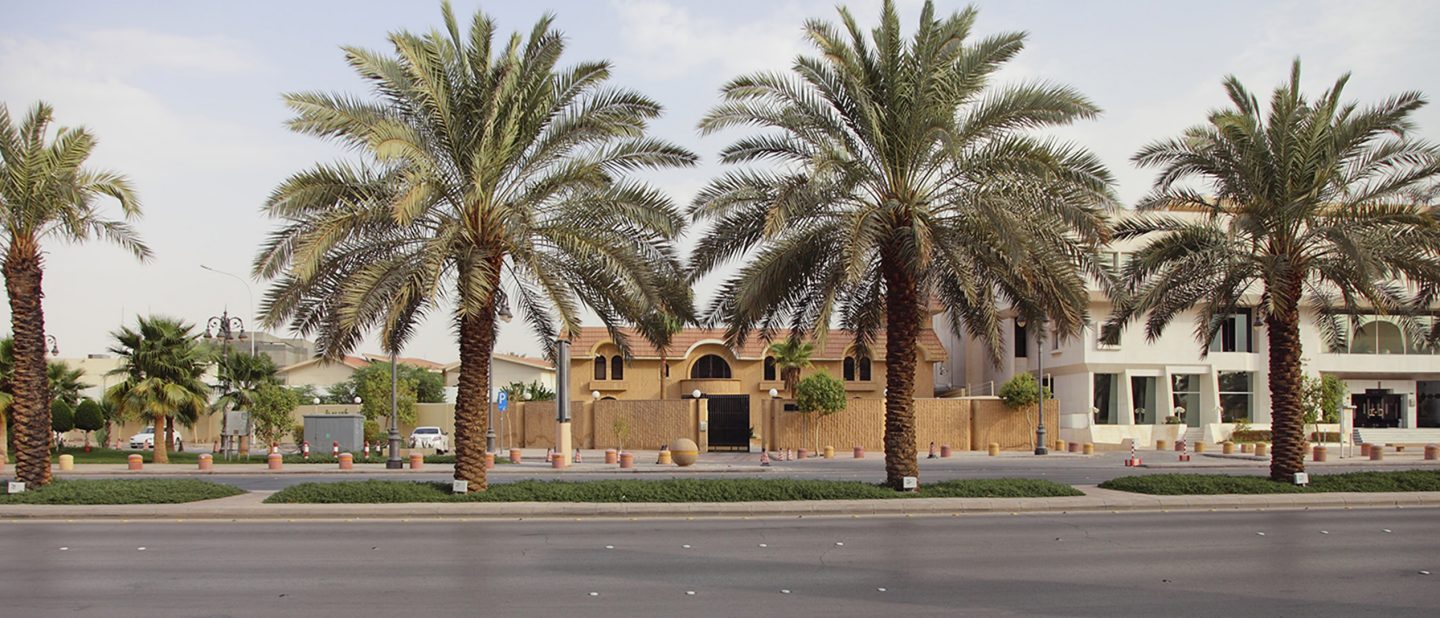
Here are our three tips for an inspiring stay in Riyadh. At first glance, the Saudi Arabian capital appears to be a young metropolis of glass, asphalt, and wide boulevards, but beneath its modern surface lies a history stretching back centuries. Historic sites like At-Turaif in Diriyah, modern cultural and leisure destinations such as Boulevard City, and its location on a desert plateau create an urban atmosphere that captivates visitors less with individual sights and more with its fascinating contrasts.
Eat – Cuisine at Najd Village
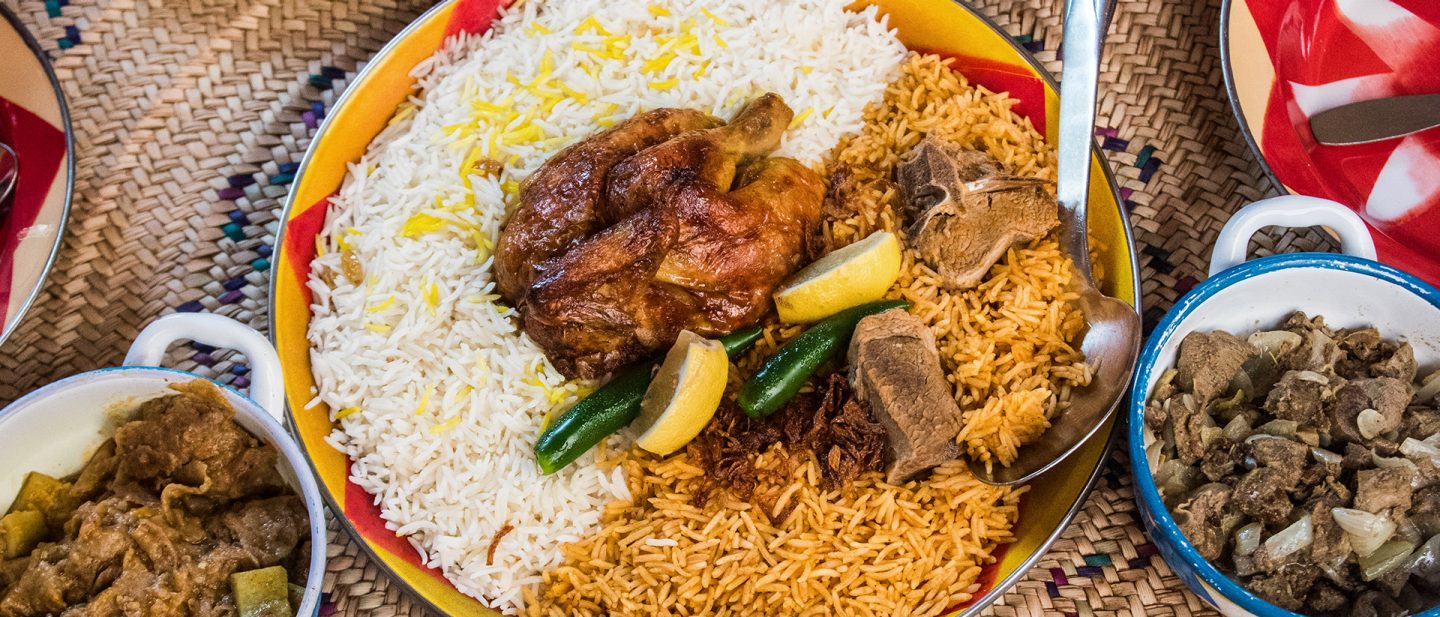
Anyone wishing to explore Riyadh’s culinary scene should sample the traditional cuisine of the Najd region, which is where Riyadh is located. At the Najd Village restaurant, classic dishes are served in a deliberately traditional setting: with low seating areas, carpets, and a cozy atmosphere where sharing a meal takes center stage. The menu features typical regional dishes in which spices and slow-cooked ingredients are the stars of the show.
More culinary delights:
- Kabsa: Kabsa is one of Saudi Arabia’s most famous dishes. In Riyadh, it appears in countless variations and is a good example of just how different a classic dish can taste. Rice and meat are served on large platters – often chicken, but also lamb, beef, or occasionally camel. Kabsa gets its characteristic flavor from an aromatic spice blend made from ingredients such as cilantro, cumin, pepper, cardamom, saffron, cinnamon, and cloves. The sauce is made from tomatoes and sautéed onions.
- Jareesh: Jareesh is a traditional dish from the Najd region and is made from coarsely ground wheat that is cooked until it reaches a thick, almost porridge-like consistency. Depending on the region and family, Jareesh is prepared with lamb or chicken, often enhanced with yogurt or milk, and served with ghee and roasted onions. This warm, hearty comfort food is also served in Saudi Arabia on special occasions and even for breakfast.
- Sabeeb: Sabeeb are among the classic desserts of the Najd region. They resemble small, thick pancakes and are made from a batter of flour, water or milk, and yeast. Baked in a pan until golden brown, Sabeeb are usually served with honey, date syrup, or butter. In Saudi Arabia, they are traditionally eaten with coffee or tea.
This may also be of interest to you



See – At-Turaif in Diriyah
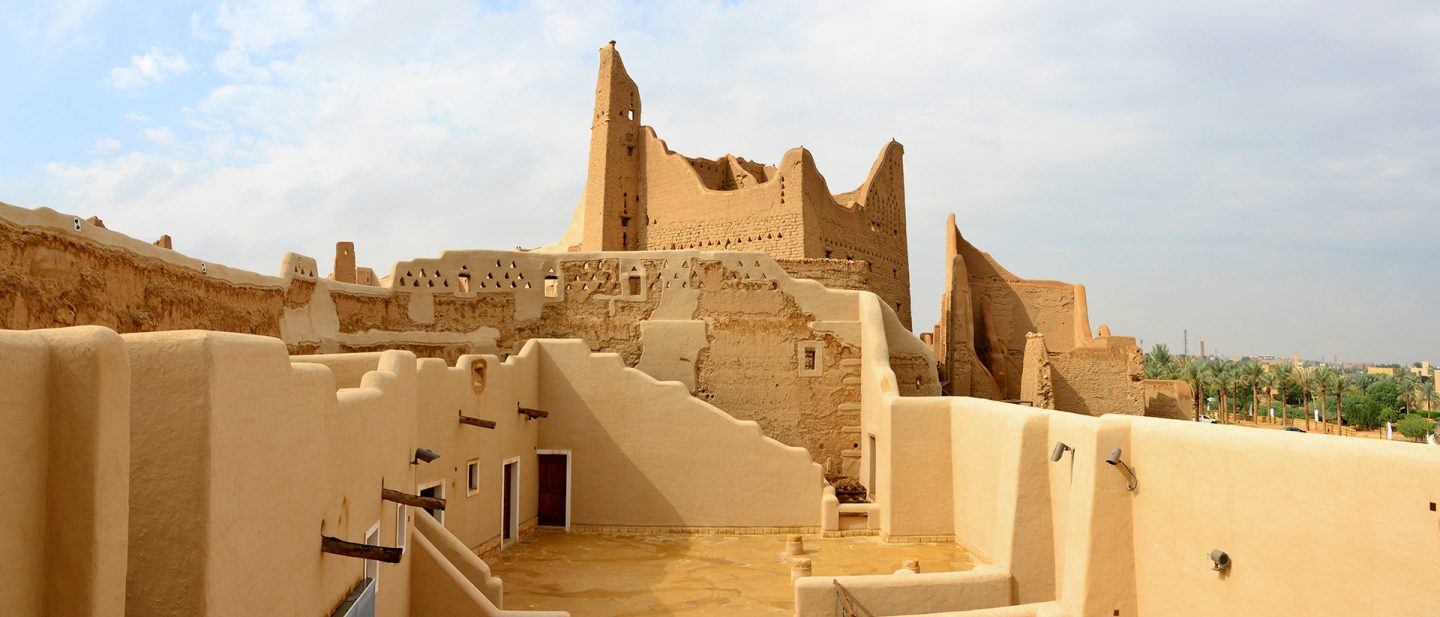
At-Turaif in Diriyah is one of the most important historical sites in the Riyadh area and has been a UNESCO World Heritage Site since 2010. The mud-brick buildings in this neighborhood were constructed in the 15th century and showcase the typical architectural style of Central Arabia, featuring courtyards, massive walls, and a clear, geometric design language. In the 18th and early 19th centuries, At-Turaif was the political center of the Saudi dynasty. Today, the origins of modern Saudi Arabia can be vividly traced among the palace ruins and restored buildings.
Also worth seeing:
- National Museum of Saudi Arabia: The National Museum of Saudi Arabia is one of Riyadh’s most important cultural sites and offers a comprehensive insight into the history of the Arabian Peninsula. Around 4,400 exhibits are presented in several thematic exhibition halls: from archaeological finds and fossils to historical weapons, furniture, and textiles, as well as other everyday objects. The exhibitions guide visitors through various eras of the region and show how culture, religion, and society have developed on the Arabian Peninsula. As one of the largest museums in the region, it is designed so that visitors can easily spend several hours here.
- Al Masmak Fort: Located in the heart of the historic ad-Dirah district, Al Masmak is one of Riyadh’s key historical sites. The mud-brick fortress was built in the 19th century and is closely linked to the city’s history: in 1902, King Abdulaziz conquered the fortress – a pivotal event on the path to the later unification of Saudi Arabia. Today, Al Masmak houses a museum that tells the story of the emergence of the modern Saudi state through photos, maps, weapons, and other historical objects.
- Sky Bridge at the Kingdom Centre: At around 300 meters (985 feet) tall, the Kingdom Centre is one of Riyadh’s most striking buildings, its unusual shape – reminiscent of a bottle opener – defining the city’s skyline. At the very top, the more than 65-meter-long (213 feet) Sky Bridge connects the two spires of the tower. From the spectacular observation deck, a sweeping view opens up over Riyadh’s skyscrapers, boulevards, and the city’s seemingly endless expanse. Especially in the evening, when Riyadh slowly begins to glow, a walk across the bridge offers one of the most impressive views of the Saudi capital.
Do – Twilight at the Edge of the World
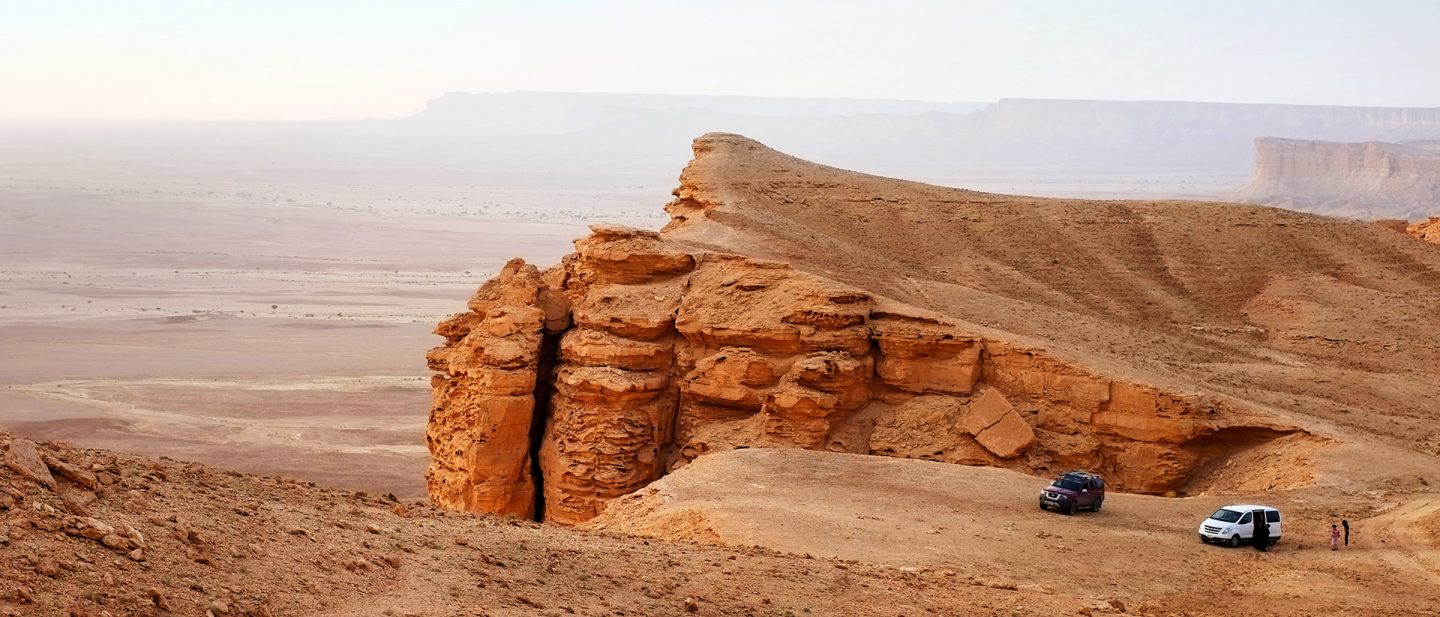
About 100 kilometers (62 miles) from Riyadh, the Tuwaik mountain range ends at a viewpoint that truly lives up to its name: Edge of the World (Jebel Fihrayn). Here, the cliffs drop abruptly into a vast plain, and at twilight, the landscape looks almost like an artistically drawn graphic – rocks, sky, horizon. The excursion is a true hiking adventure and, at the same time, a tranquil experience of vastness, against which Riyadh suddenly seems very small.
Further experiences:
- Desert safari just outside the city: The landscape outside Riyadh, with its dunes, rock formations, and vast plains, offers the ideal setting for a desert safari. Guided tours usually take you through the sandy landscape around the city in an off-road vehicle, often combined with short stops for photography, sandboarding, or an evening in a traditional Bedouin setting. Sunset excursions are particularly atmospheric, when the dunes glow in the warm light.
- Boulevard City: Boulevard City – often simply called “The Boulevard” – is a large, modern entertainment and leisure district in the Hittin neighborhood. The approximately 90-hectare (220-acre) area is now considered one of the city’s main entertainment hubs. Various themed zones feature restaurants, cafés, shops, outdoor cinemas, event stages, gaming areas, and dancing fountains. Concerts, festivals, and sporting events are also held here regularly. As the central stage of Riyadh Season, Boulevard City now serves as a hub for much of Riyadh’s nightlife and leisure activities.
- King Abdullah Park: King Abdullah Park in the Al Malaz district is one of the most beautiful places for anyone who wants to experience Riyadh beyond the boulevards, malls, and skyscrapers. The site, formerly known as Al-Malaz Square, now features expansive lawns, gardens, and wide paths. It’s a place for walks, picnics, and a break in the greenery. In the evenings, the large, illuminated fountain draws many visitors: the water dances to music and light, giving the park a festival-like atmosphere.
Ready to discover Riyadh?
Book your flight and get ready for your trip. With our tips, it will be unforgettable.
*The prices incl. all taxes, fees, carrier surcharges may vary and serve as a guide for your selection.