

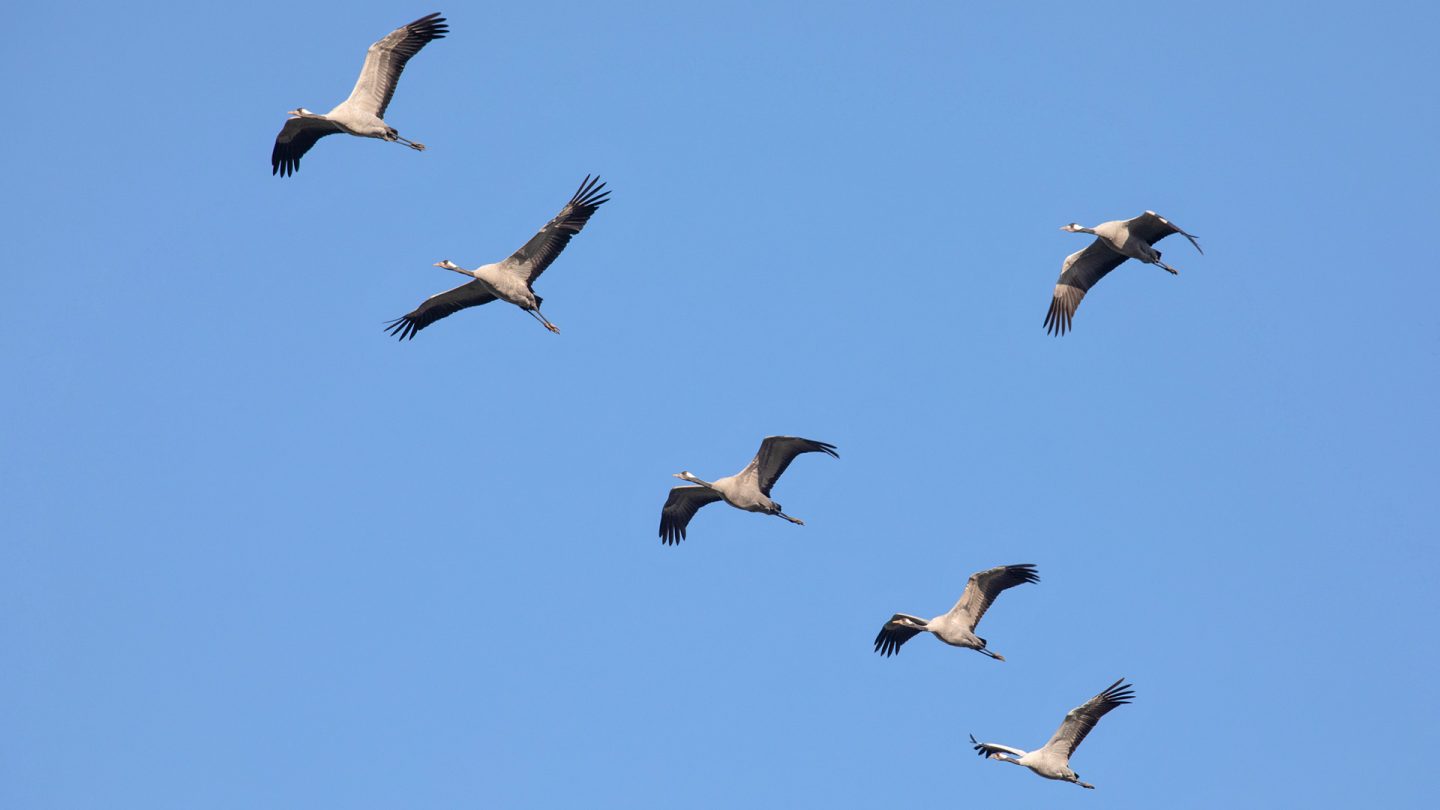
“Everyone wants to fly with the cranes”
The crane symbolizes longing and wanderlust, which is one of the reasons it has always been featured on Lufthansa aircraft. To protect this migratory bird, Lufthansa works closely with Crane Protection Germany. Volunteer crane ranger Hildegard Lamberty and Dr. Günter Nowald, director of the NABU Crane Center in Vorpommern, explain what makes these animals so special
It’s well known that Germans are particularly drawn to Mallorca. But where do our cranes fly when they long for warmth?
Dr. Günter Nowald: Mainly to Extremadura in southern Spain. However, due to climate change and rising temperatures in Northern Europe, many birds now only fly as far as France for the winter, or even stay in Germany. Around the year 2000, German cranes flew an average of 1,600 kilometers. Now it’s only 600.
How do you know all this so precisely?
Nowald: We monitor the cranes by fitting them with differently colored rings or GPS trackers. For instance, we've been tracking Karl, our Lufthansa-sponsored crane whom we regularly feature on social media, since 2023 and always know exactly where he is. In the fall of 2025, for example, Karl flew from Saxony-Anhalt through the Champagne region to central France.
But at our Kranorama crane observation center on Lake Günzer in Vorpommern, we also closely monitor exactly how many cranes gather there each year at the feeding grounds before flying between their winter territory and their summer quarters.
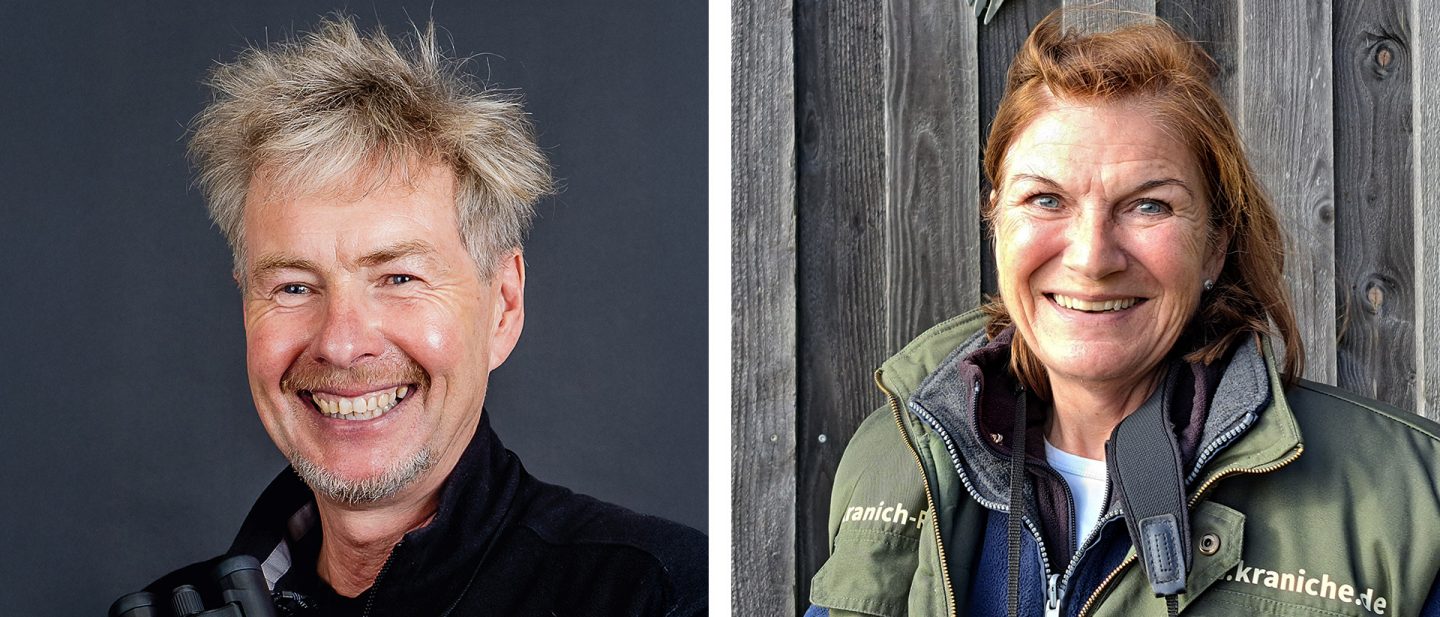
Ms. Lamberty, you volunteer as a crane ranger. How did you come to take on such a special role?
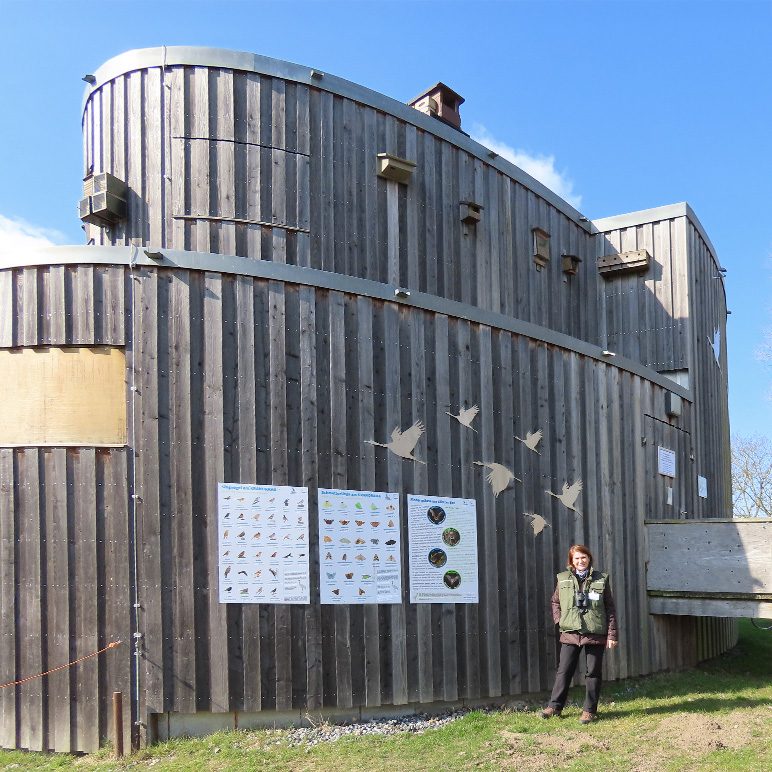
Hildegard Lamberty: I worked for a long time in corporate communications at Lufthansa and, when I left my team, they gave me a crane sponsorship as a farewell gift. His name is Toni, and for the first three years he only ever flew from Mecklenburg-Vorpommern to Lower Saxony to spend the winter there. I was a bit surprised by that. Last year, he even made a splash on Rügen. In any case, this special gift gave me the idea to volunteer in crane conservation. Today, I support the Crane Conservation Team at the Kranorama by observing the birds, showing visitors how to use the spotting scope, equipping them with binoculars, and answering any questions they might have. The Kranorama is simply an incredibly beautiful observation spot for anyone who wants to learn more about this very special bird species.
What fascinates you about cranes?
Lamberty: Cranes form happy and equal partnerships and usually stay together for life. Watching how they care for their young together is truly touching. I’m also impressed by the fact that, just like us humans, they remain capable of learning throughout their lives. We can see that, for example, in the way they adapt to climate change.
Nowald: Many people associate a certain longing with cranes flying across the sky. Everyone would love to fly with them as they journey toward light and warmth in the fall. Just like Lufthansa, cranes also travel internationally. That is why we have cooperation partners in Asia, Africa, and Europe, working together to protect these animals.
Lufthansa has supported Crane Protection Germany since its founding in 1991. What has been achieved during this time?
Nowald: In the early 1990s, there were barely 2,000 breeding pairs left in this country. By 2025, that number had risen to 12,500. This is a major success that would not have been possible without Lufthansa’s support. With Lufthansa’s help, the International Crane Foundation was also able to establish an international network that monitors the global migration of cranes and works to ensure their survival.
What is key to crane conservation?
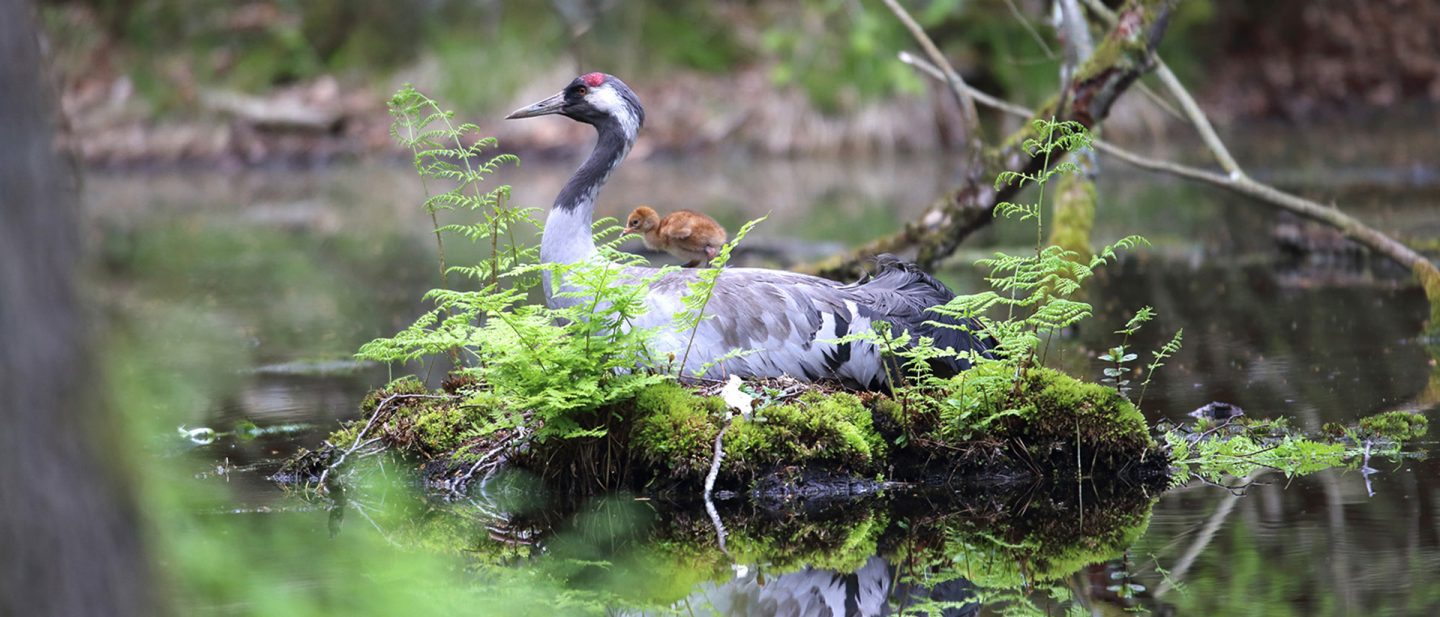
Nowald: Cranes need wetlands for breeding because they nest in shallow water. They do this to protect themselves from predators such as foxes. Unlike other birds, they do not sleep in trees, but on the water. That is why we advocate for restoration projects in Germany, where far too many wetlands have been drained in the past for agriculture or forestry. In addition, we have succeeded in enacting laws to protect them in Mecklenburg-Vorpommern and Brandenburg, where most of Germany’s cranes live. There, for example, no human activities are permitted within a 300-meter radius of the nests during the cranes’ breeding season.
Why is the protection of wetlands important in general?
Nowald: Because they provide habitat for many different animal species: for moor frogs, dragonflies, and many other insect species. Unfortunately, the loss of biodiversity is a major problem in Germany. By restoring wetlands, we can make a significant contribution to species conservation.
Lamberty: The crane is our voice for nature conservation. When we protect it, we also protect many other animal species. Thanks to its trumpet-like, unmistakable call and its distinctive flight formation, it is familiar to many people. That means we are able to attract the necessary attention. With toads, on the other hand, you probably couldn’t get much interest.
For many people, cranes are symbols of good luck. Why is that?
Nowald: That’s certainly because cranes lead such a happy married life. But people see something different in them in every country. In Sweden, for example, people look forward to the arrival of cranes in the spring because, after the long, dark winter, they finally bring the sun, light, and warmth from the south to the north. In China and Japan, cranes carry the souls of the deceased to the realm of the gods.
Where and when is the best time to observe cranes in Germany?
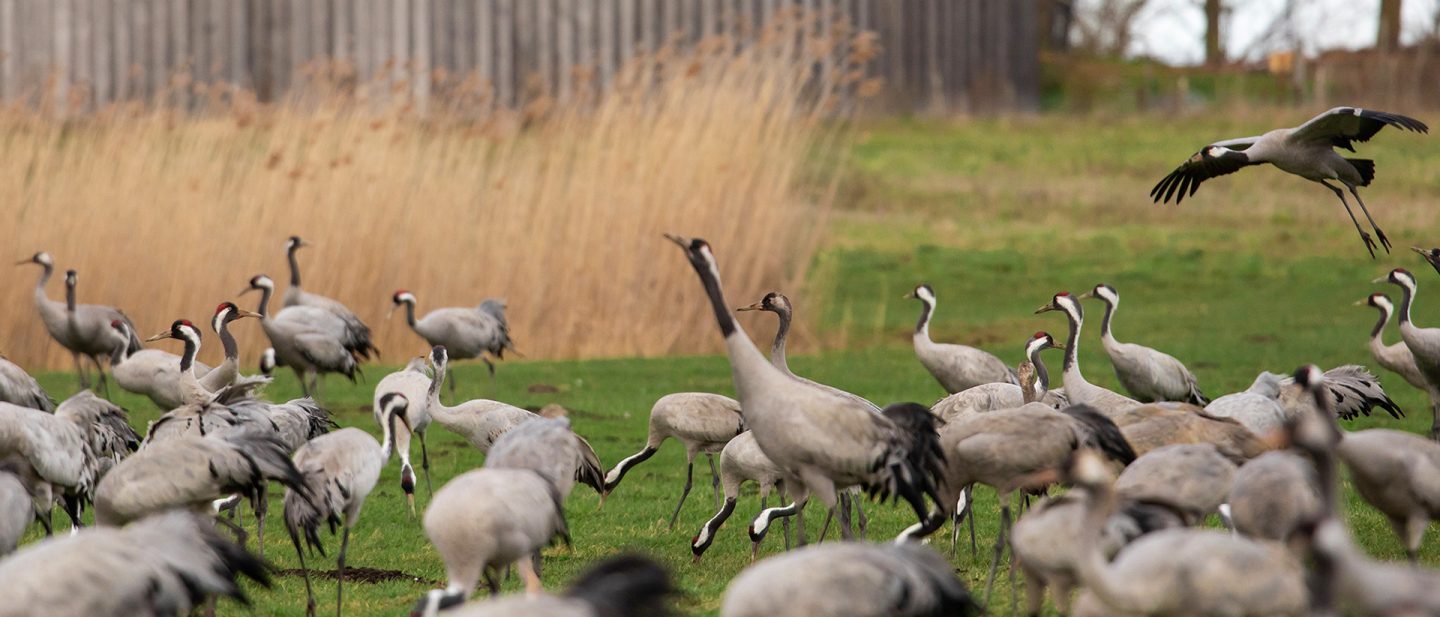
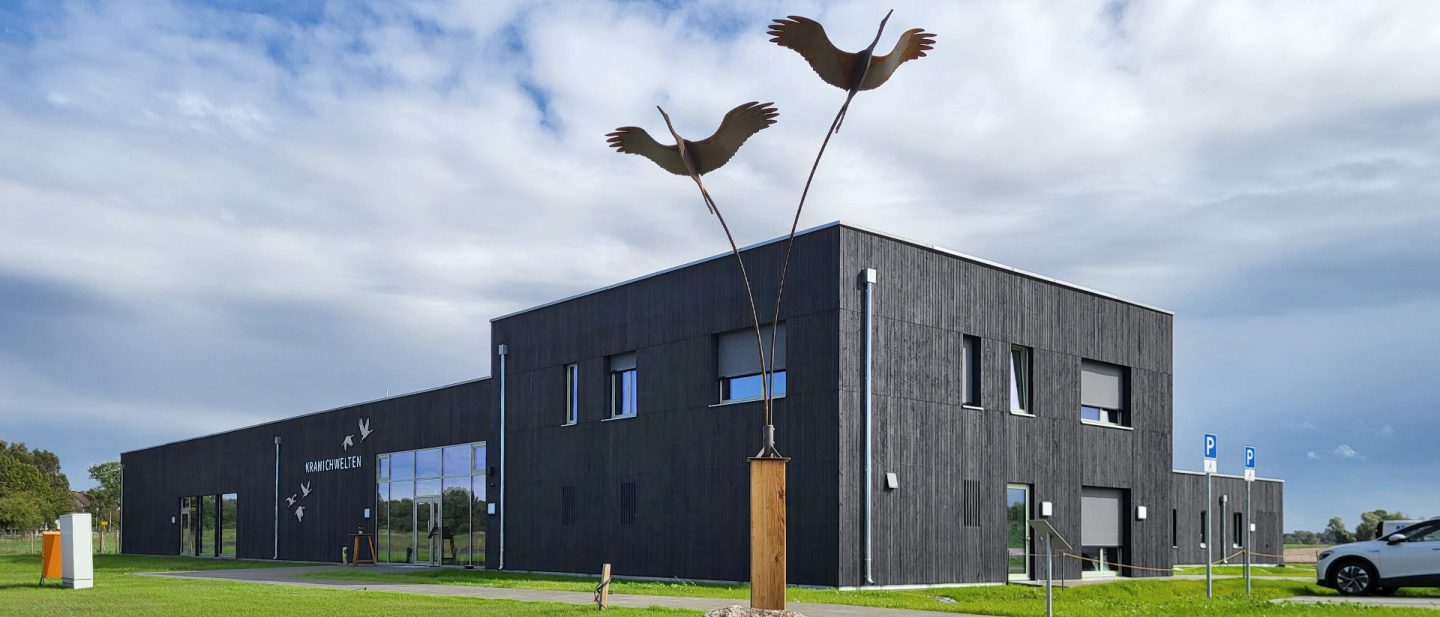
Lamberty: The best months for live crane observations at the Kranorama are March, September, and October. Just 300 meters away, the new international NABU Crane Worlds Experience Center has been open since September 2025, where you can learn about cranes year-round. You can also observe cranes in Zingst on the Baltic Sea, where we operate an information van. It’s always a beautiful sight when thousands of birds fly there in the evening to their roosts on the island of Kirr.
How can I tell if it’s cranes or wild geese flying across the sky?
Nowald: The wingbeat of cranes is much slower and more leisurely than that of geese. Geese tend to look more fidgety when flying. Cranes also have longer legs and necks than geese.
Is the takeoff and landing of cranes really comparable to that of airplanes?
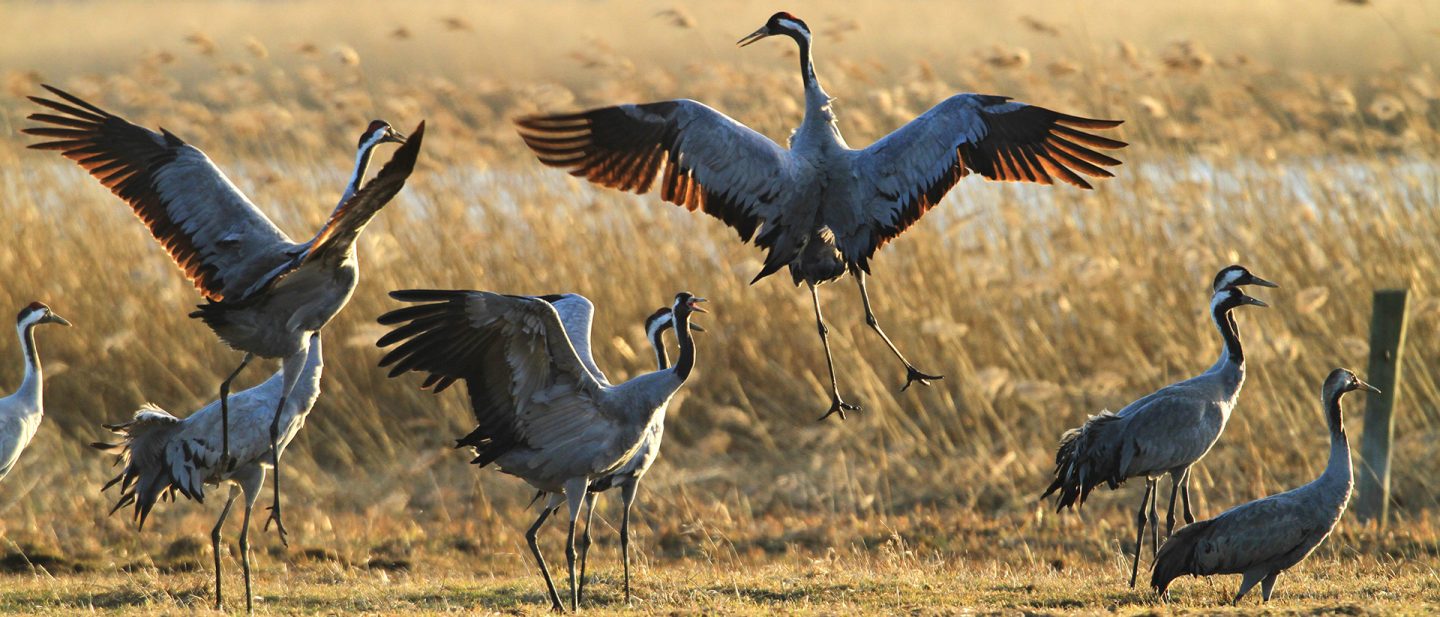
Nowald: That’s actually true! As a rule, cranes position themselves into the wind before takeoff and signal with a specific posture that they are “ready for takeoff.” Then they take two or three steps to build up speed and lift off. When they want to land from a great height, they descend in circling movements, much like airplanes that circle above the airport before beginning their descent.
About
For more than 30 years, Dr. Günter Nowald, director of the NABU Crane Center in Vorpommern, has dedicated himself to crane conservation. Before beginning his scientific career, he worked as a nature photographer. Photographing cranes remains one of his great passions to this day.
Hildegard Lamberty worked in corporate communications at Lufthansa until the end of 2021. She has now been volunteering for four years at the Kranorama and the Info-Mobil in Zingst, working alongside other volunteers to protect cranes.
Support these beautiful birds:
For more information about Crane Conservation Germany and ways to support the cause or sponsor a crane, please visit www.kraniche.de
Ready for a journey through time?
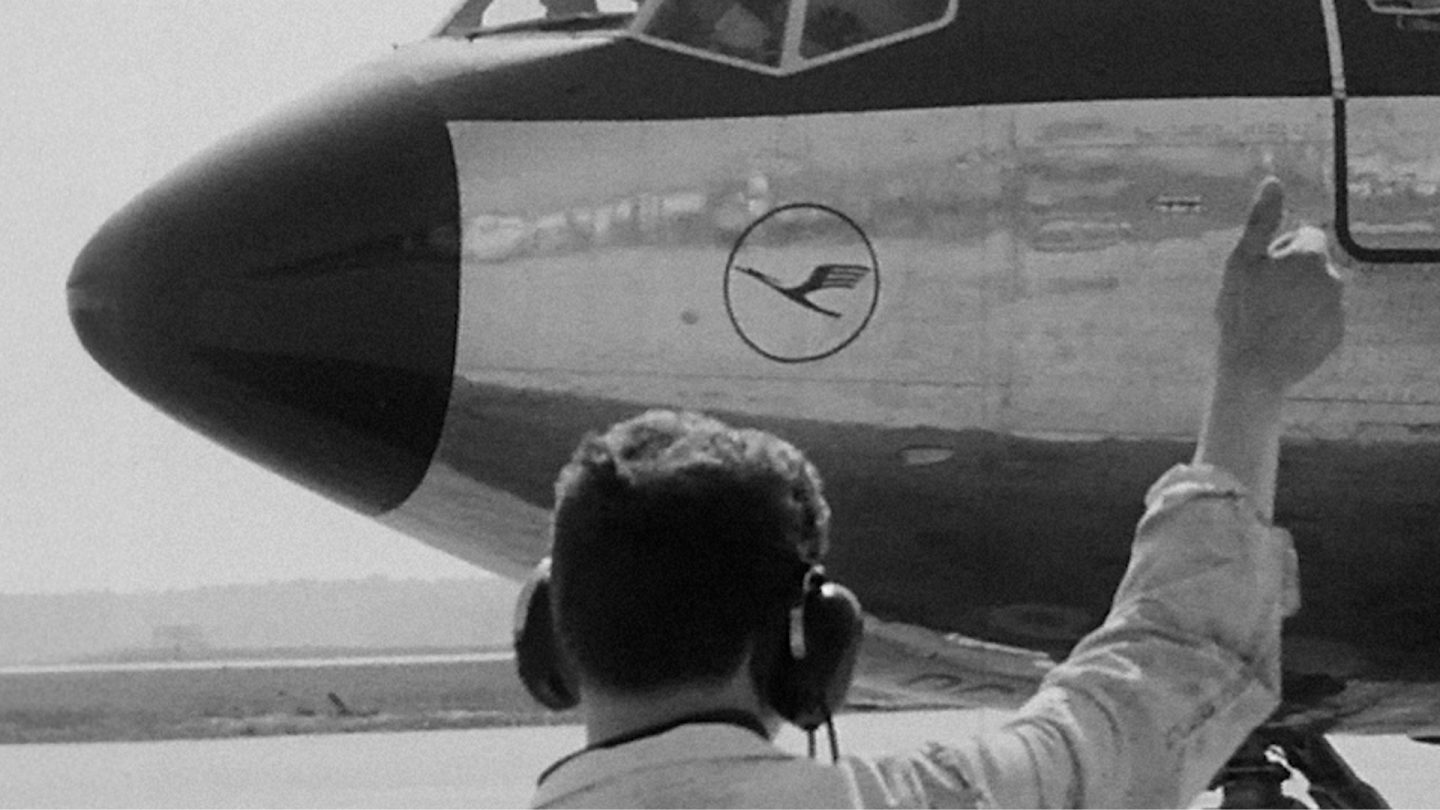
In 2026, Lufthansa celebrates its 100th anniversary – explore our remarkable journey