


Know Before You Go: Beijing
Beijing was laid out over the centuries along a clear north-south axis, which can still be seen today in the palace complexes, wide streets, and monumental squares. It is also a place where imperial history, socialist heritage, and modern city converge

Getting from the Airport to the City
Beijing Capital International Airport (PEK) is located about 30 kilometers (18.6 miles) northeast of the center and is the city's main international airport. The fastest and cheapest way to get to the city center is with the Capital Airport Express. The railway line connects the terminals directly to the central stations of Sanyuanqiao and Dongzhimen; the journey takes about 20 to 30 minutes and costs around 25 yuan (about 3 to 4 euros). Alternatively, taxis and app-based driving services such as Didi are available. Depending on traffic, the journey to the center takes about 40 to 60 minutes, though it can take much longer at peak times. The cost is usually between 100 and 180 yuan.

Getting Around
Beijing has a structured network of ring roads and subway lines. With more than 500 stations, the metro is considered the main means of transport in everyday life and provides access to almost all of the city's central sights. The network is supplemented by buses and ride-hailing services such as Didi, which are mainly used for direct journeys or traveling later in the evening. Bicycles and rental e-bikes are also available and are particularly suitable for shorter distances or rides through the hutongs.
This may also be of interest to you

Currency
In Beijing, and throughout the People's Republic of China, you pay with renminbi, whose basic unit is the yuan. In everyday life, however, cash plays an increasingly subordinate role: payments are made almost everywhere via smartphone using the WeChat Pay or Alipay apps – in Michelin-starred restaurants as well as at small street stalls. International credit cards are mainly accepted in hotels and larger shops, but much less often in everyday life. It is advisable to set up one of the local apps in advance.

Tipping
Tipping is unusual in China and is not expected.
Outlets & Voltage
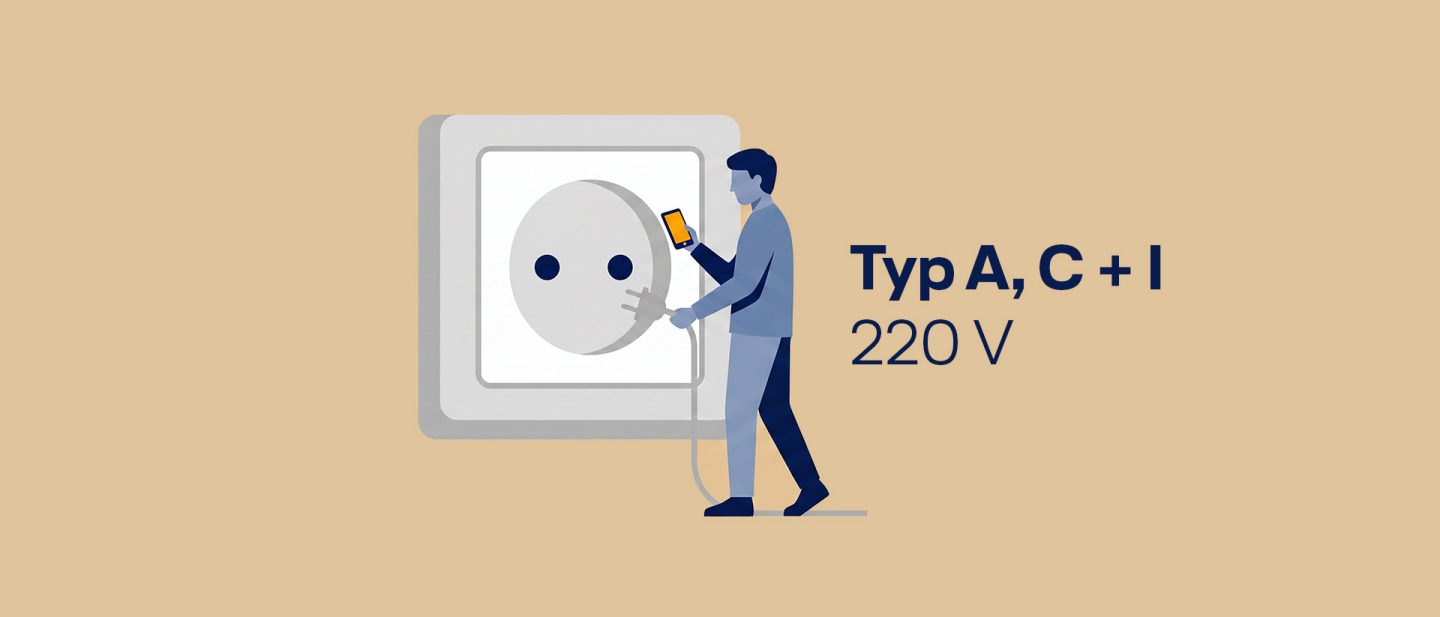
In China, type A, C, and I sockets are used. European plugs with two round pins (Type C) fit partially, but German Schuko plugs (Type F) usually do not. A universal adapter or a travel adapter for China is therefore recommended. The mains voltage is 220 volts at 50 Hertz and thus largely corresponds to the European standard, so that modern devices such as smartphones or laptops work without any problems.

Don't
Chopsticks should never be inserted vertically into a bowl of rice. In China, the gesture is reminiscent of incense sticks in mourning ceremonies and is considered a clear taboo. Pointing chopsticks at other people is also perceived as rude.

Fun Fact
In the past, no building was allowed to tower over the Forbidden City, so for centuries, the rule was that no building in Beijing could be higher than the Imperial Palace. This enabled the central position of the emperor to remain architecturally visible.

Ready to discover Beijing?
Book your flight and get ready for your trip. With our tips, it will be unforgettable.