


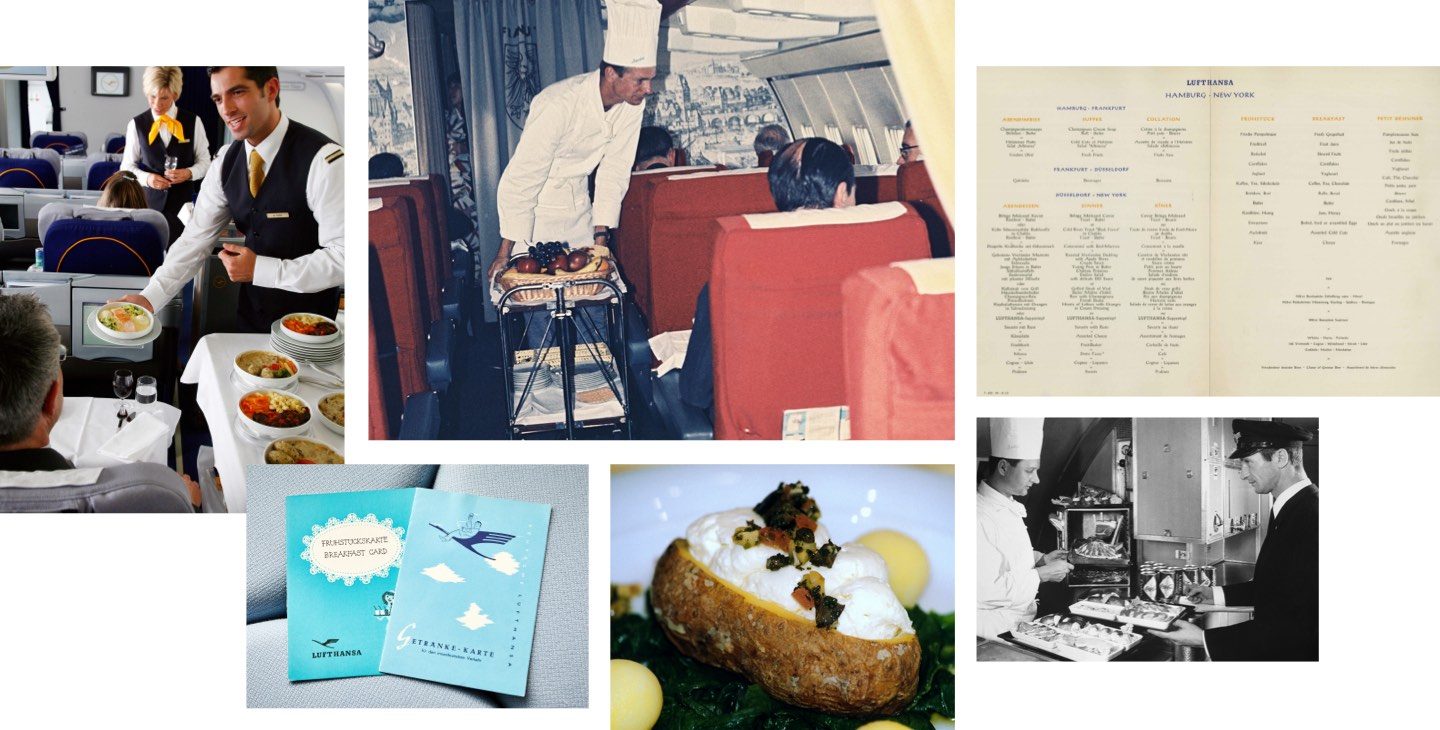
On-board menus always tell a story – about style, standards, gourmet culture, and about how service changes as time goes by. From the lavish dishes of the post-war decades through the lightness of nouvelle cuisine to increased customization, more comfort and unmistakable Lufthansa Signature Moments in the fundamentally re-designed onboard experience from 2026 onward, meals on board have always been more than an incidental part of flying. They’re the expression of a lived travel culture.
Induglence in the early years
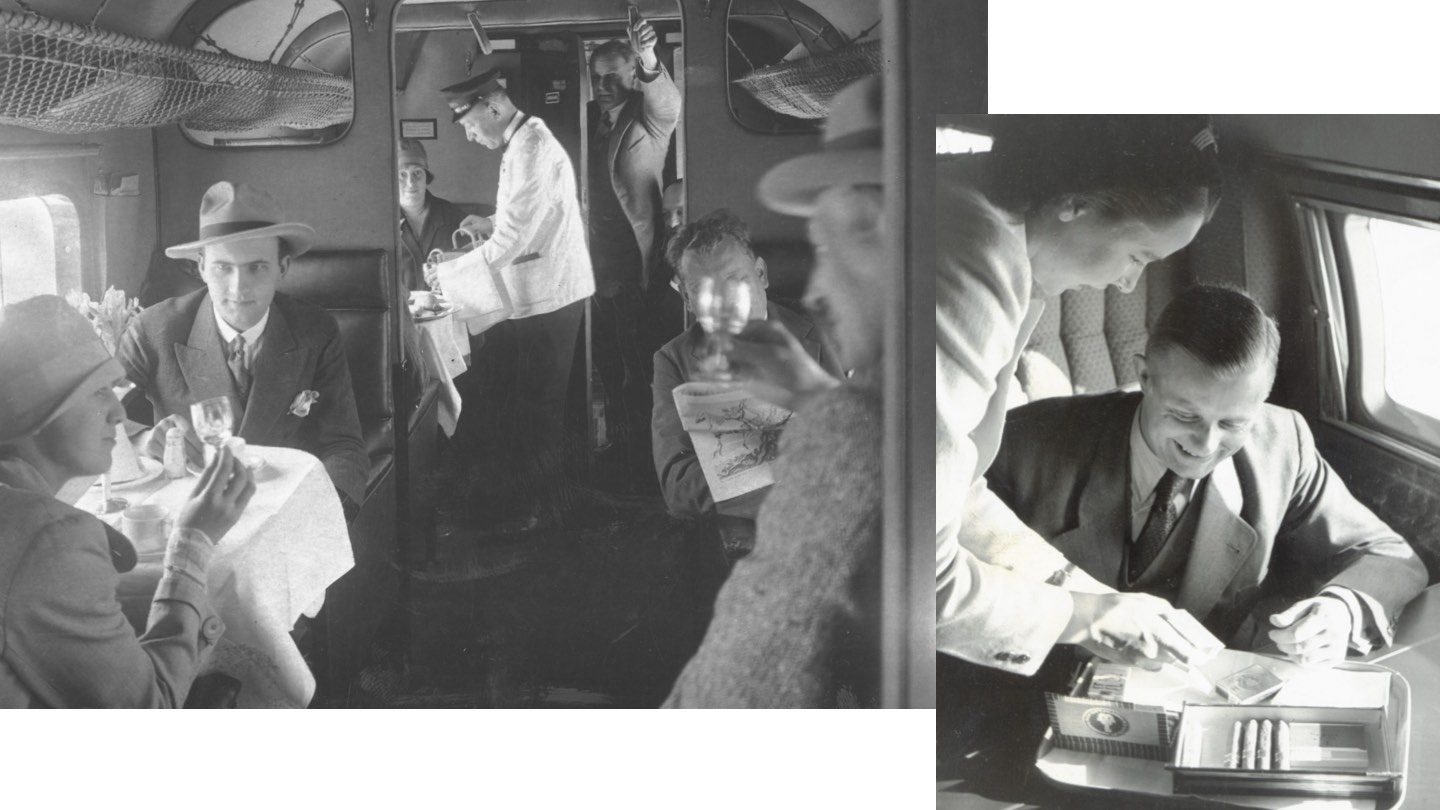
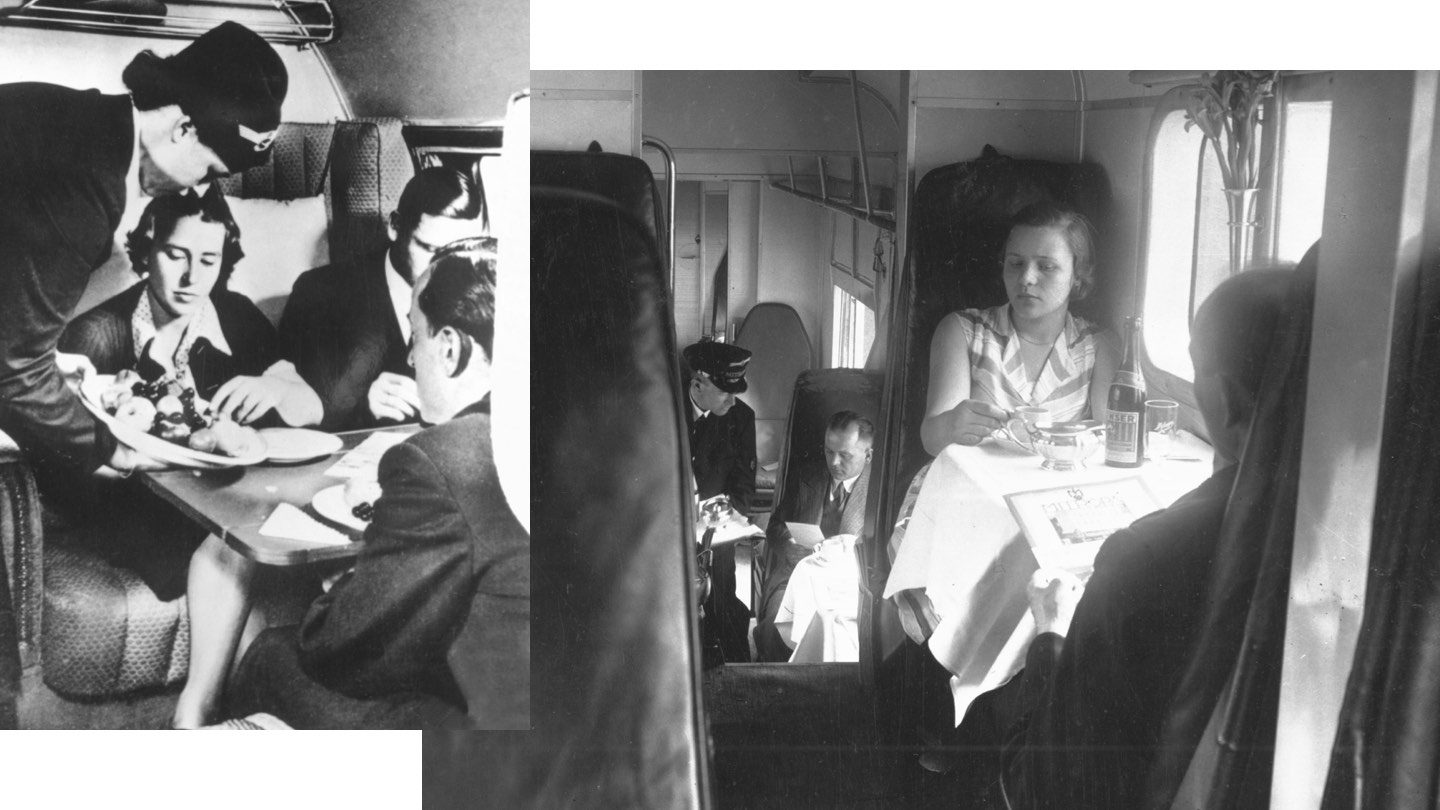
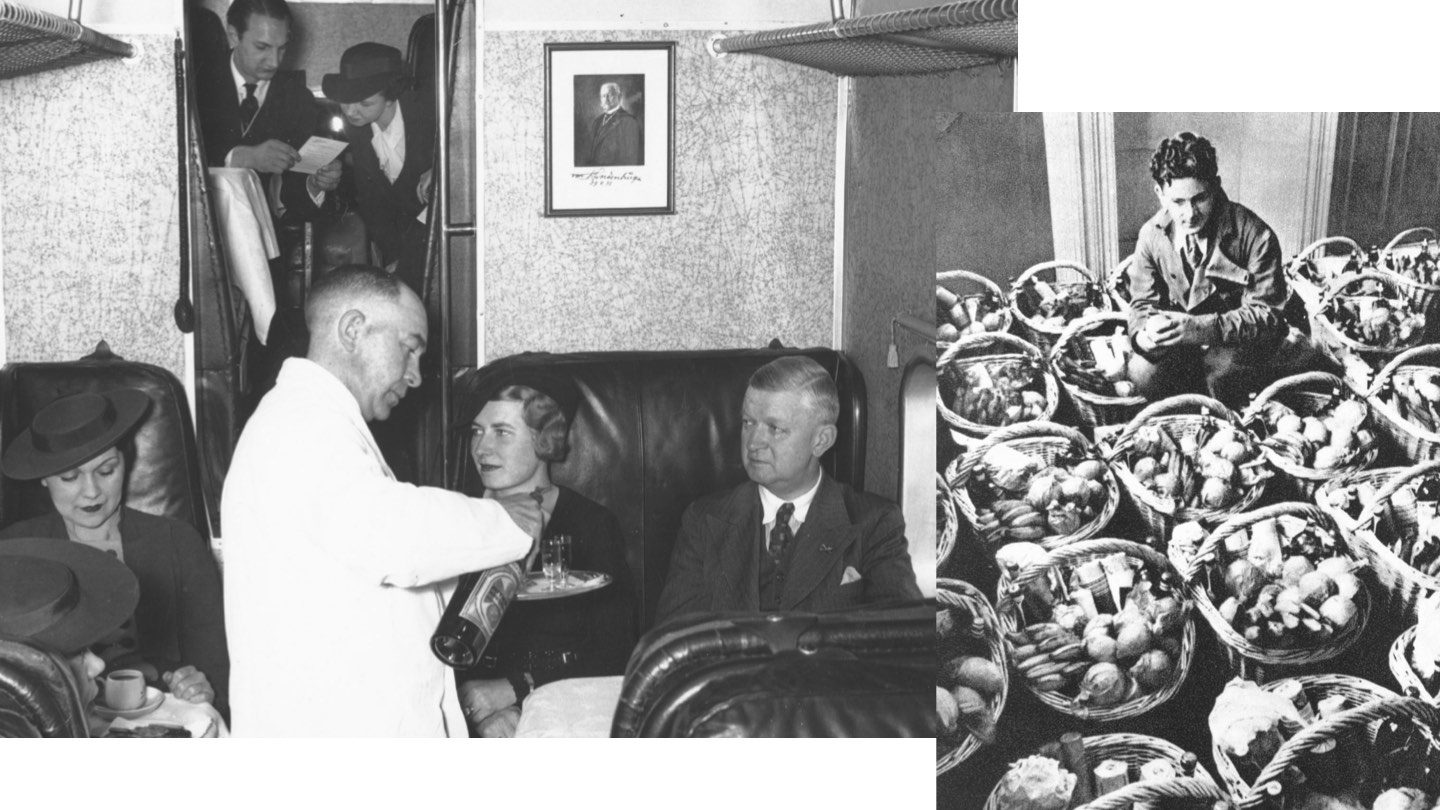
Dining on board was already a product of the pioneering spirit and an expression of luxury back in the 1920s and 1930s. On the early routes of the Deutsche Luft Hansa, the first steward – in partnership with Mitropa, the foremost sleeping and dining car company of the day – served small snacks and drinks on the Junkers G 31. Not long afterward, menus were delivered in a lounge setting on big airplanes like the G 38 or Junkers Ju 90, with a bar, a handful of seats and plenty of personal attention. Stewardesses also took care of travellers’ well-being in the roomy cabins from 1938.
In 1928, moreover, Lufthansa prepared and offered hot meals on board the Berlin-Paris route as one of the first-ever airlines to do so. This is an early indication of the significance the culinary arts had for travellers and for Lufthansa from the earliest days.
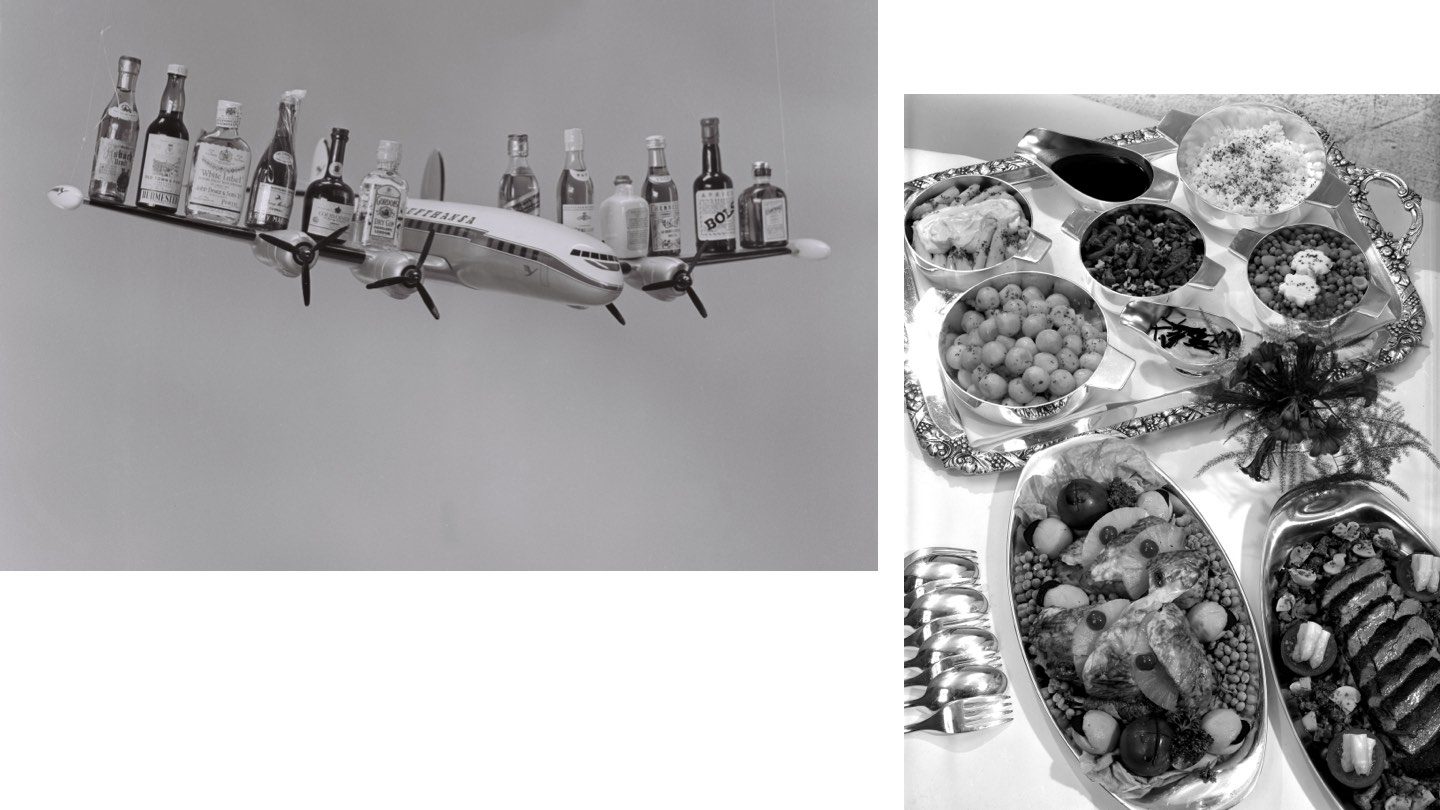
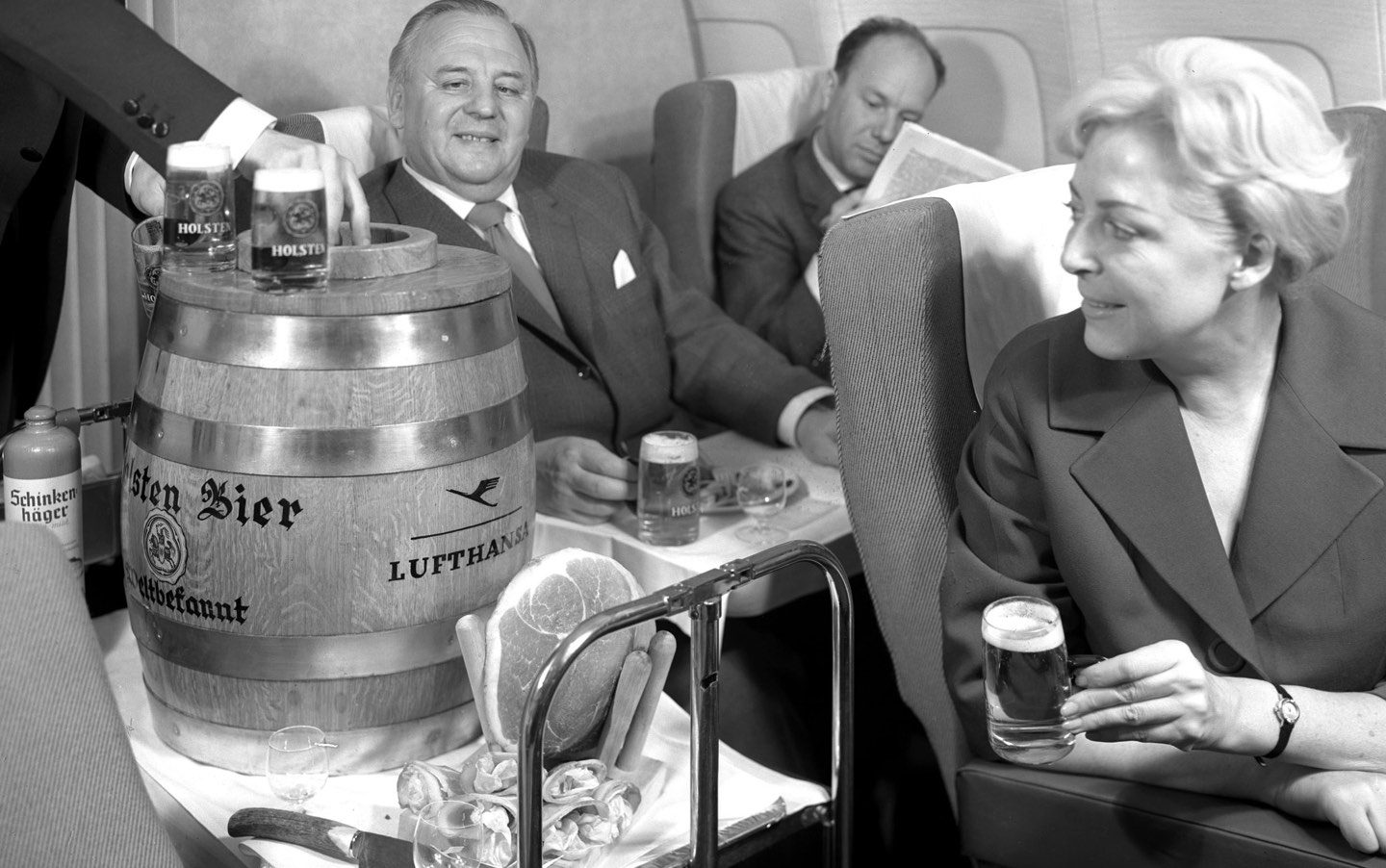
Flying was an adventure for a narrow, exclusive clientele, and on-board catering was more reminiscent of a grand hotel than a means of transport: multi-course menus served on porcelain, select wines and tobacco goods turned this new journey above the clouds into a society event.
A hearty dinner above the clouds
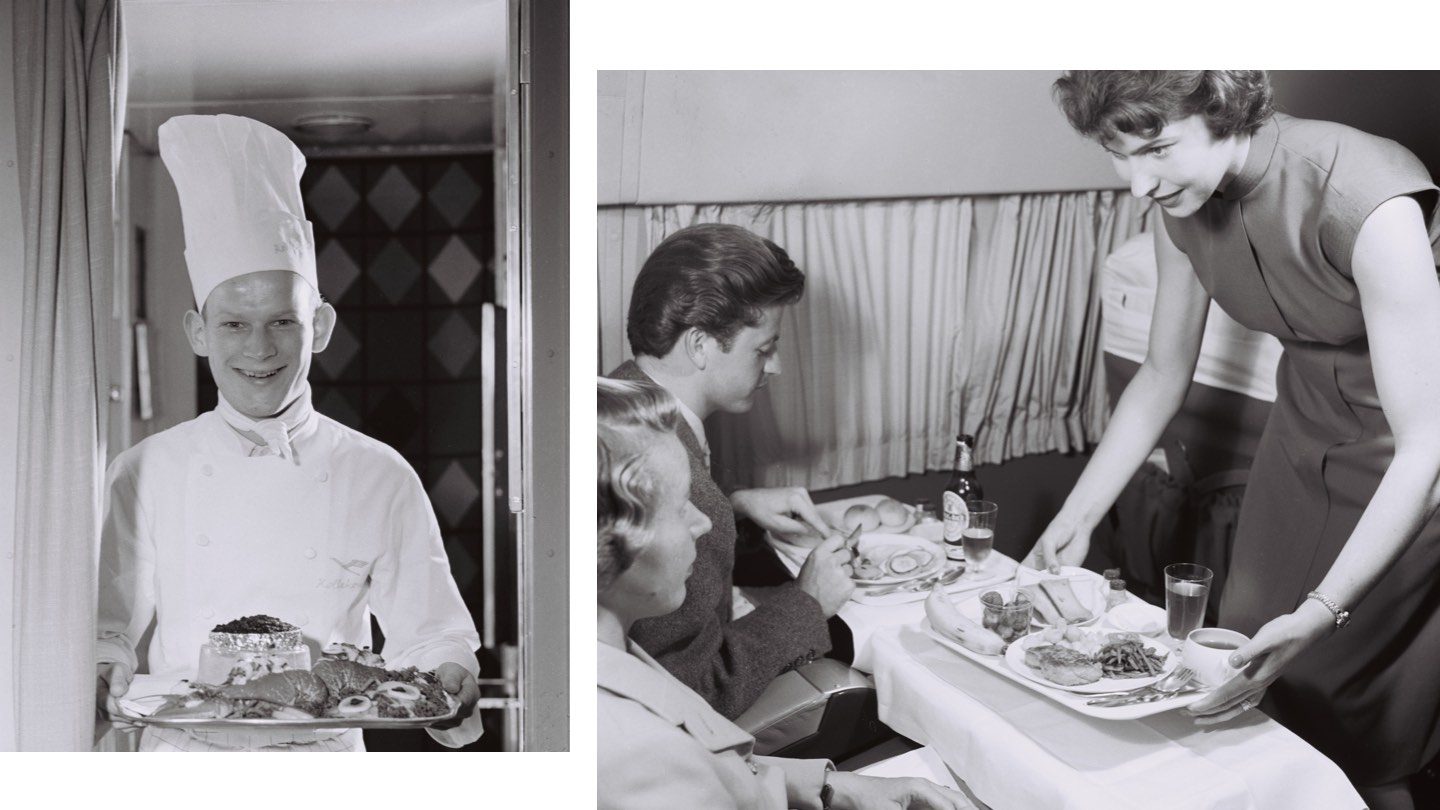
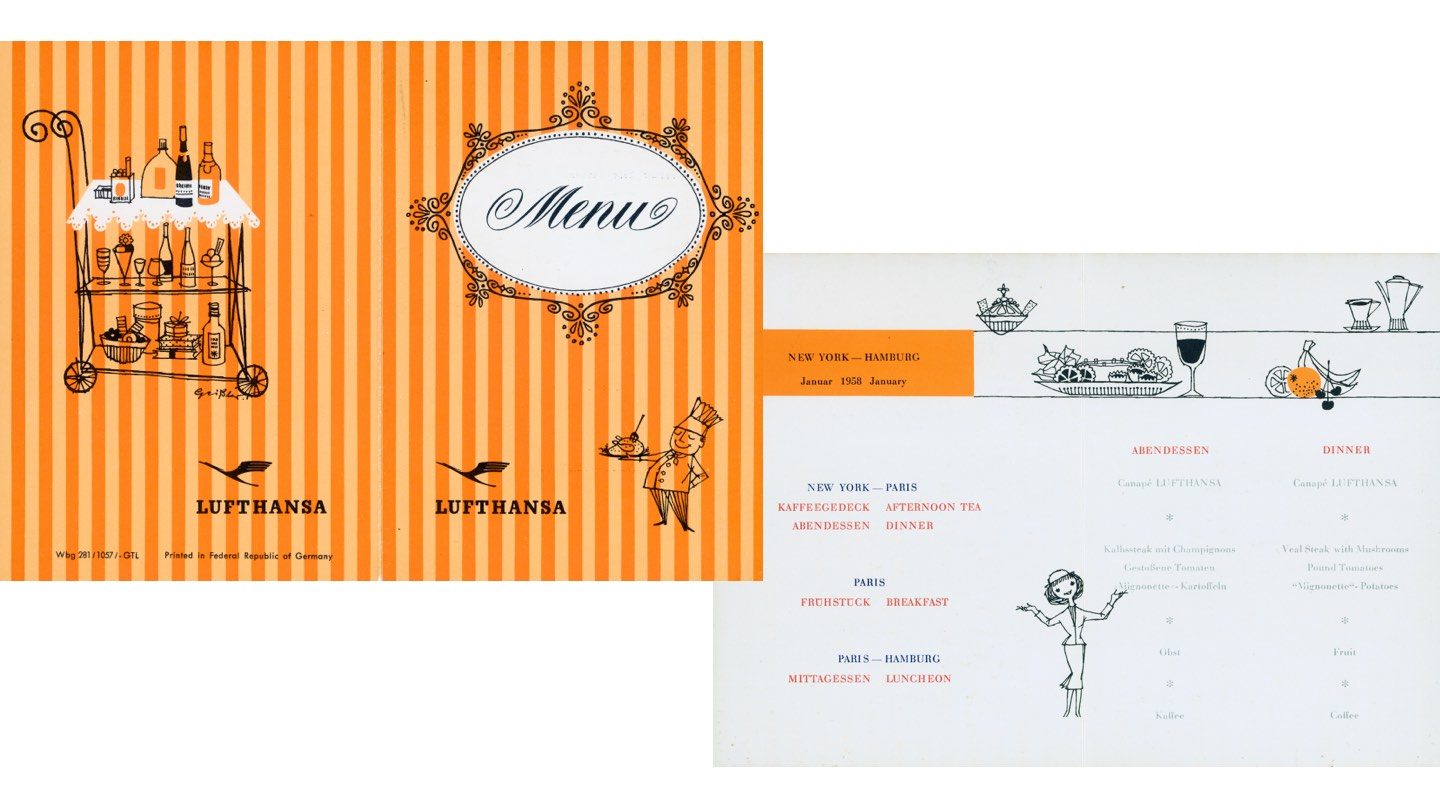
Lufthansa’s culinary journey begins at a time when flying was still something very special. In the late 1950s, with the Lockheed Super Star, the Senator service was introduced on the North Atlantic route – a concept that, by the standards of the time, seemed almost visionary. There was room on board for just thirty-two guests, who got to enjoy a lounge, an on-board restaurant and on-board cuisine. A specially trained chef steward prepared à la carte menus and select drinks were served at the bar. Flying was more than a mere form of conveyance. It was a culinary pleasure.
The table settings
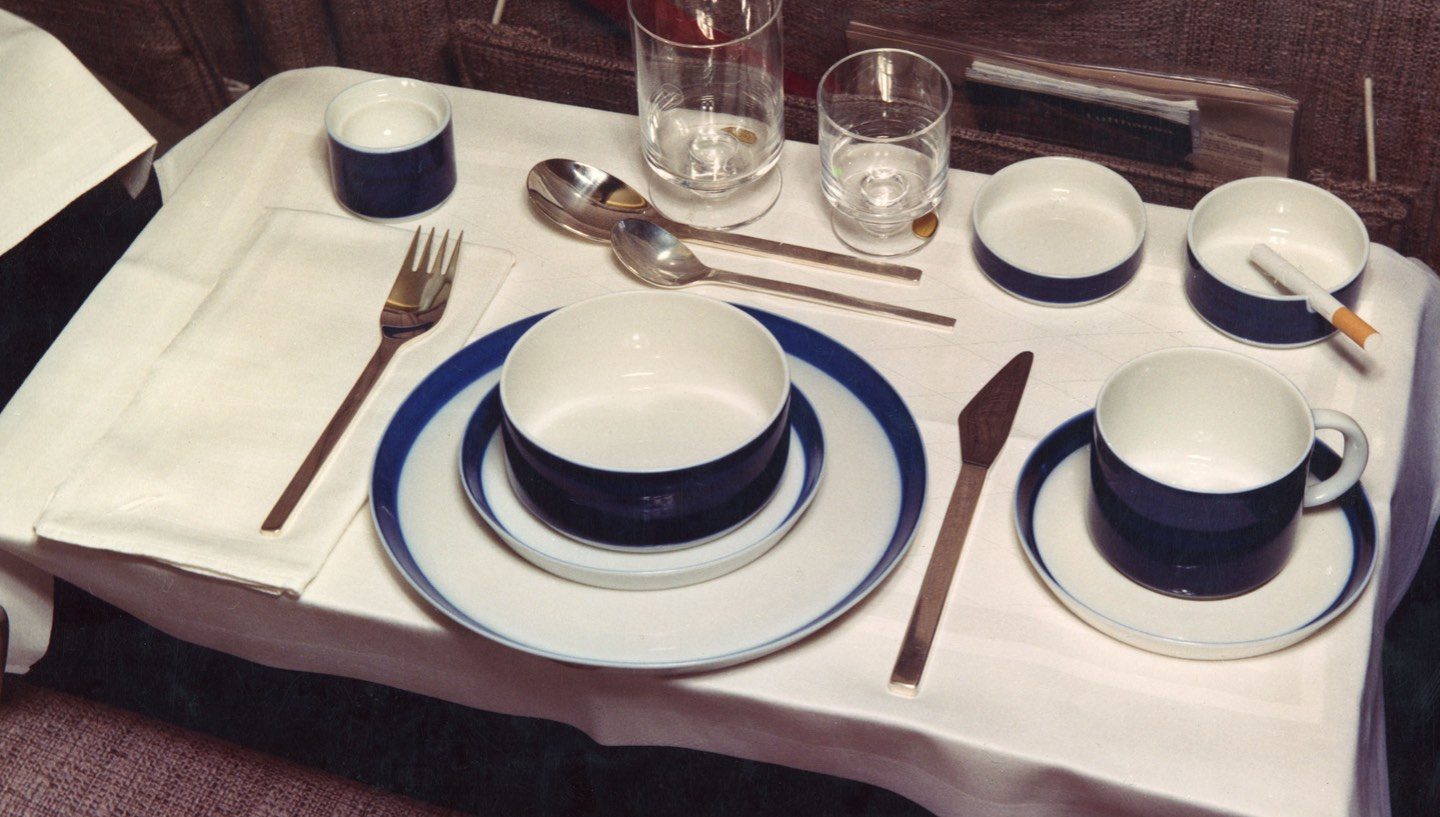
As airplanes advanced technologically, the requirements of in-flight service evolved too. The fleet became more modern, faster and more efficient – yet the aspiration remained to create a truly indulgent ambience. The answer was careful table settings: a prepared tray with a textile cover, porcelain, cutlery, a napkin and a glass. The impression of a restaurant with full table settings was thus created in limited space.
From lavishness to more refinement
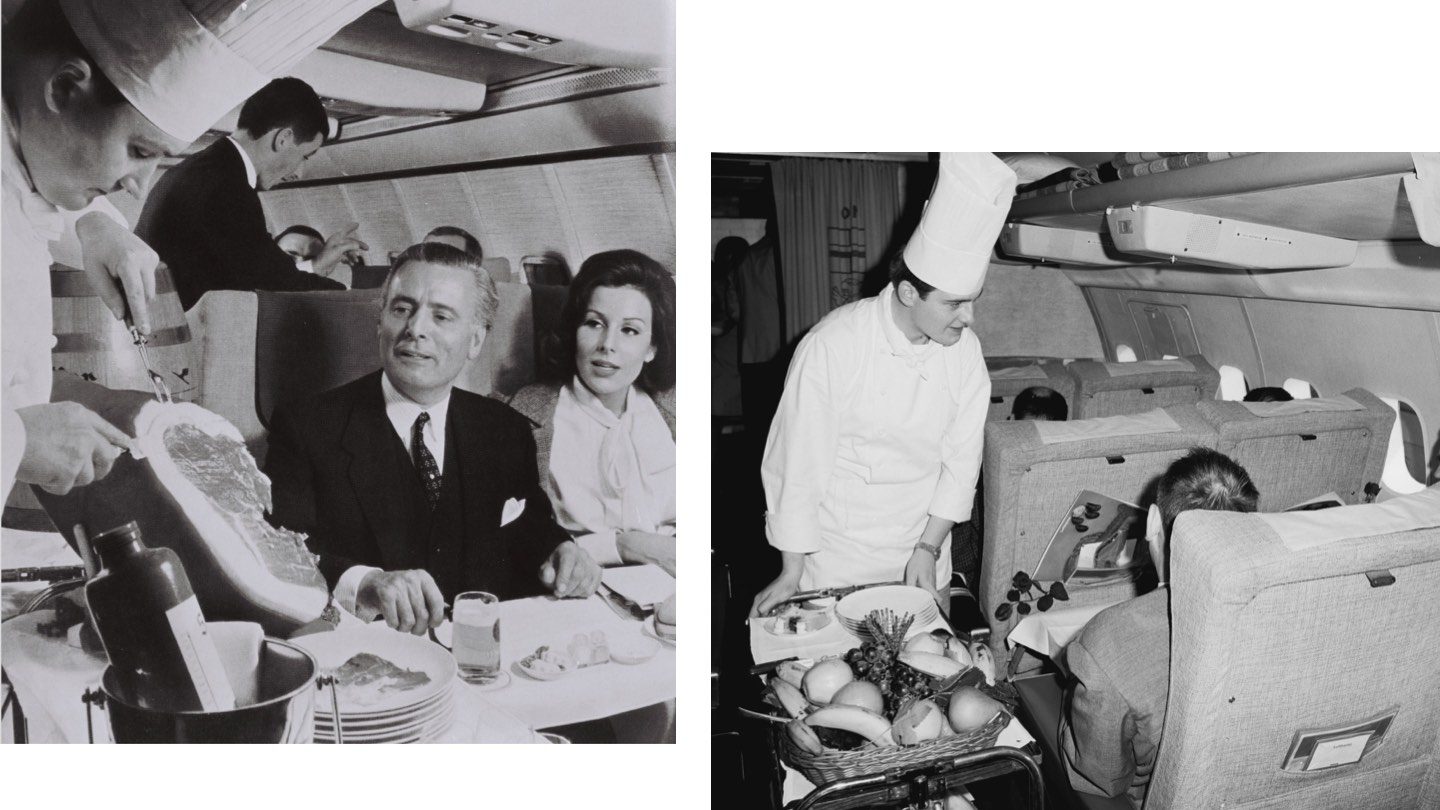
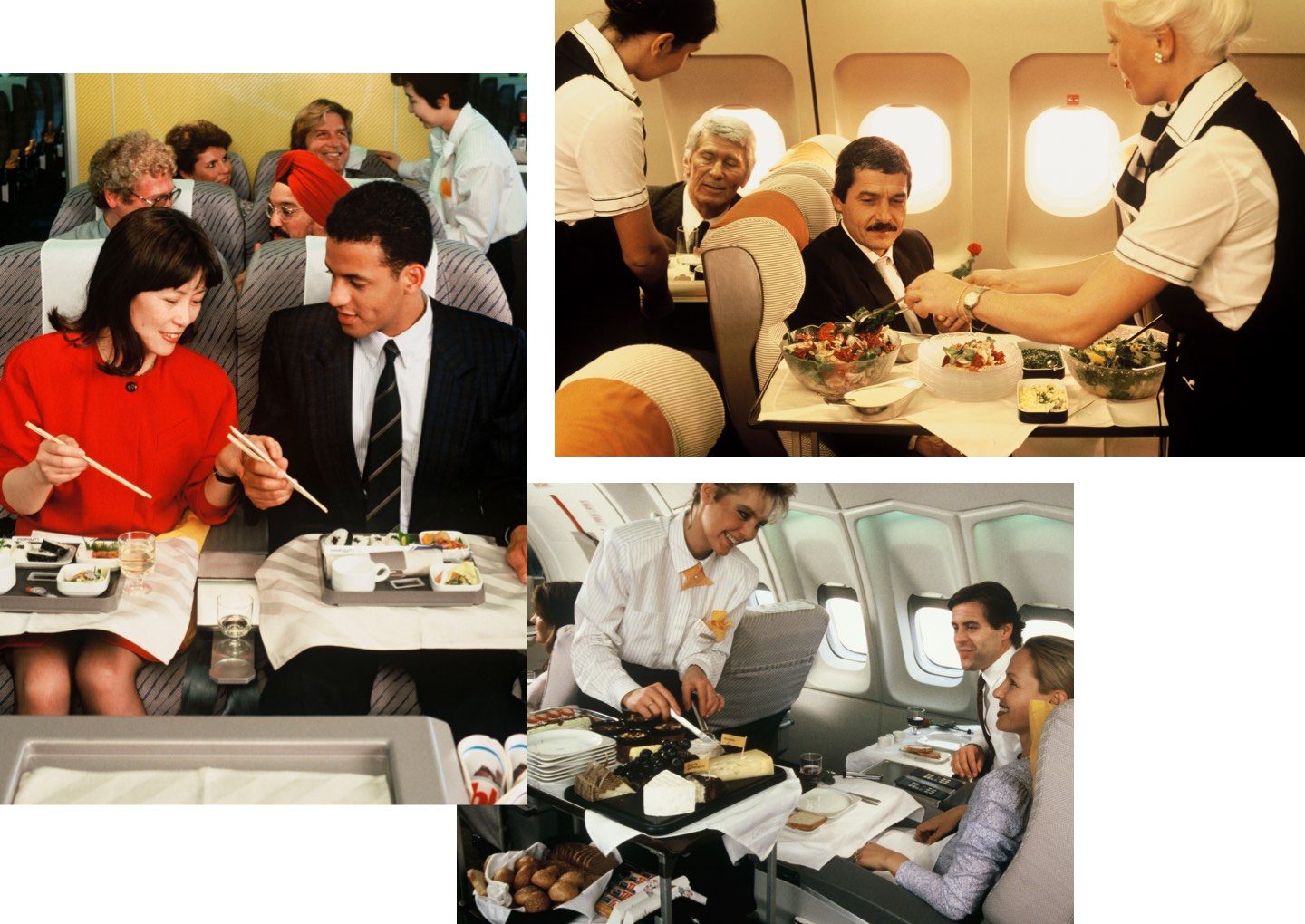
In the 1970s, a new era of comfort began with the Boeing 747. First Class offered more space, more tranquillity and more amenities – and the culinary range also altered its character: lavish, traditional menus gave way to subtle refinement.
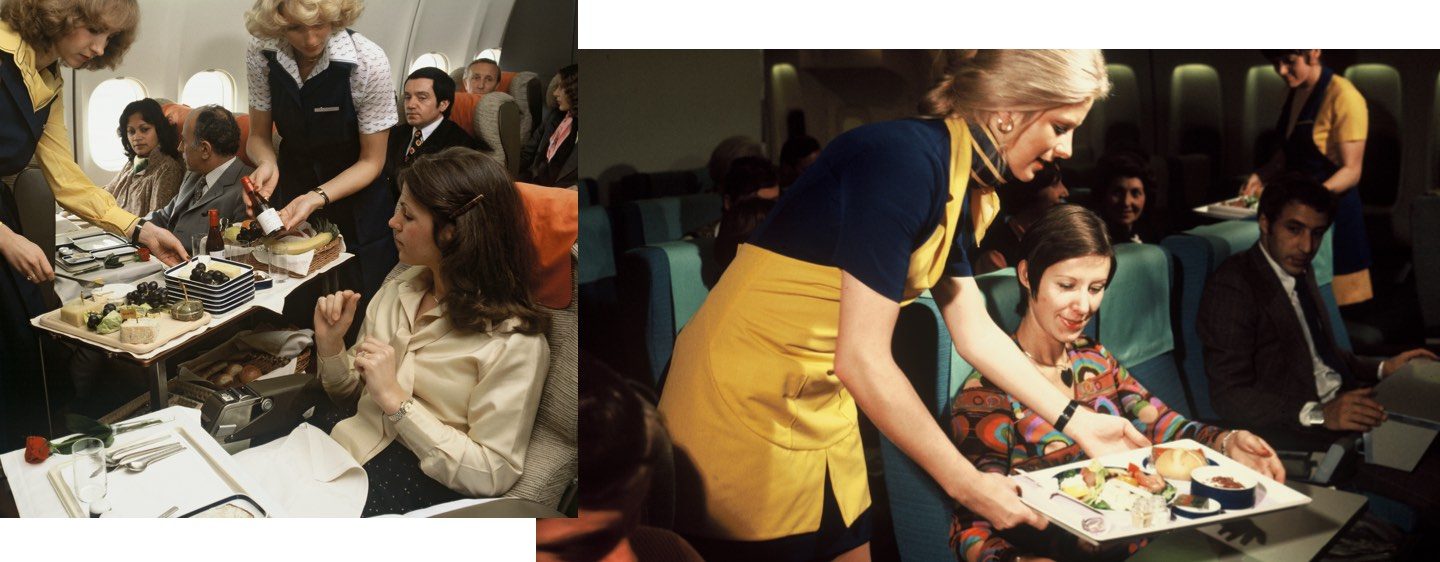
In the early 1980s, the cuisine became more delicate, fresher and more elegant – nouvelle cuisine was introduced on board. Characteristic of that time were, for example, fresh figs with foie gras, a salad of cured ham with Belgian endive and radicchio, roast saddle of lamb with mushrooms and mint jelly, or poached turbot on savoy cabbage with saffron sauce.
The guest determines the pace
The guest moved even more strongly into focus in the 1990s. Customization became a central theme. In 1997/98, Lufthansa introduced an à la carte service in First Class for the first time. Guests could now decide for themselves when, what, how much and in what order they wanted to eat or drink. Meals were individually prepared, plated up on new porcelain, and served directly at the seat.
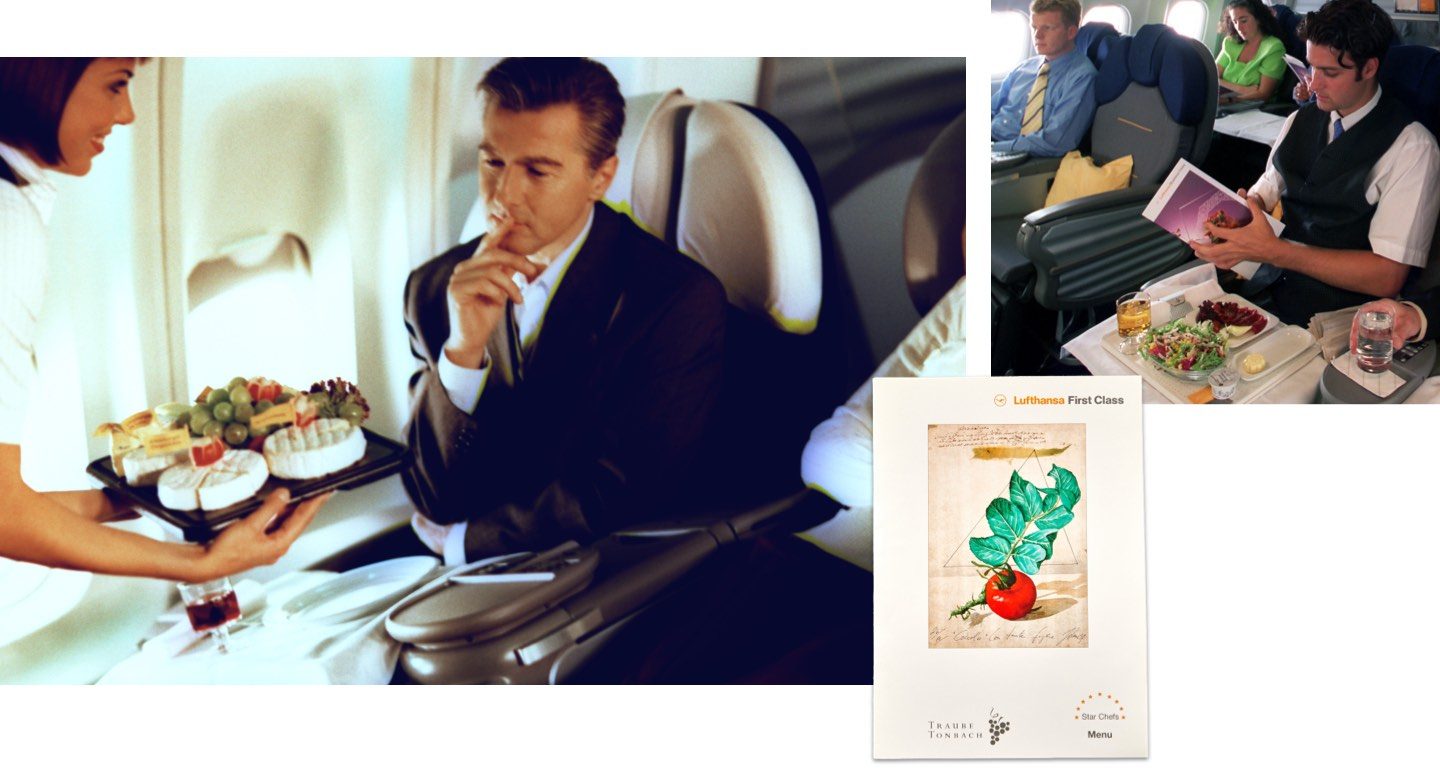
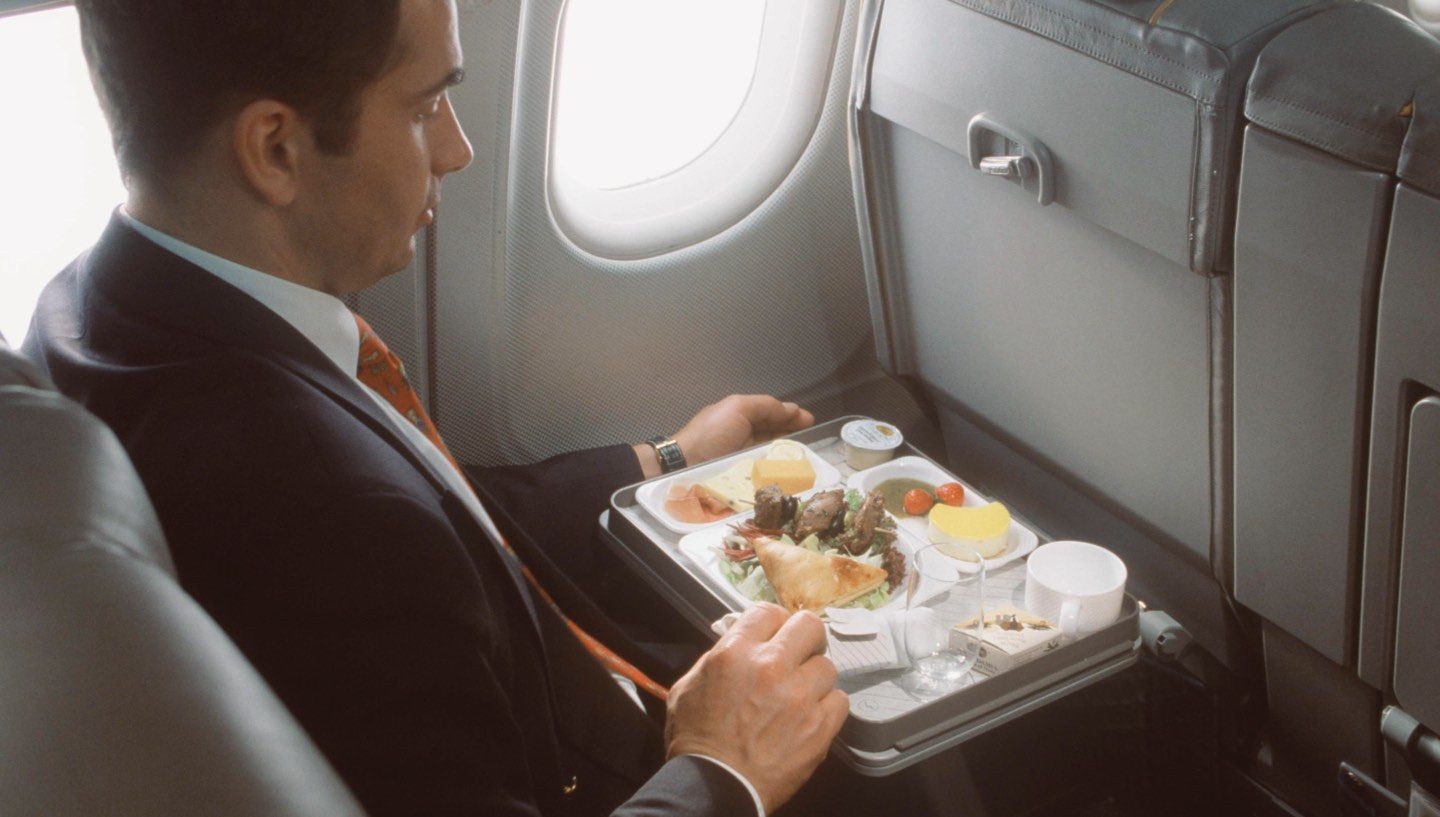
The culinary offering became more personalized in Business Class as well. A wider selection, a Quick Meal and a Last Minute breakfast demonstrated that in-flight service was now more strongly harmonized with flight time, time of day, and individual preferences. Characteristic of this stage were multi-course menus with freely combinable appetizers, main courses and desserts, supplemented by fresh breakfast ranges and smaller, flexibly combinable meals. Dining on board was therefore no longer a fixed sequence – it was now more aligned with the traveller’s own pace.
Lufthansa’s culinary signature
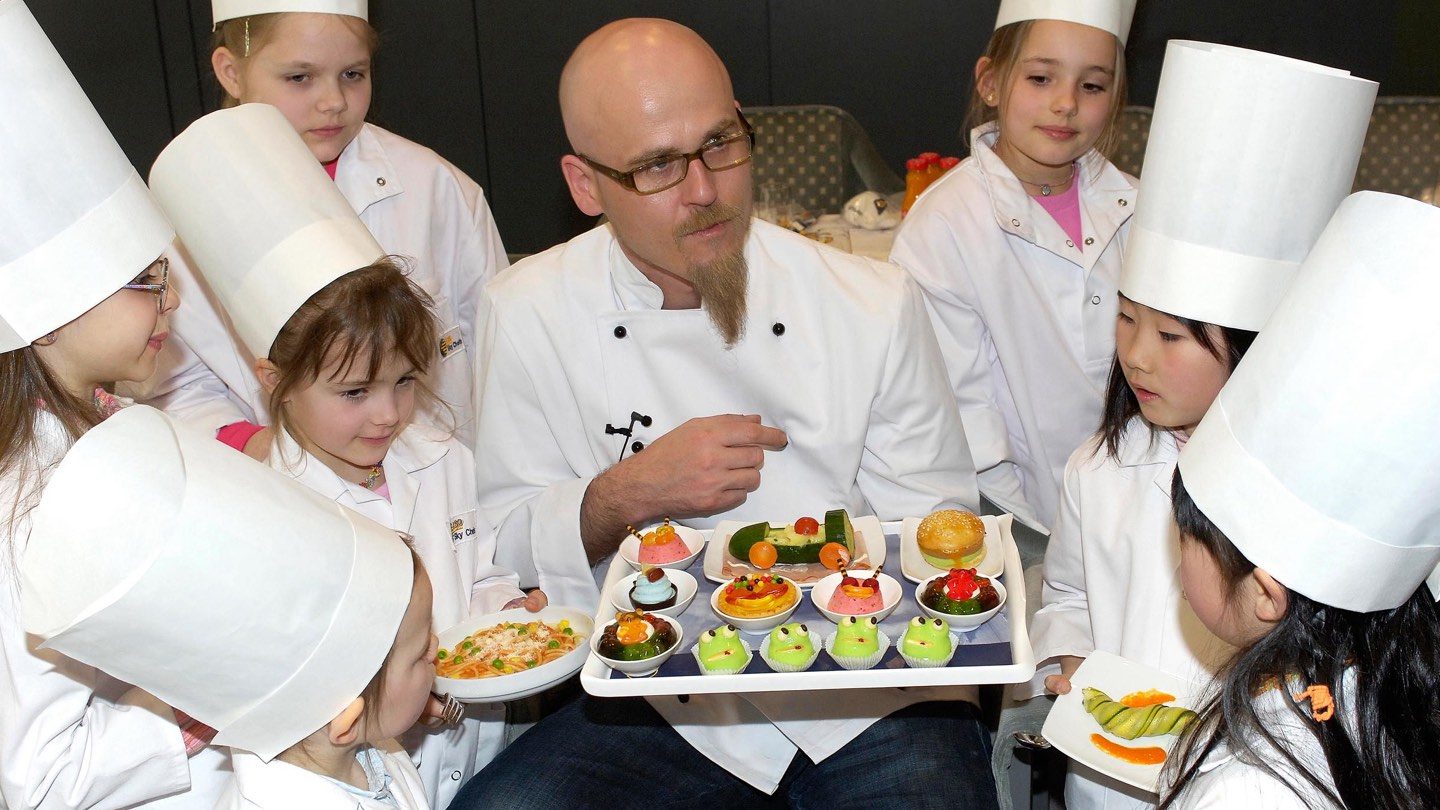
Right from the early years, chef stewards and specially trained on-board teams shaped the in-flight service experience. Later, chefs increasingly worked on recipes that were able to have an impact even at great altitudes. This is because the structure and consistency of foods, along with their taste, change at a height of 10,000 metres.
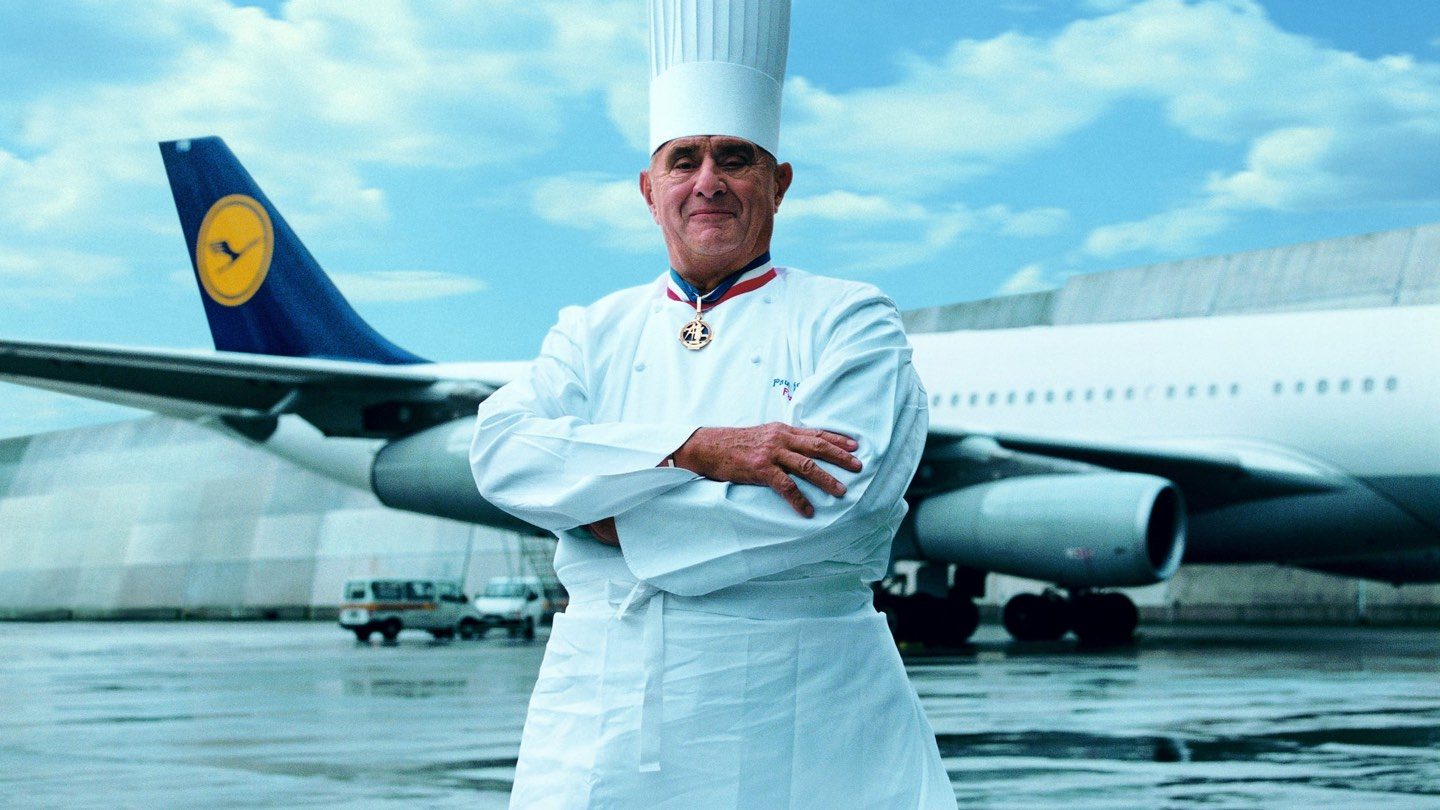
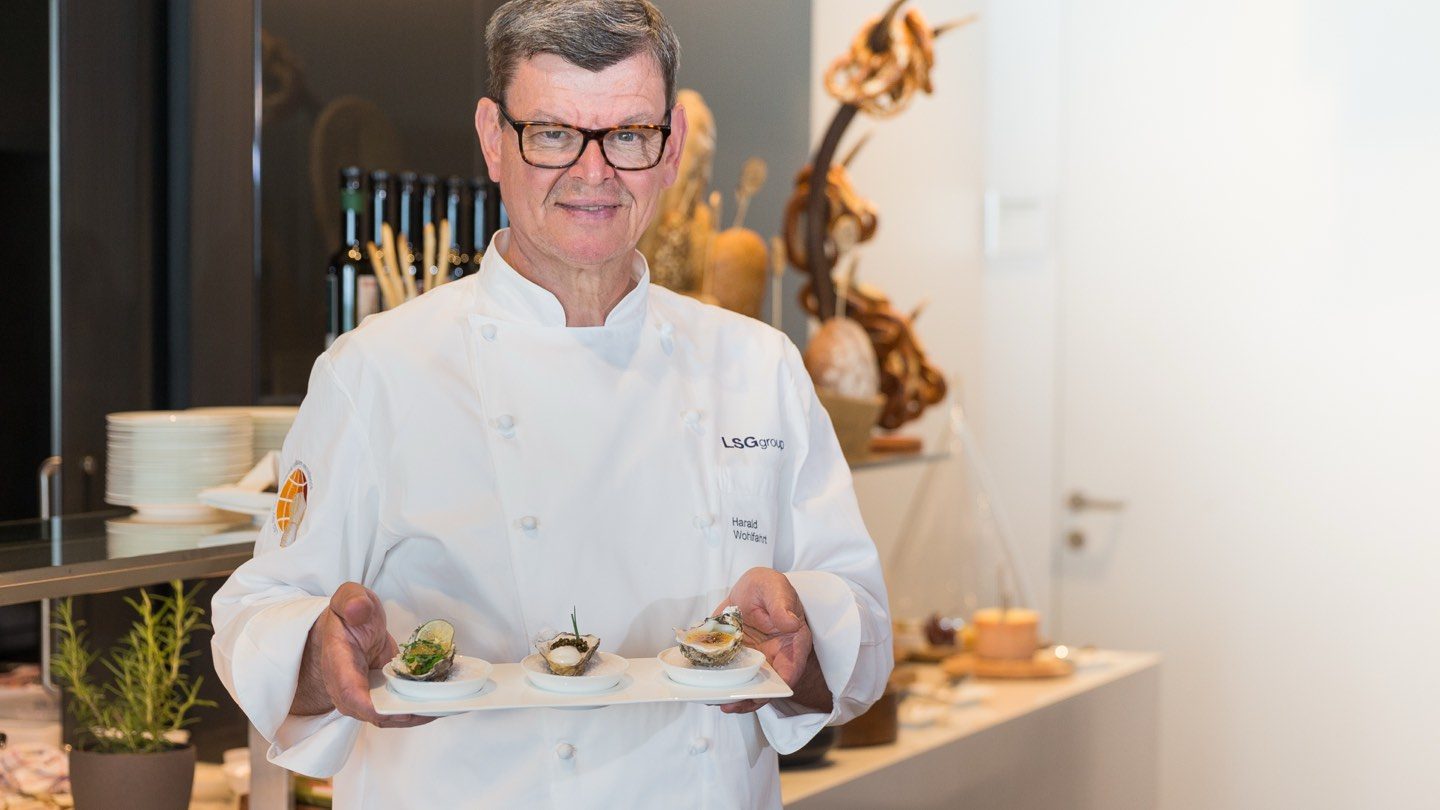
Thus, together with award-winning chefs, a unique culinary signature emerged ever more clearly from the late 1990s. Top chefs like Emile Jung, Marc Haeberlin, Paul Bocuse, Ralf Zacherl and Harald Wohlfahrt continued to develop the menus for First and Business Class, creating a culinary range that was consciously aligned with top-flight cuisine.
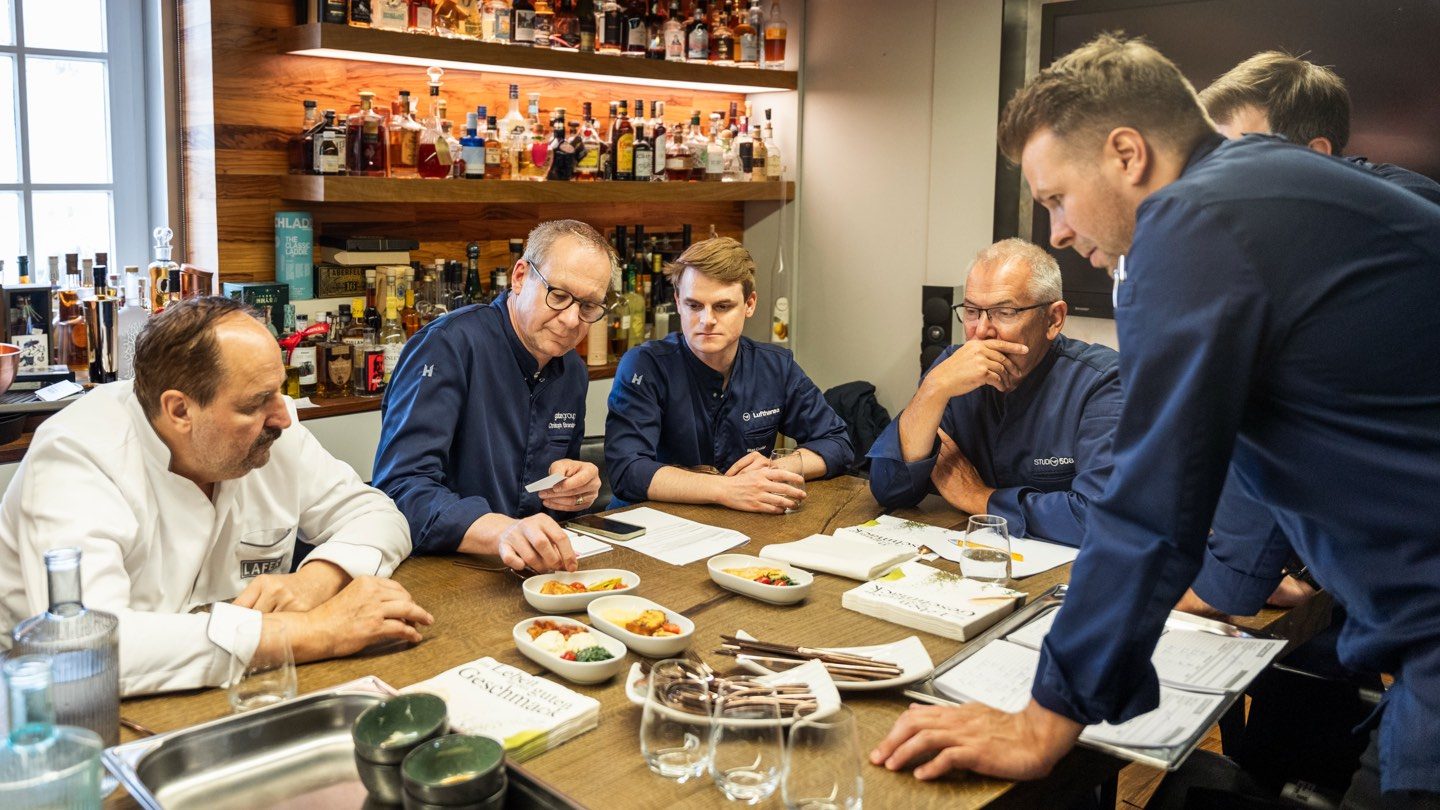
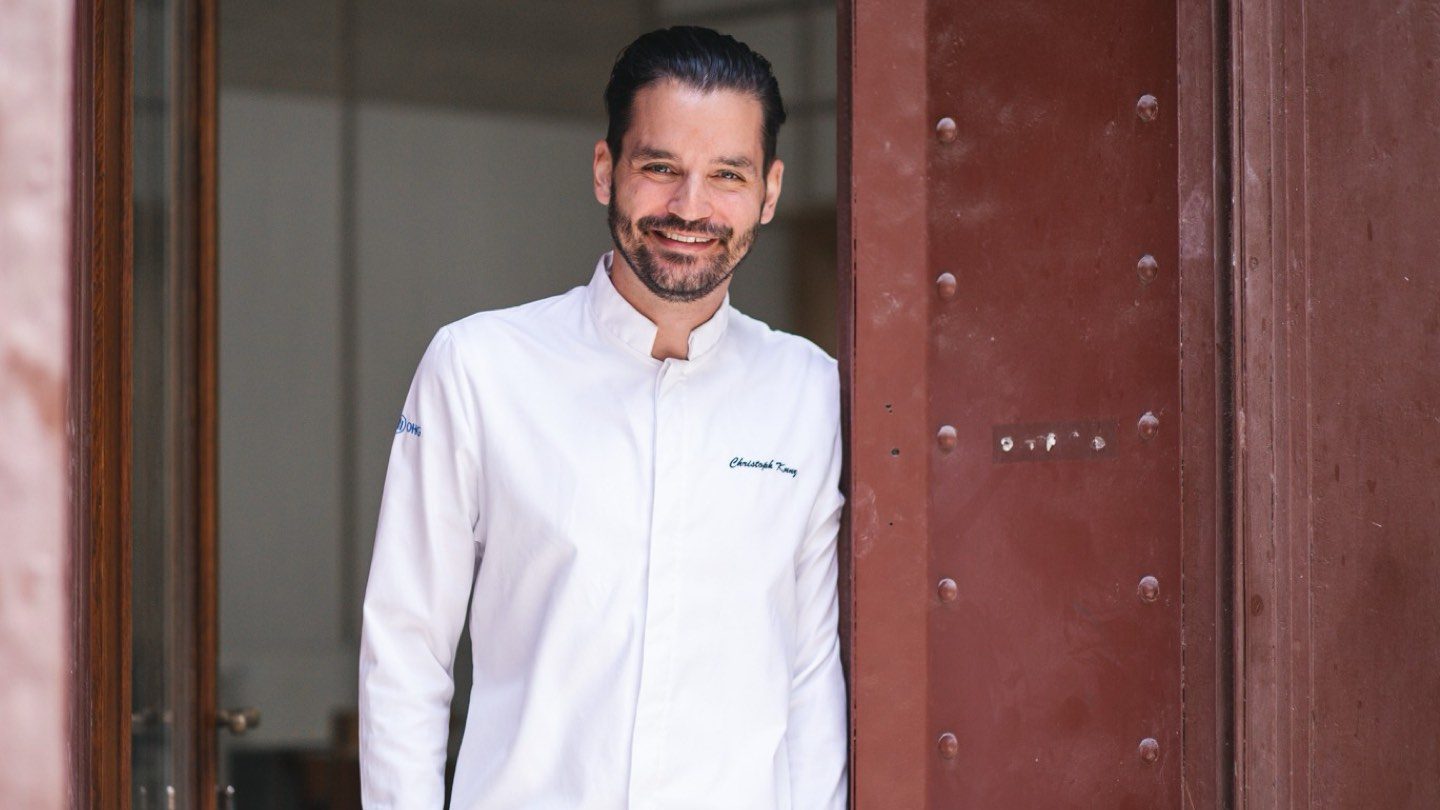
With Johann Lafer, co-developer of the Business Class concept since 2025, the idea of modern on-board indulgence is pursued to this day, with a focus on source, variety and seasonality. From 2026, award-winning chef Christoph Kunz too is inviting us to join him on a culinary journey, his exquisite tasting menus taking indulgence on board to a new level.
Ready for today’s culinary journey?
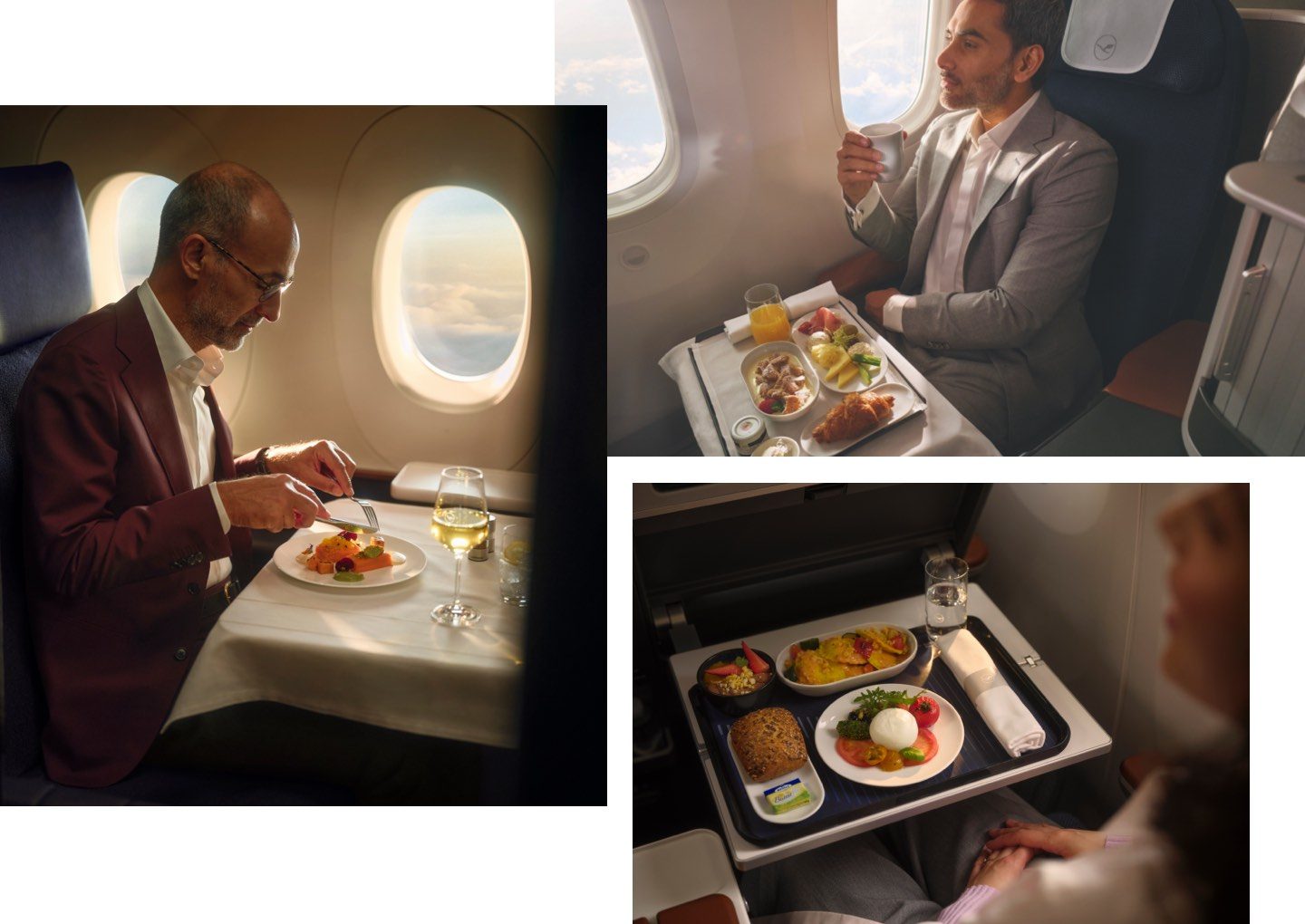
All routes lead to indulgence
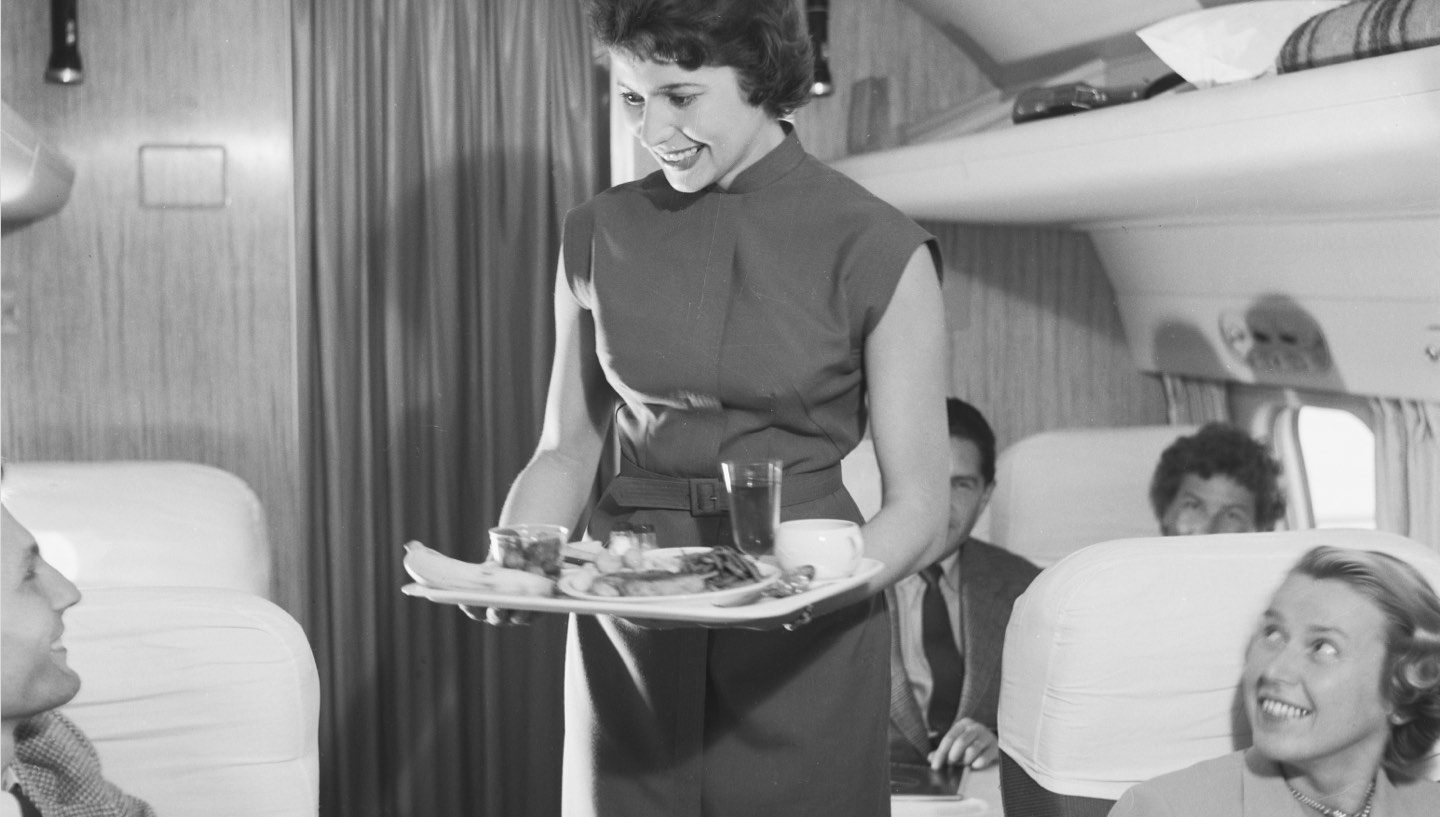
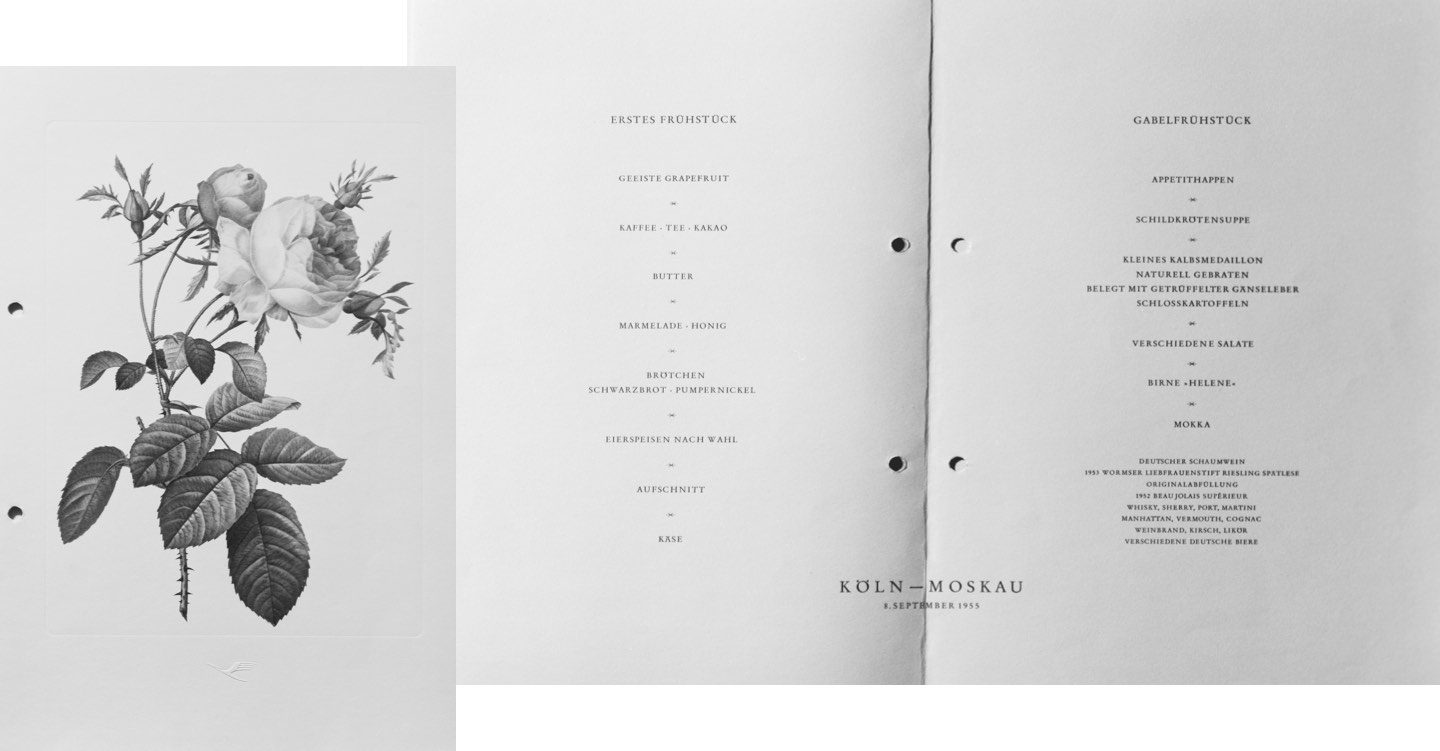
A look at how on-board menus have evolved reveals the close link between indulgence and travel culture. From the lavish menu comprising turtle soup and veal medallions through the exquisite lightness of nouvelle cuisine to the customizable à la carte service, dining on board has changed many times – and yet its significance has remained the same.
This is because a good meal above the clouds is more than an item on the schedule between take-off and landing. It’s about anticipation, an escape from the everyday, comfort and even sometimes the very first highlight of the journey.