

Five Things You’ve Always Wanted to Know About Flying
Why do the window shades have to be raised during takeoff and landing? Why does tomato juice taste better on a plane – and what do those mysterious “beeps” on board actually mean? We answer the questions you’ve probably asked yourself while on a plane
Is it true that the Captain and First Officer aren’t allowed to eat the same thing before takeoff?
At home, everyone can eat whatever they like. But during the flight, the cockpit crew never eats the same thing. That's actually mandatory. The goal is to minimize the risk of both pilots getting food poisoning at the same time.
What do the different beeps on board mean?
The inconspicuous beeps like “ping” or “ding-dong” on board an airplane are much more than mere background noise: though often barely noticeable to passengers, they serve as a communication system for the cabin crew. They signal, for example, that the aircraft has reached its cruising altitude or that the seatbelt signs can be turned off. Or that the flight attendants should go to the nearest intercom speaker, which are located in the front and rear sections of the aircraft cabin. Either because the cabin crew wants to communicate internally, or, for example, because the pilot needs something. They also sound shortly before landing so that the flight attendants can make all the necessary preparations.
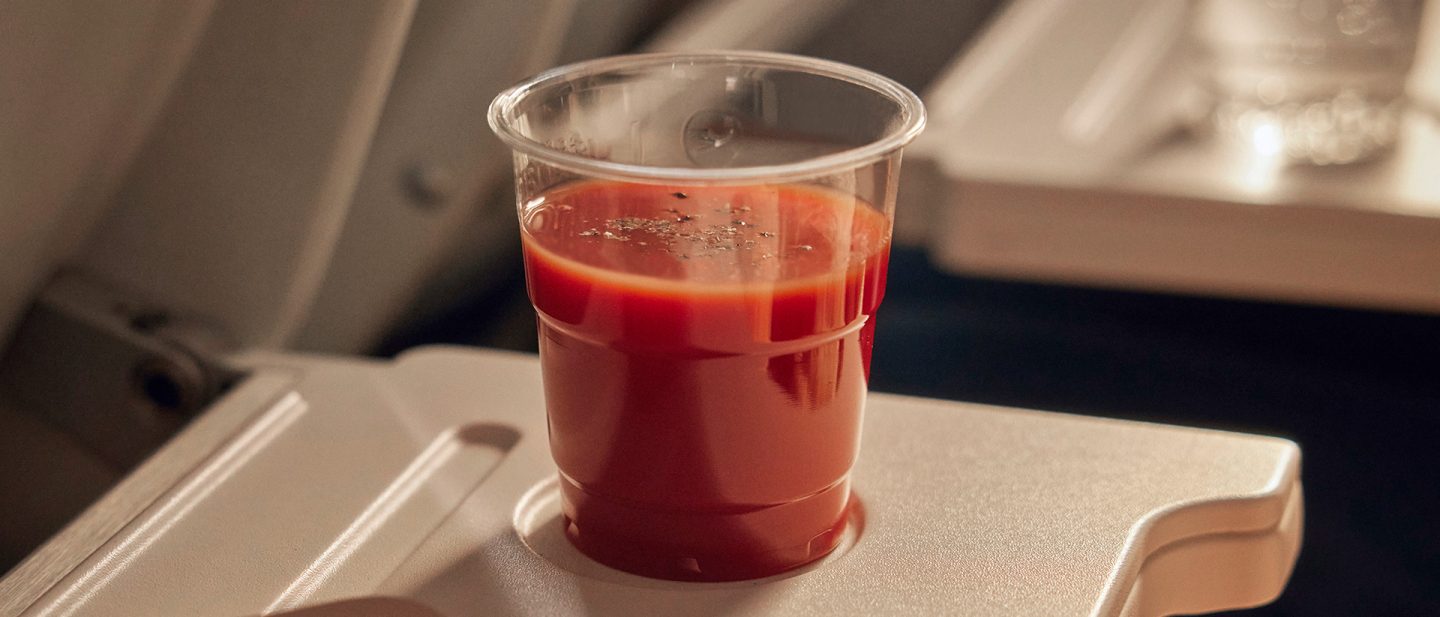
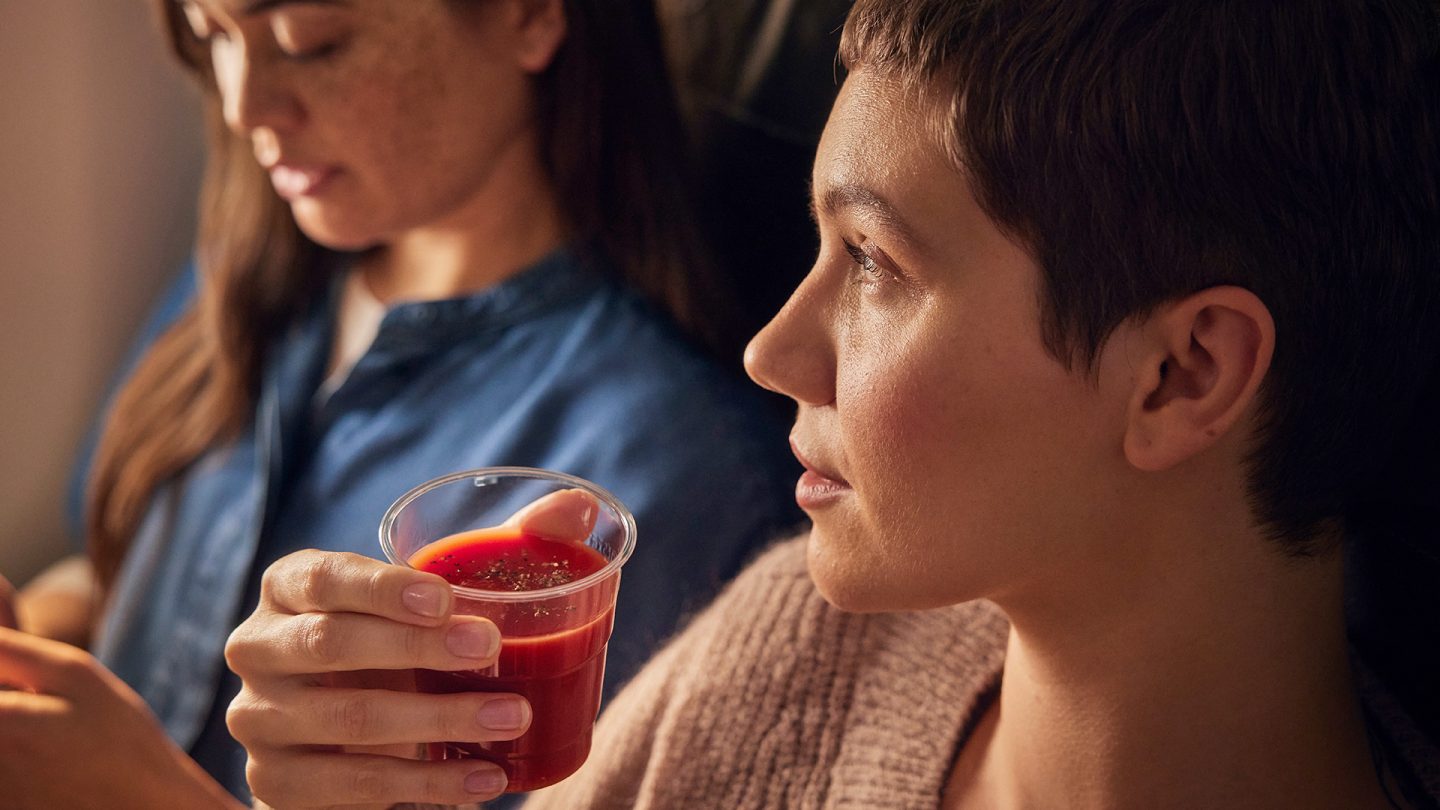
Why is tomato juice so popular at 30,000 feet?
Once the plane has reached cruising altitude, the air pressure in the cabin is lower and the air is relatively dry. This alters our sense of smell and taste, making it harder for us to perceive sweet and salty flavors. However, we can still taste the savory, umami flavor of tomato juice very well. In addition, tomato juice tastes fruitier, more refreshing, and less earthy above the clouds.
Why must the window shades be raised, the seatbacks upright, and the lights dimmed during an airplane’s takeoff and landing phases?
These rules are part of international aviation regulations to ensure safety during takeoff and landing. The window shades must be raised so that cabin crew can better assess the situation outside in an emergency. It also allows emergency responders to see inside more clearly from the outside. Reclined seats could also unnecessarily hinder an evacuation. Dimming or turning off the cabin lights during takeoff and landing serves a similar purpose: the emergency lighting that marks the path to the exits is much more visible in the dark.
Where do flight attendants rest during a long-haul flight?
On long-haul flights, cabin crew are required to take set rest periods. While passengers doze or watch movies, the flight attendants take turns retreating to hidden sleeping compartments. These crew rest compartments are located in different parts of the plane depending on the aircraft type. In the Airbus A350 or the Boeing 787 Dreamliner, they are often located in the upper part of the fuselage. In the Airbus A380, however, they are on the lower deck near the cargo holds. Inside, flight attendants find a surprisingly cozy, albeit rather compact environment: narrow berths, separated from one another by curtains, ensure privacy, and safety belts keep sleepers securely in their berths even during turbulence. There is also a wardrobe where they can hang their uniforms.
Everything you need to know at a glance
What’s the easiest way to check in? What entry requirements should I be aware of at my destination, and how should I best prepare my checked baggage? In our Travel Briefing, you’ll find helpful tips to make your next flight as comfortable as possible

Ready to take to the skies with your new knowledge?
Now that you know what goes on behind the scenes, it’s time for your next flight experience with Lufthansa.