


What I've Learned in Helsinki: My Experiences
Mikko Fritze was born in Finland to German parents and attended school in Helsinki. He later headed the Goethe-Institut there. His current job also relates to his country of birth – he runs the Finnish Institute in Berlin, where he lives. However, if he had the choice, he would move back to Helsinki. Why? He reveals the reasons here
The Essence: Urban, Yet Close to Nature
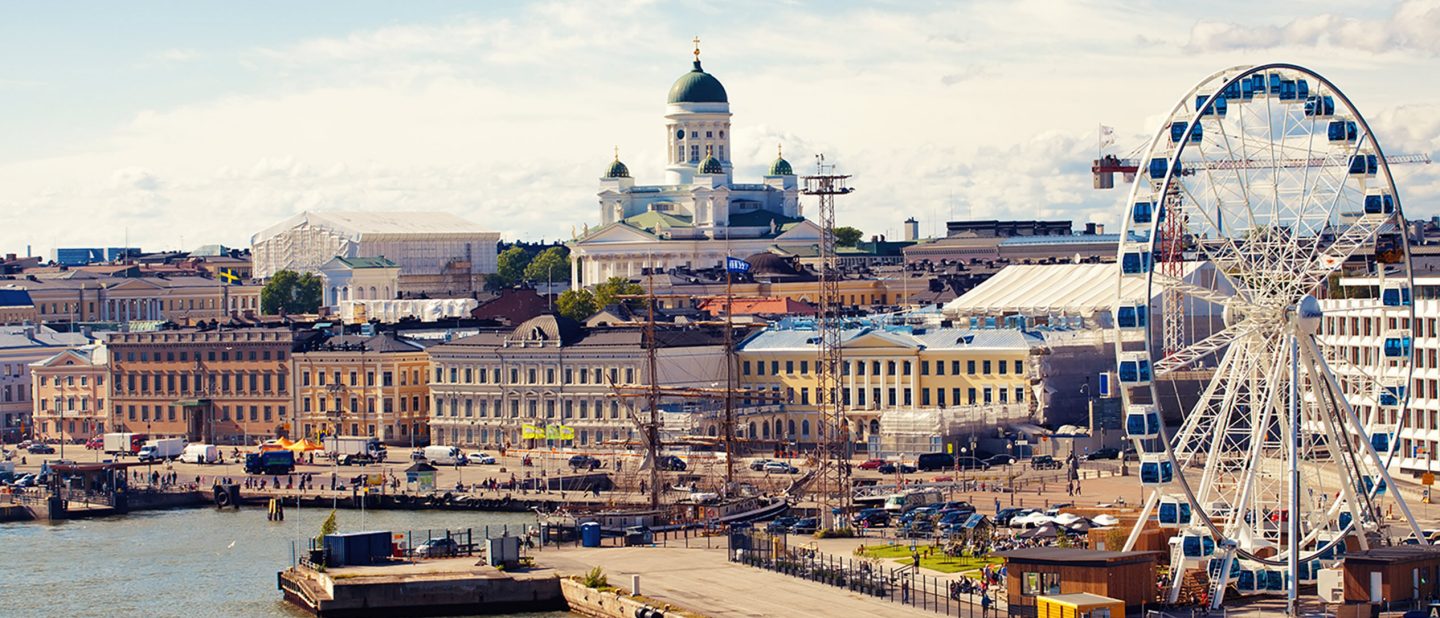
In Helsinki, people like to exaggerate a bit and say you can't walk for more than three minutes without reaching the water again. This unbeatable blend of land and sea, nature and urban life, is exactly what makes the city so endlessly fascinating. It's similar to Stockholm, which is surrounded by a comparable number of rocky islands. Growing up in Helsinki, I've always felt that something is missing whenever nature isn't just around the corner.
The Change: The Long Road to Becoming a Metropolis
I grew up at a time when Nokia was still making rubber boots instead of cell phones. And you definitely needed those in and around Helsinki. When I was a child, Finland was still very rural, and that was true for the Helsinki area as well. Our house, for instance, which was just outside the city, could only be reached by a sandy road. There was no subway back then, but since then Helsinki has grown into a modern European metropolis.


The Architecture: Helsinki's Monumental Buildings – and a Lot of Art Nouveau
Finnish design is, of course, world-famous for its simplicity and for the consistency with which it embraces the principle of form follows function. So you might imagine the city looks like a modernist dream envisioned by star designers like Alvar Aalto or Kaj Franck. But that's not quite the case. Helsinki is defined by landmarks such as its monumental central railway station and an abundance of art nouveau architecture. And it's easy to forget that Finland once belonged to Russia for a brief period – something that's still visible in Helsinki today.
The People: Dependable and Content
Yes, they really do exist: middle-aged men, gray-haired and tight-lipped, just like in the wonderful films of Aki Kaurismäki. But most people in Helsinki today are much more open, not least because the city has become more international and just about everyone speaks English. That doesn't mean you'll instantly make new friends or find yourself constantly invited into people's homes. But you can count on people to keep their word once something has been agreed upon. According to surveys, the people here are considered the happiest in the world – though I'd say they're more content than anything else.
The Culture: Small Country, Rich Offerings
Although Helsinki isn't a metropolis like Berlin or Paris, it offers a surprisingly rich and impressively diverse range of cultural activities. An extraordinary number of musicians, writers, and other artists come from Finland – a country with a population of only 5.6 million. Who knows, maybe it has something to do with the long, dark winters …
The Darkness: Coziness and Winter Sports on Short Days
In winter, the days are short. Very short. This can be quite depressing for many people here, especially foreigners – but I actually enjoy this time of year in Helsinki. On one hand, you can make yourself cozy at home with candles and a fire. On the other, you can walk between islands on the frozen sea, skate everywhere, and go cross-country skiing on well-maintained trails.
The Heat: In Helsinki, Sweating Is a Natural Part of Life
Public saunas are part of the city's DNA. Here, as in the rest of the country, people go to sweat together from childhood onward. It's important to note, however, that men and women usually use separate saunas. In the sauna, the typically reserved Finns often really come out of their shells. Perhaps this is because the sauna is treated as a matter of course here – it isn't part of a wellness trend, but simply a natural part of life.
For Friends: Excursions Into the Countryside, Finnish Cuisine, and Saunas by the Water
City and nature – I'd definitely want to introduce both to anyone visiting Helsinki for the first time. Let's start with nature: just 20 minutes from the city center is Lammassaari, a small island that feels like a little paradise. Along the nature trail, you can watch birds, climb to viewpoints, and explore the marshlands. A bit further away – but well worth the trip – is Nuuksio National Park. And you really can't miss Suomenlinna, an old fortress spread across several islands that's part of a UNESCO World Heritage Site.
A must-see is Oodi Central Library. Not necessarily to borrow books, but because libraries in Finland are so much more than that: they're places to meet, exchange ideas, work collaboratively, and even use sewing machines for free. Oodi, which only opened in 2018, is an architectural gem both inside and out.
Helsinki also has far more to offer in terms of cuisine than many people realize. I love how many restaurants preserve traditional approaches. That's why I enjoy going with friends for example to Kosmos, where French, Russian, and Swedish influences come together to create Finnish cuisine.
For the obligatory sauna session, we either head to the extremely chic Löyly, a sauna restaurant right on the waterfront, or to the free Sompasauna, which is a lot of fun and run entirely by its visitors. It's also located on the Baltic Sea, and after the sauna, you can simply jump into the cool water to refresh yourself.
About
Mikko Fritze was born in Tampere to German parents and lived in Helsinki from the ages of six to twelve. After spending time in Hamburg and Tallinn, among other places, he returned to Helsinki in 2010 as director of the Goethe-Institut. Since 2021, he has served as director of the Finnish Institute in Berlin, where he lives with his wife. He still visits Finland several times a year, not just for work.
More Insider Tips for Helsinki From the Lufthansa Insights Editorial Team
- Visit Kotiharjun Sauna in the Kallio district: Helsinki's last traditional wood-fired sauna (since 1928) is authentic, affordable, and hardly ever crowded with tourists.
- Walk on the frozen lakes: in winter, many lakes freeze over, but only venture onto the ice on clearly marked, locally recommended routes. To stay on the safe side, use artificial surfaces like the Johanneksenkenttä Ice Rink in the Design District or municipal rinks such as Brahenkenttä.
- Get around quickly: cycle along the central Baana route to travel from Kiasma to Ruoholahti without worrying about traffic. HSL City Bikes are available from April to October, making them perfect for short trips between museums, the waterfront, and the Design District.
Ready to discover the world?
Book a flight and write your own story. Our travel tips will make it unforgettable.