

"For Me, Airplanes Are Works of Sculptural Art"
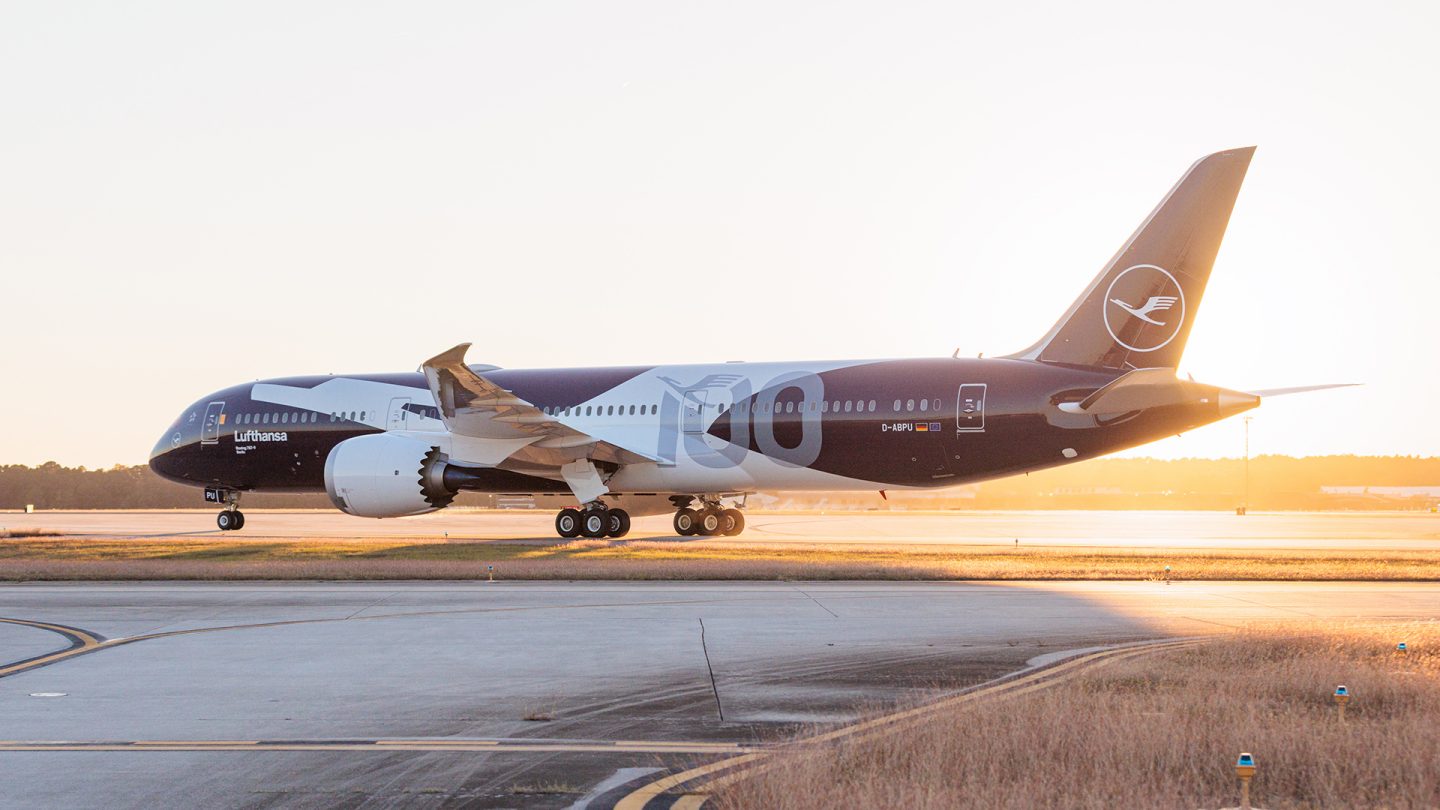
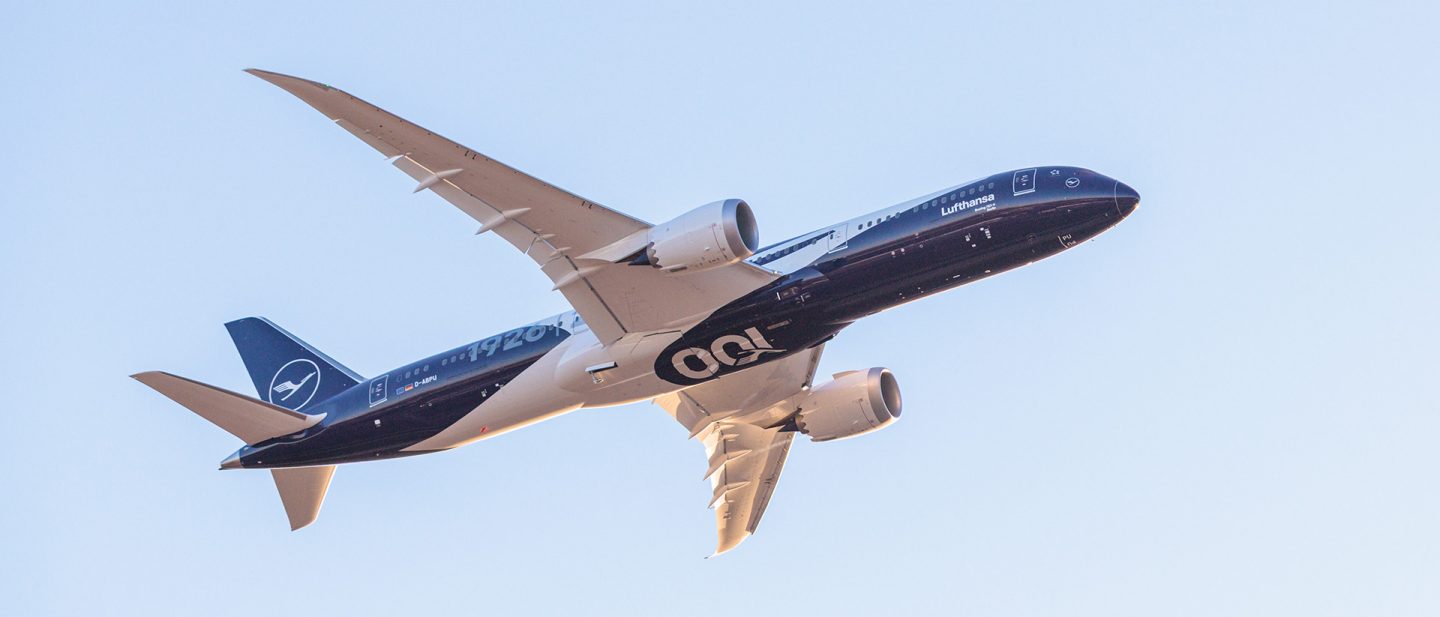
It looks like a bird taking flight: to mark Lufthansa's 100th anniversary in 2026, designer David Hedley Noble has covered a Boeing 787-9 with a special livery that resembles a giant crane. The inspiration for this anniversary design came from the Lufthansa Design Unit. We asked Hedley Noble how he finally implemented the idea
David, to mark Lufthansa's 100th anniversary, the airline is sending a very special crane into the air: a Boeing 787-9 with a special livery whose wings resemble those of a bird. How did this idea come about?
The large crane concept (or "Super Crane" as it is known!) has been around in Lufthansa’s brand design department in various forms for quite some time. It was one of the early concepts during the Lufthansa rebranding in 2018. The airline's 100th anniversary seemed like the perfect moment to bring it out again and integrate it into today’s livery. It deliberately breaks the mold, references the historic crane by graphic designer Otto Firle, and reminds us of what airplanes are at their core: giant birds that carry us around the world.
The aircraft featuring the anniversary design will take off for the first time in December – how does that make you feel?
Even though I've been working in the aviation industry for 30 years, I still get goose bumps when I see a design I have worked on for months and months at the airport. The only difference is that I now have gray hair. Inside, I'm still as excited as a little boy.
An Iconic Design to Celebrate Lufthansa’s 100th Anniversary
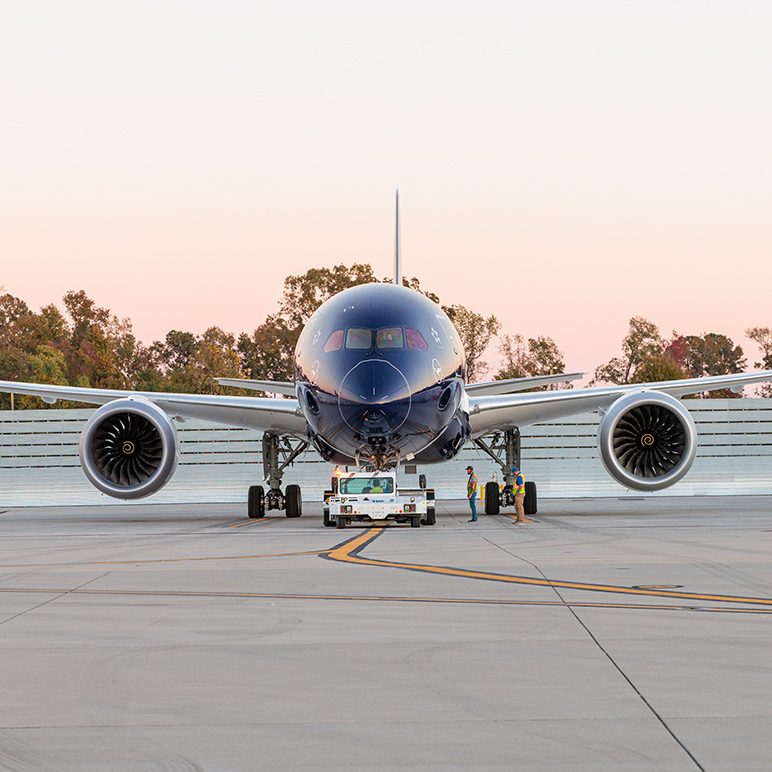
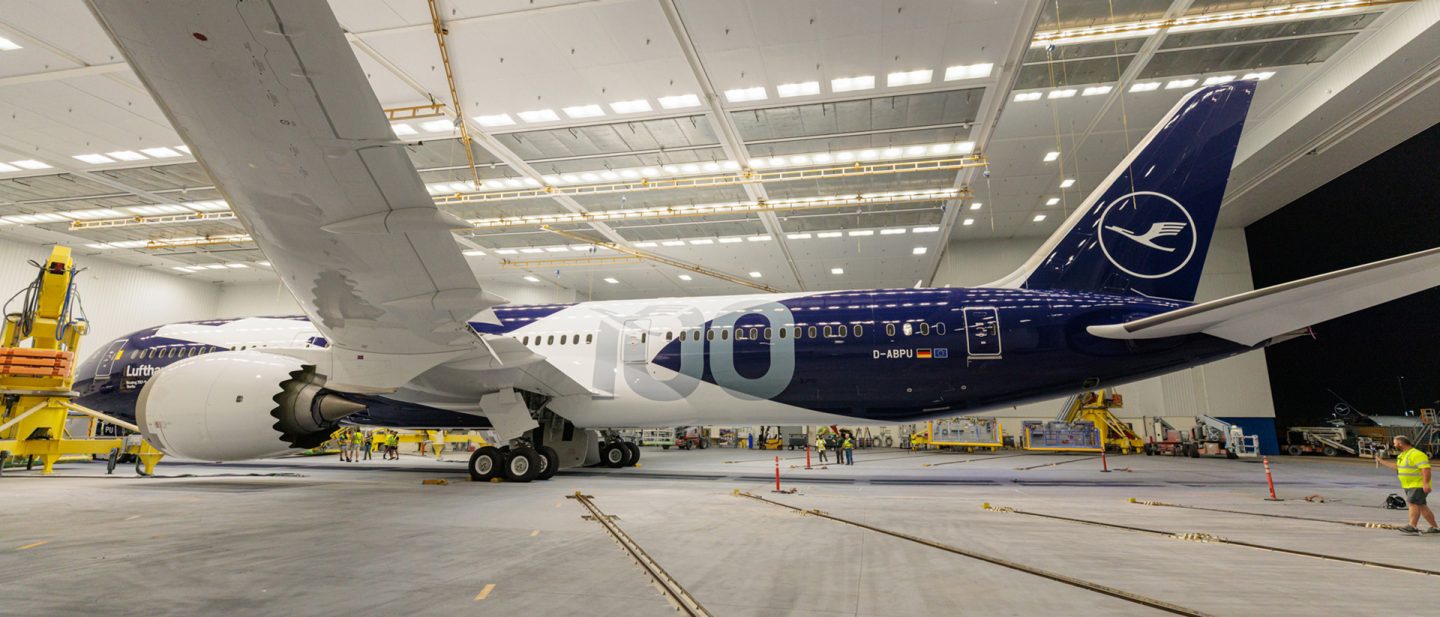
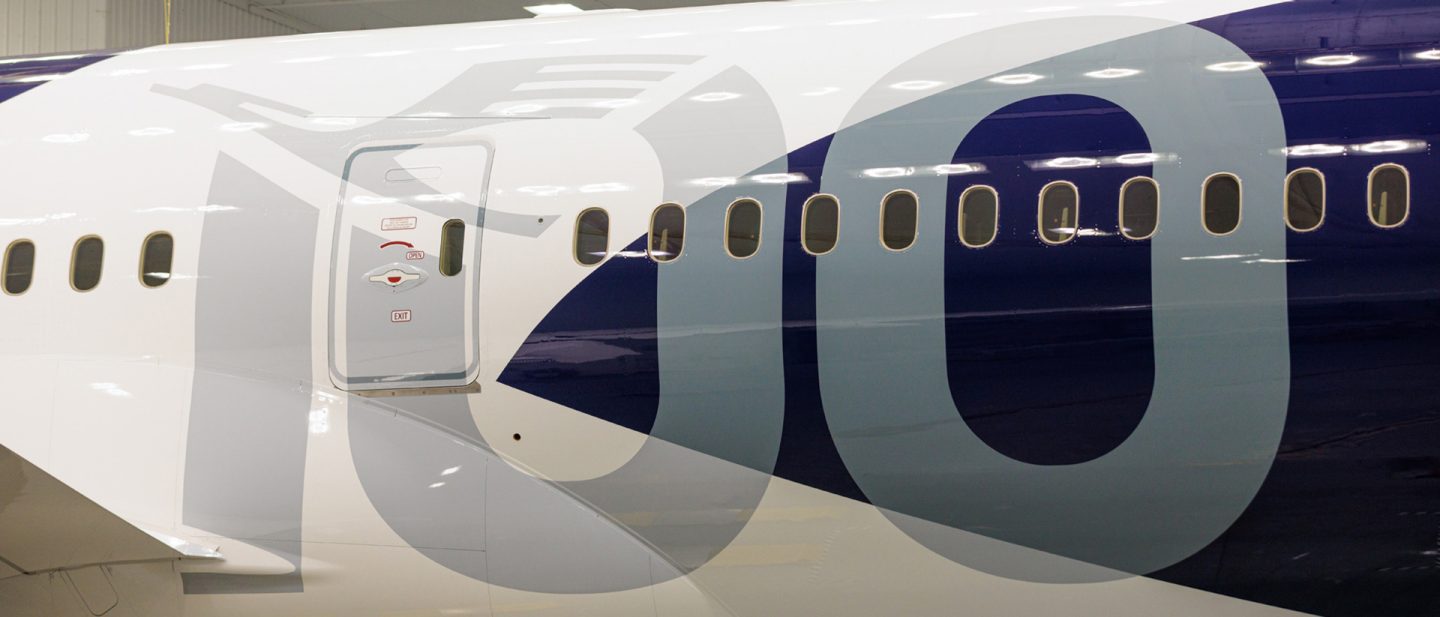
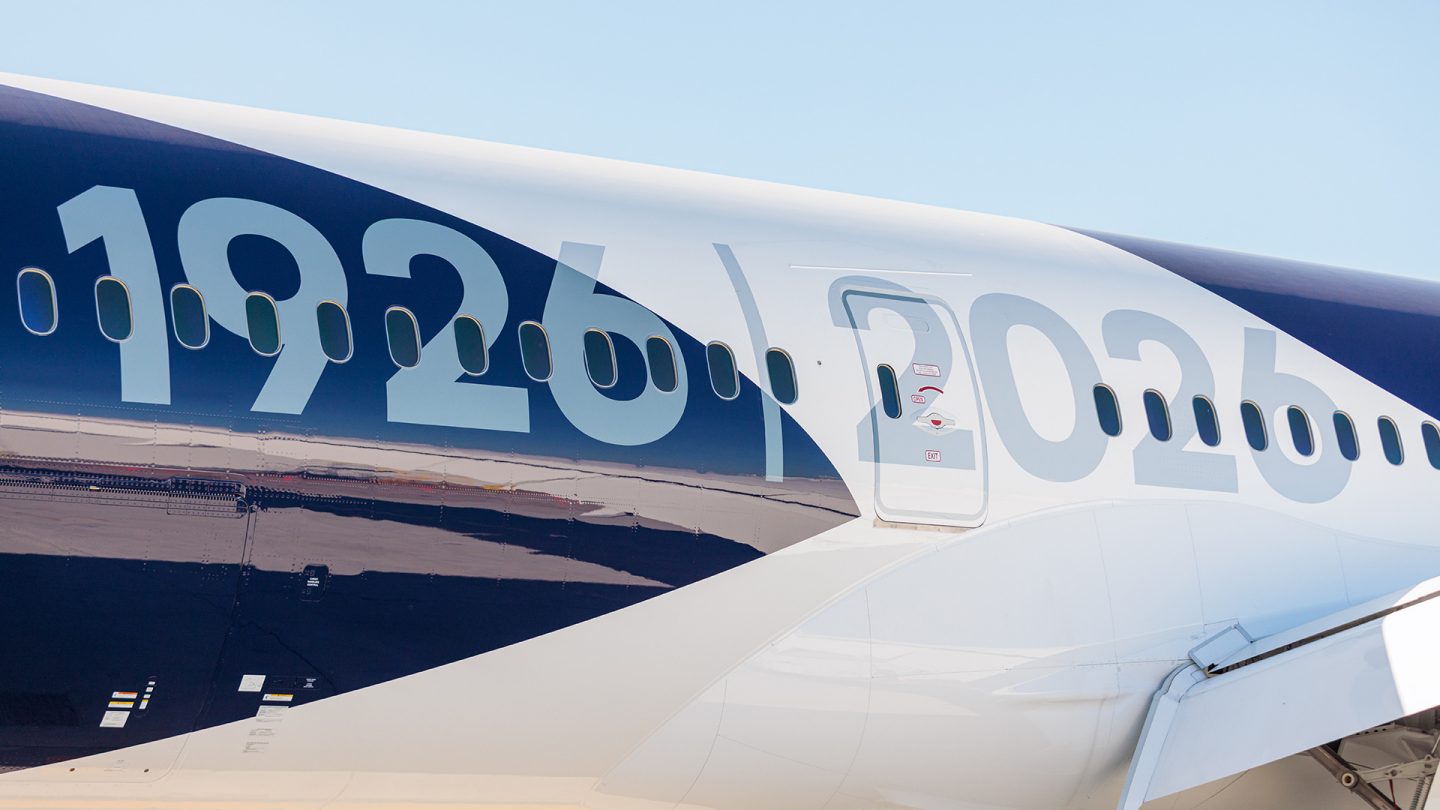
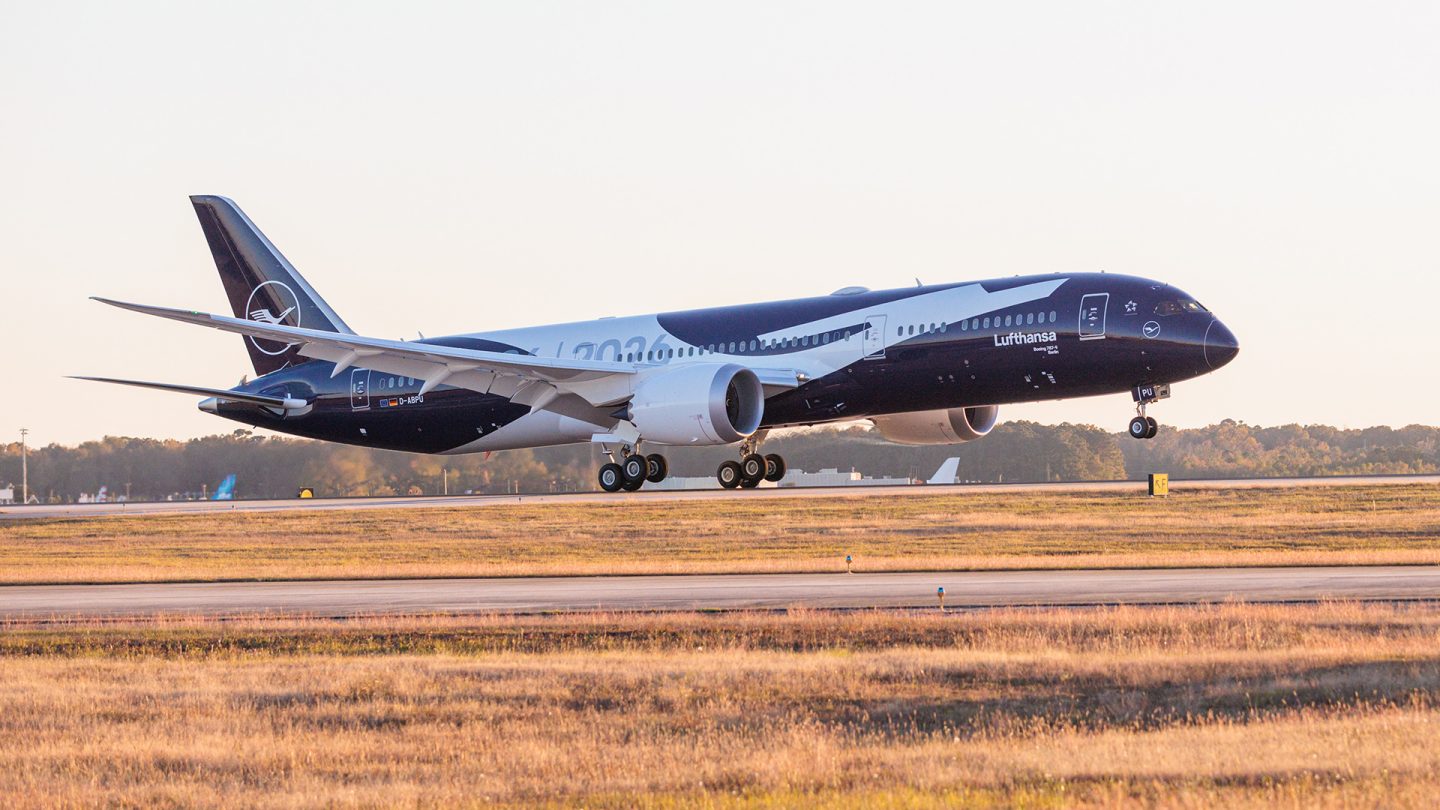
It predates Lufthansa itself, and yet no symbol is more closely associated with the airline than of the crane, lifting gracefully toward the sky. To celebrate Lufthansa’s 100th anniversary, this iconic emblem now stretches across the entire fuselage and wings of a Boeing 787-9, the first of six aircraft to boast the special design. Designed, from initial sketch to final rollout, by the Lufthansa Design Unit, the "Super Crane" radiates an especially strong presence. Striking and unmistakable, it stands for reliability, freedom, and openness to the world - values travelers have long associated with Lufthansa.
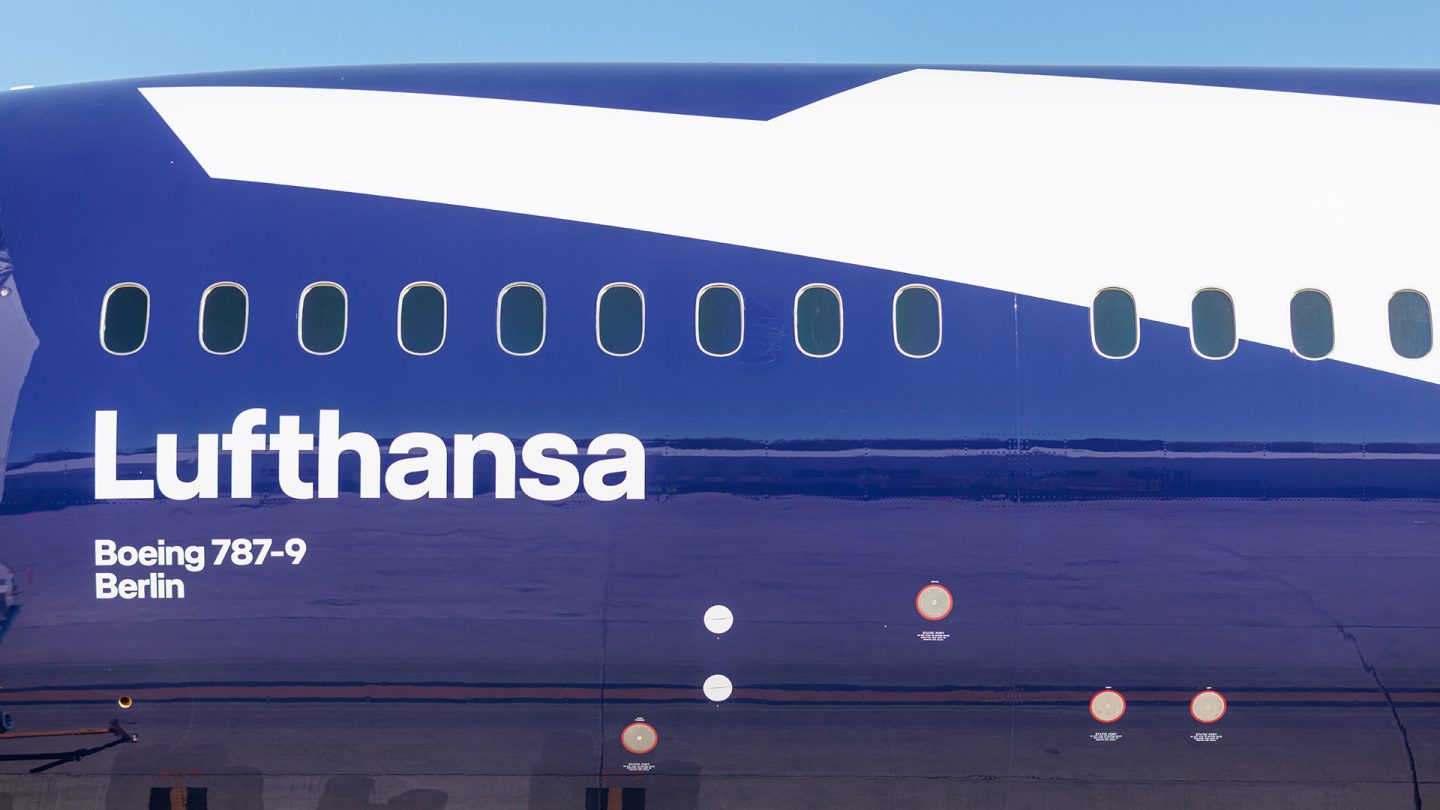
For the first time, a Lufthansa aircraft fuselage features a deep blue finish. In interplay with the white wings, the visual effect is striking: the crane seems to lift off in flight. Following the brand-new Boeing 787-9 Berlin, scheduled to arrive in Frankfurt this December, an Airbus A380, an Airbus A350-1000, an Airbus A350-900, an Airbus A320, and a Boeing 747-8 will also take to the skies bearing the soaring anniversary emblem.
There are lots of fashion and product designers, but very few design the look of aircraft. How did you end up doing this special job?
At the beginning of my career, I worked as an art director in a London agency – today a cereal box, tomorrow a car, the day after tomorrow a beer bottle. Lots of variety, but little focus. It was only when I was commissioned to work on a frequent flyer program in Latin America that I realized how exciting and diverse aviation can be for designers. I founded my studio, Aerobrand, and since then I've been designing everything from cabin interiors to aircraft liveries. For me as a designer, this industry is heaven. It's like a sandbox full of different toys.
What are the biggest challenges when designing new aircraft liveries?
It is important that I know every detail of the various aircraft types used by Lufthansa. That's the only way I can tailor the designs precisely to their different sculptural shapes. I’ve climbed all over of them and measured them very carefully. When you paint an airplane you are up very close. You spend two or three weeks in a hangar with your baby. You look at every detail of it to really understand it: its curvatures, the way the wings join to the fuselage. For me, airplanes are works of sculptural art.
Why is it so important to pay attention to every little detail?
Because everyone has a smartphone these days, people are constantly taking photos of aircraft and posting them online. That's why I can't afford to make any mistakes and have to make sure that the aircraft looks good from every angle. Even from above! If you make a mistake, someone is bound to find out.
When designing for aircraft, it's important to think big. How do you ensure that the design fits the plane seemlessly?
Over the years, my team and I have developed 3D models of various aircraft types. These models are extremely accurate and help us create three-dimensional designs. When we then apply the template for the paintwork to the aircraft in the hangar, everything fits perfectly.
International airports are a bit like a catwalk for different aircraft designs. What makes Lufthansa's design unique compared to those of other airlines?
It is classic and timeless. Like a good suit that you take out of your closet again and again. Aircraft design should never be based on trends, but must last at least 20 to 30 years. The formula behind it is as simple as it is challenging: maximum reduction. Complexity is easy to create, but true design artistry is revealed in omission. This is exactly what graphic designer Otto Firle achieved over a hundred years ago. With his streamlined, highly stylized crane, he created a symbol that still radiates modernity today.
Nevertheless, the shade of blue used by Lufthansa in 2018 was changed and the classic egg yolk yellow removed from the planes. Why was that?
The aim was to make Lufthansa's modern understanding of premium quality tangible in the design. For me, this also includes a clearer color language. The Lufthansa blue is very sophisticated, almost 3D in its reaction to light. Whether in fog or bright sunlight, it always looks its best. The yellow wasn’t completely removed, of course. Instead, it is used in more personal, surprising ways. The Welcome Panel as you enter the aircraft for example.
Can we expect more special liveries in Lufthansa's anniversary year?
Absolutely! I've just transferred the design of a Lufthansa Lockheed Super Star from the 1950s to an A321. It was great fun adapting the retro design from back then to a state-of-the-art aircraft. I can't wait to see this very special aircraft take off for the first time in January. The A350-1000 will also feature a special livery in 2026 to mark Lufthansa's 100th anniversary. Stay tuned for others!
About
Anglo-Irish designer David Hedley Noble creates creative liveries for various airlines, transforming aircraft into flying canvases. His design studio Aerobrand, based in London and New York, will celebrate its 30th anniversary in 2026.

Ready to discover the world?
Book your flight and find new inspiration – wherever the journey may take you.