

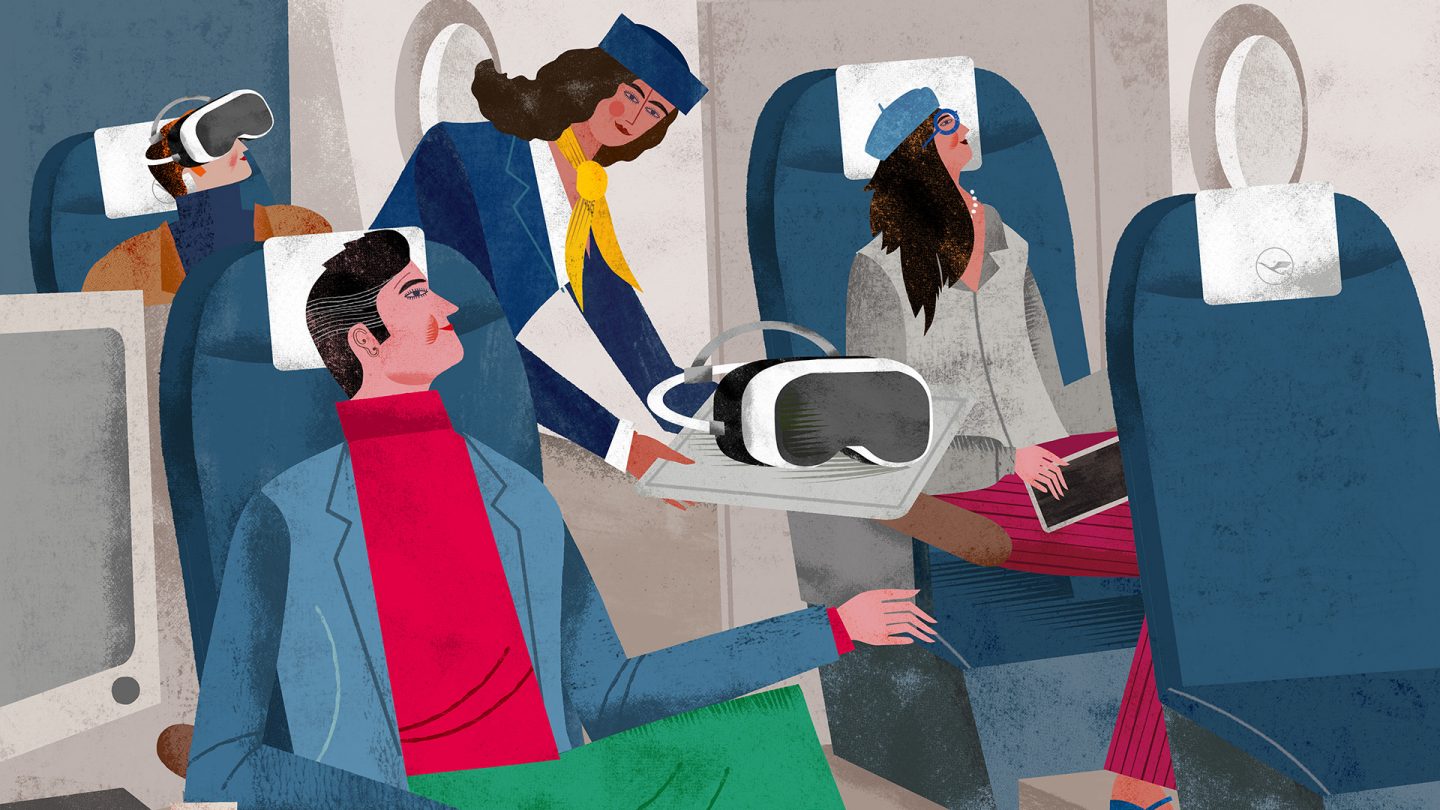
Virtual Reality Above the Clouds: Lufthansa Enters a New Era of In-Flight Entertainment
Lufthansa is leading the way as the first airline to make the leap into the virtual reality era. By providing VR headsets on board, the airline is pushing the boundaries of in-flight entertainment and demonstrating that the future of travel has already begun
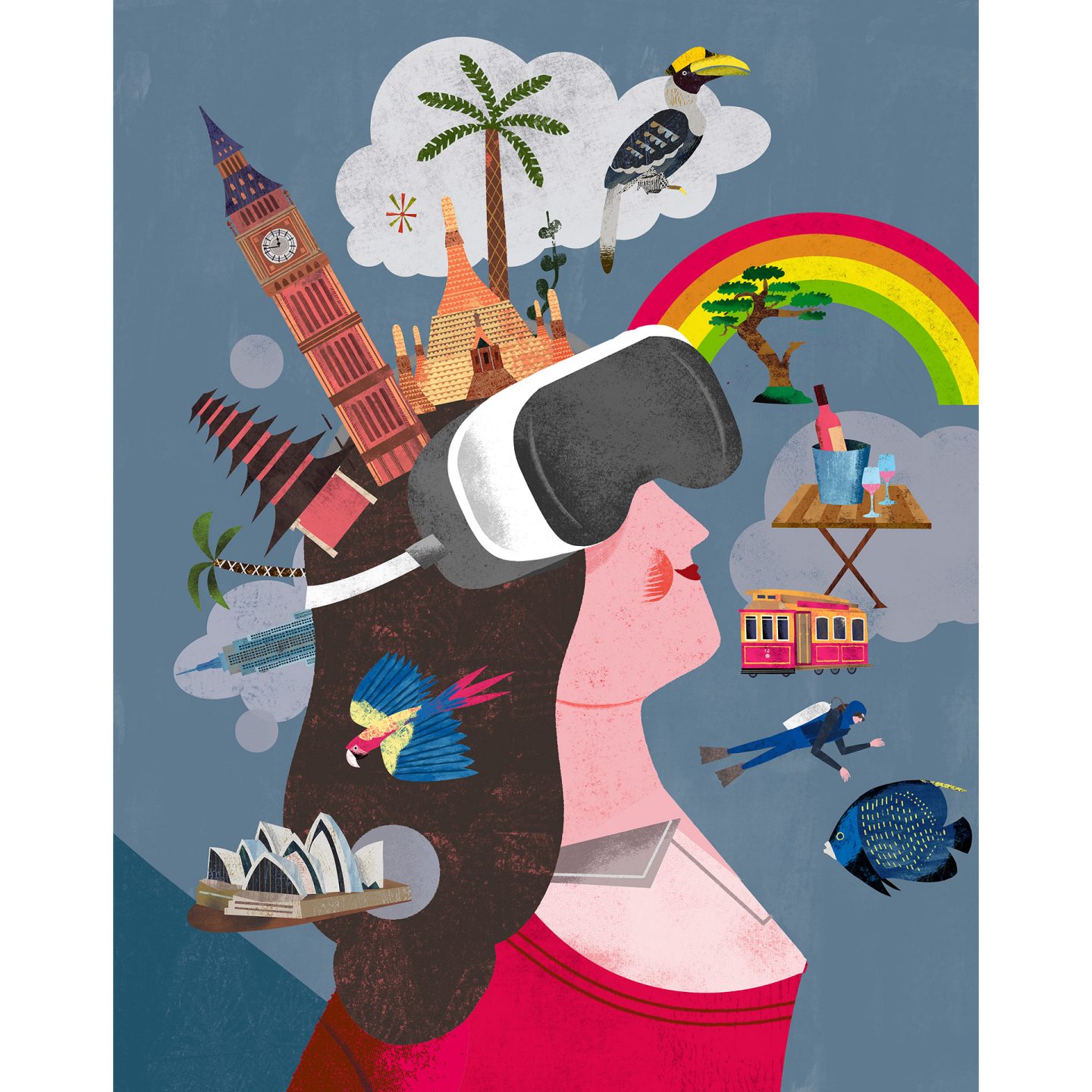
Imagine you are boarding an airplane. Your destination: New York City. Shortly after takeoff, skyscrapers rise up next to you, the Statue of Liberty appears on the horizon. You are already there. You walk through the canyons of the Big Apple and look down from the Empire State Building over the seemingly endless sea of skyscrapers and the Hudson River. Then, you stroll through the lush greenery of Central Park. A little later, you float over the monumental Brooklyn Bridge.

What sounds like a dream, as if you had dozed off immediately after takeoff, becomes a reality with Lufthansa. Virtual reality, to be precise. The Lufthansa Group has teamed up with the technology company Meta and the agency MSM.digital to expand Lufthansa's in-flight entertainment with virtual reality. In the initial testing phase, 4,000 passengers used the innovative Meta Quest 3 headset to immerse themselves in other worlds as if in a dream.
Immersive Experiences on Board
"We are always on the lookout for innovations," says Rena Engelke, who works in Customer Journey and Experience Design at the Lufthansa Group. "We wanted to find something that would create real added value and make our guests' flight experience more emotional, more individual, and more forward-looking." It's an offer that goes beyond screens. "It's immersive, surprising and inspiring," says Engelke.
The idea of bringing a virtual reality experience to the aircraft emerged during the presentation of the new Lufthansa Allegris cabin in February 2023. Selected customers who could not attend the official launch event in Berlin were able to explore the seats virtually with preconfigured VR glasses. "The response was incredibly positive, and we recognized the potential of this technology," says Engelke.
During the first test of the innovative in-flight entertainment program in early 2025, passengers in Lufthansa Allegris Business Class were able to try out very different content specially designed for this purpose. While listening to a podcast about their destination, the Meta Quest 3 glasses brought what they were hearing to life, allowing the testers to virtually explore the cafés, museums, and sights of their destination.
Others watched a blockbuster movie. Thanks to the headset, they no longer felt like they were on board an airplane, but rather in a virtual cinema auditorium. Some sat at a table with another guest and played Connect Four or chess, even though the other person was sitting a few rows away. "The special thing about this technology is that it can create a 'sense of presence'," says Camillo Stark, Deputy Managing Director at MSM.digital. "People really forget that they are sitting on a plane."
Some passengers were initially reluctant to put on the headset. In the end, however, everyone was delighted. "Many passengers emphasized that they didn't feel like they had just spent several hours on the plane," says Engelke. "They found their long-haul flight extremely entertaining, and they thought using the headset was surprisingly pleasant and intuitive." Carolina Schymczyk, who works in Customer Business Development at the Lufthansa Group, highlights another motivating factor for the team to push ahead with the project: "The test runs have shown that our guests not only accept the virtual reality offer enthusiastically, but they even describe it as an important factor in their future airline decisions." According to Schymczyk, this confirms that such innovations create real added value and have enormous potential to change travel experiences in the long term.
Challenges Solved: Sensors and Safety
The intuitive control system, which uses hand movements instead of a controller, was also very well received. Even an 83-year-old woman with little affinity for technology could operate the system with little introduction, recalls Engelke.
However, manual operation was one of the many challenges to using virtual reality in the aircraft. "The headset has numerous highly sensitive sensors for motion detection, spatial orientation, tracking, and stabilization," explains Bastian Schütz, Head of XR in Travel at Meta, who is driving the development of virtual reality experiences for travelers. "These sensors are designed to work in a stable environment. However, an airplane is constantly moving; it accelerates, climbs, descends, and sometimes flies through zones of turbulence." To solve this complex challenge, Meta developed a travel mode. "It's a special feature that dynamically adapts the sensor technology and optimizes tracking for mobile environments," says Schütz.
Lufthansa is a pioneer in the use of virtual reality on board. The travel mode technology was developed in close cooperation with the airline and tested in its flight simulators before being used on board. "This partnership was essential to ensuring that the technology works perfectly under real flight conditions," says Schütz.
When it comes to flight safety, this is, of course, a top priority for Lufthansa. Strictly speaking, the virtual entertainment system is not virtual reality; it's mixed reality. This means that only part of the field of vision is overlaid with virtual elements, ensuring passengers can still perceive their actual surroundings. They can hear announcements from the pilot or cabin crew and see warning signs without any problems. "Passengers remain in full control of their environment – this is crucial for safety, comfort, and seamless integration on board," says Schütz.
Virtual Reality on Board: A Glimpse Into the Future
Looking into the future, the possibilities of mixed reality seem almost endless: experiencing live concerts from the front row, cheering on soccer or basketball teams from the sidelines, participating in important business meetings as a photorealistic avatar, or watching a movie on synchronized virtual screens with the family sitting on the sofa at home – all while being on a plane.
"Virtual reality devices will become the primary personal devices of many travelers," predicts Stark. "Airlines like Lufthansa that prepare for this future now and create the infrastructure for virtual reality offerings are laying the foundations for a new era of in-flight entertainment." And Lufthansa is the first airline to enter this new era.

Ready to discover the world?
Book your flight and find new inspiration – wherever the journey may take you.