

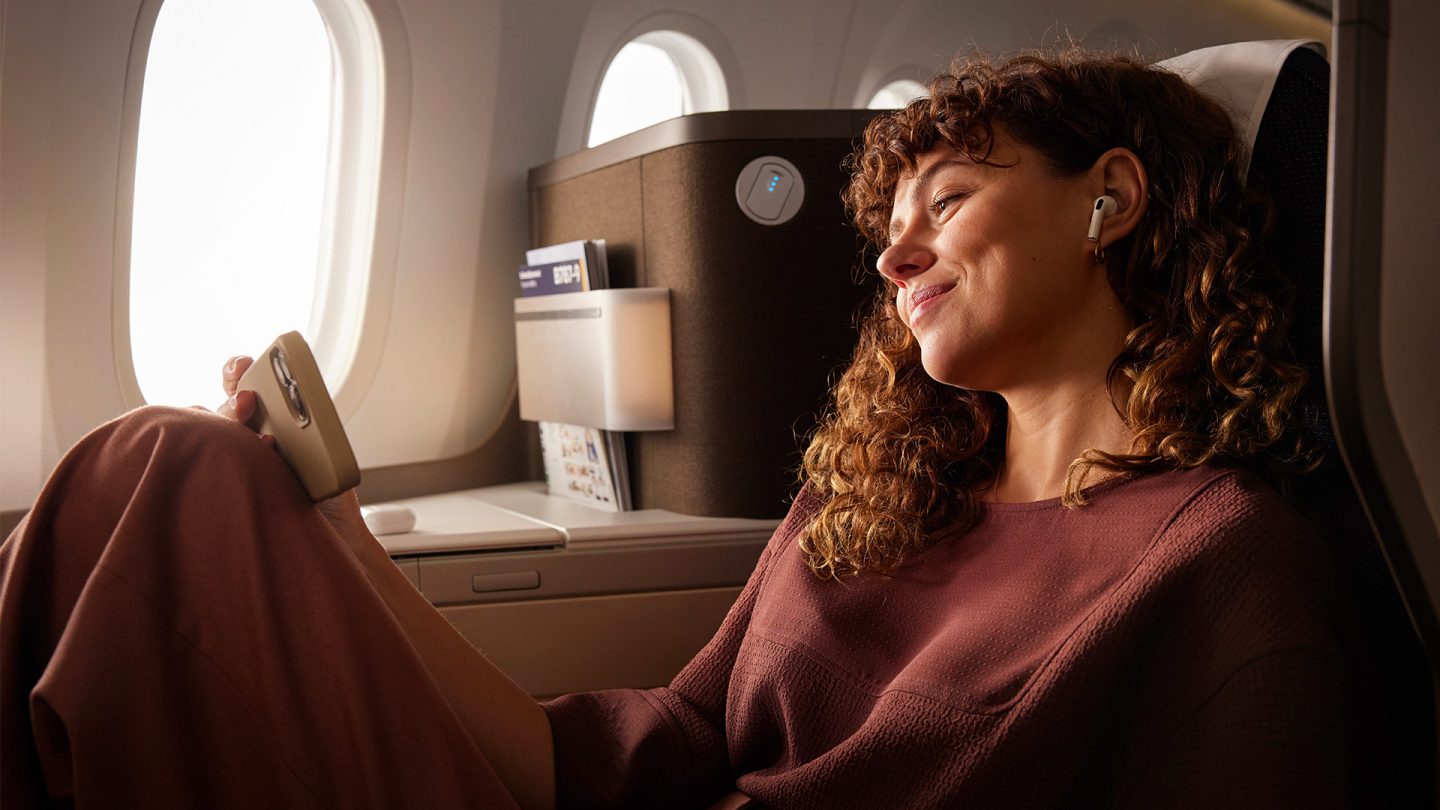
Above the Clouds, but Connected to the World
The Lufthansa Group will be equipping its entire fleet with high-speed internet from Starlink by 2029. The system has been installed for the first time at Lufthansa’s Technical Fleet Management maintenance center at Berlin Brandenburg Airport (BER) in a Lufthansa Airbus A320neo. We visited the site
The Airbus A320neo “Freising” stands in the Lufthansa maintenance hangar at BER Airport with scaffolding around its nose and tail. Mechanics in yellow Lufthansa safety vests hurry through the space. A female technician is working on one of the engines – thanks to sophisticated gear technology, these are among the most advanced turbines in modern aviation. Muffled voices and the sounds of work being carried out drift from within the aircraft. Outside, rain is pounding on the tarmac, and the rumble of thunder echoes around.
Inside the hangar, there’s little sign of the bad weather. Eight aircraft can be serviced simultaneously at the Berlin facility. Around 220 technicians and engineers working in three shifts, along with 40 administrative staff from planning, engineering, and product management, work to keep the aircrafts’ downtime as short as possible. The “Freising” has been in the hangar for two weeks; it’s undergoing what’s known as a C-Check, a scheduled inspection – and so far, everything is going according to plan. Just Business As Usual Then?
Quite the contrary. For the on-site staff, Lufthansa Airlines, and the Lufthansa Group as a whole, this stormy early summer day marks a first. The “Freising” is the first aircraft in the Lufthansa fleet to be equipped with high-performance internet access from Starlink – visible to passengers as Lufthansa Group Wi-Fi. The system ensures reliable and secure internet access on board at all times, with only minimal latency.
“High-Speed Internet from Gate to Gate”
“With Starlink, we can offer our passengers high-speed internet from gate to gate for the first time,” says Christian Radius. The aerospace engineer is responsible for the technical execution of the Starlink installation at the BER site and serves as the point of contact for the production team in the case of any implementation questions. After the “Freising,” plans are in place to equip another 15 Airbus A320neo aircraft here. Lufthansa Technik’s heavy maintenance facilities in Budapest and Sofia are also being utilized at the same time. By 2029, the entire Lufthansa Group fleet – approximately 850 aircraft – is expected to be equipped with the Starlink system. This would make it the largest European airline to use this technology.
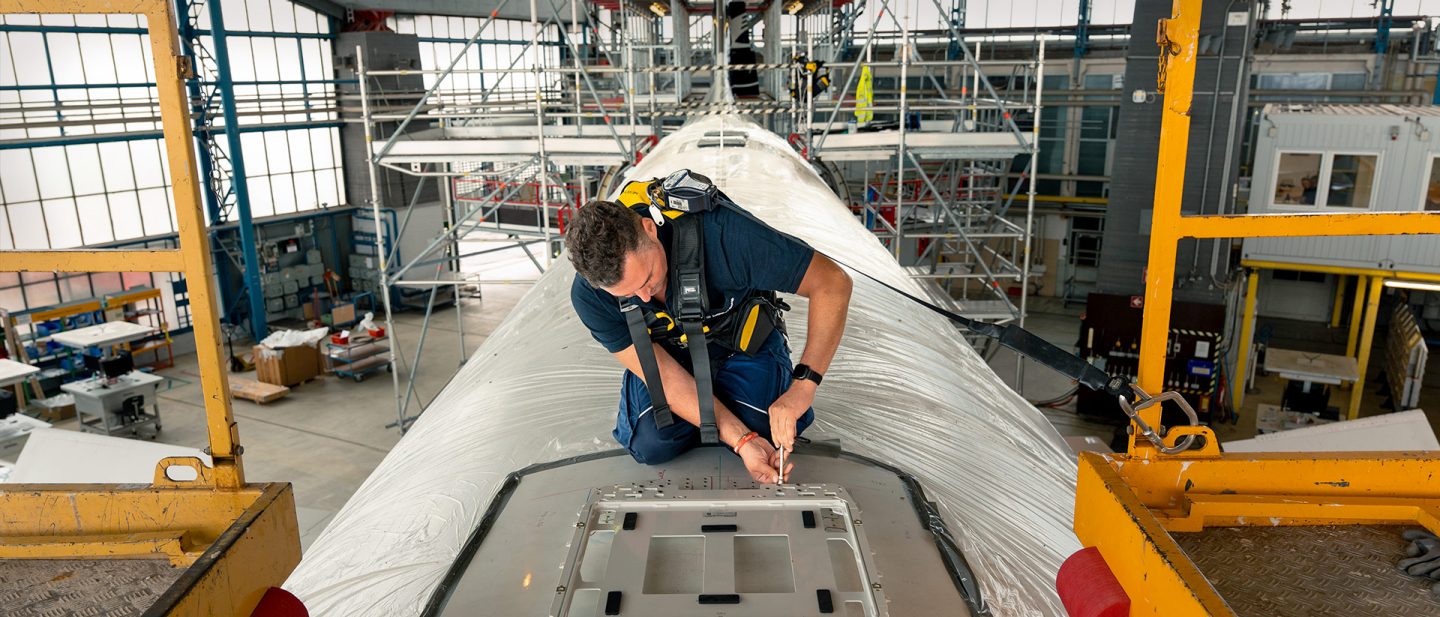
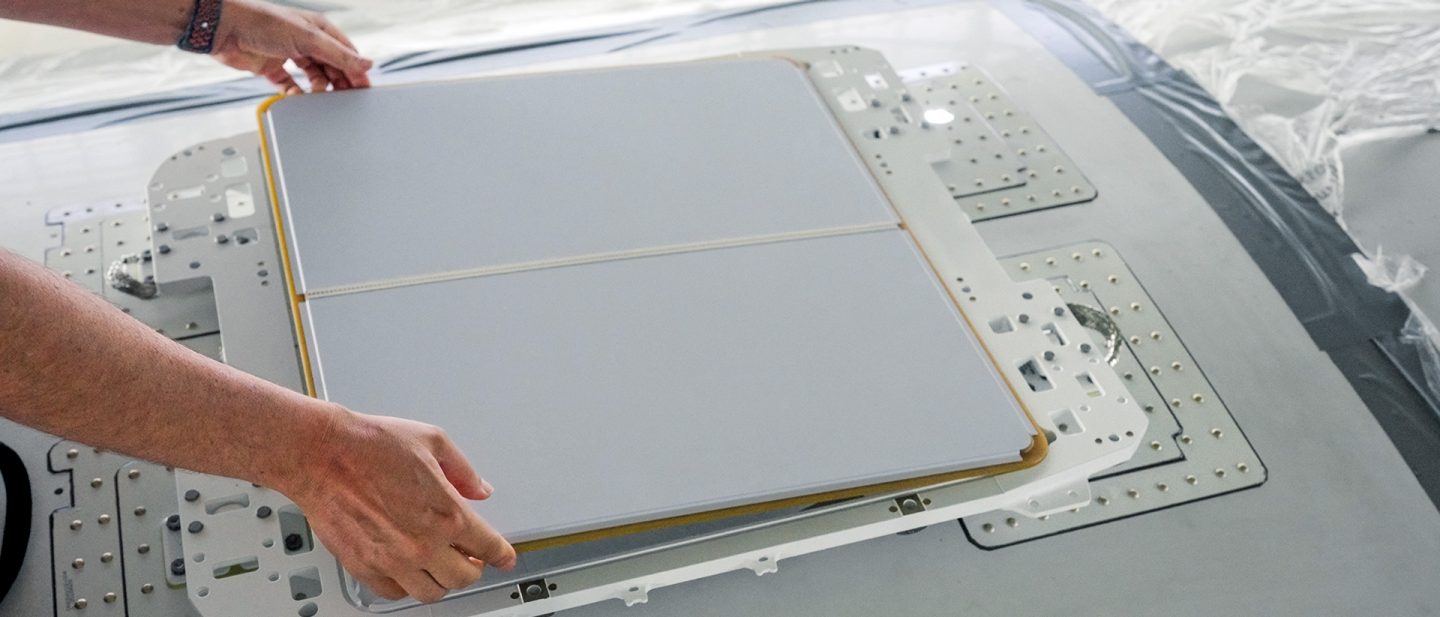
Installing the Wi-Fi system is a complex process that requires collaboration between specialists in the structural engineering field – who are responsible for the aircraft fuselage – and electronics engineers. “To ensure high-performance connectivity at every seat, we’re installing two Starlink systems in every A320neo,” explains Radius. “Four routers in the cabin process the signals from two antennas mounted on the fuselage – one at the front of the cabin and one at the rear.”
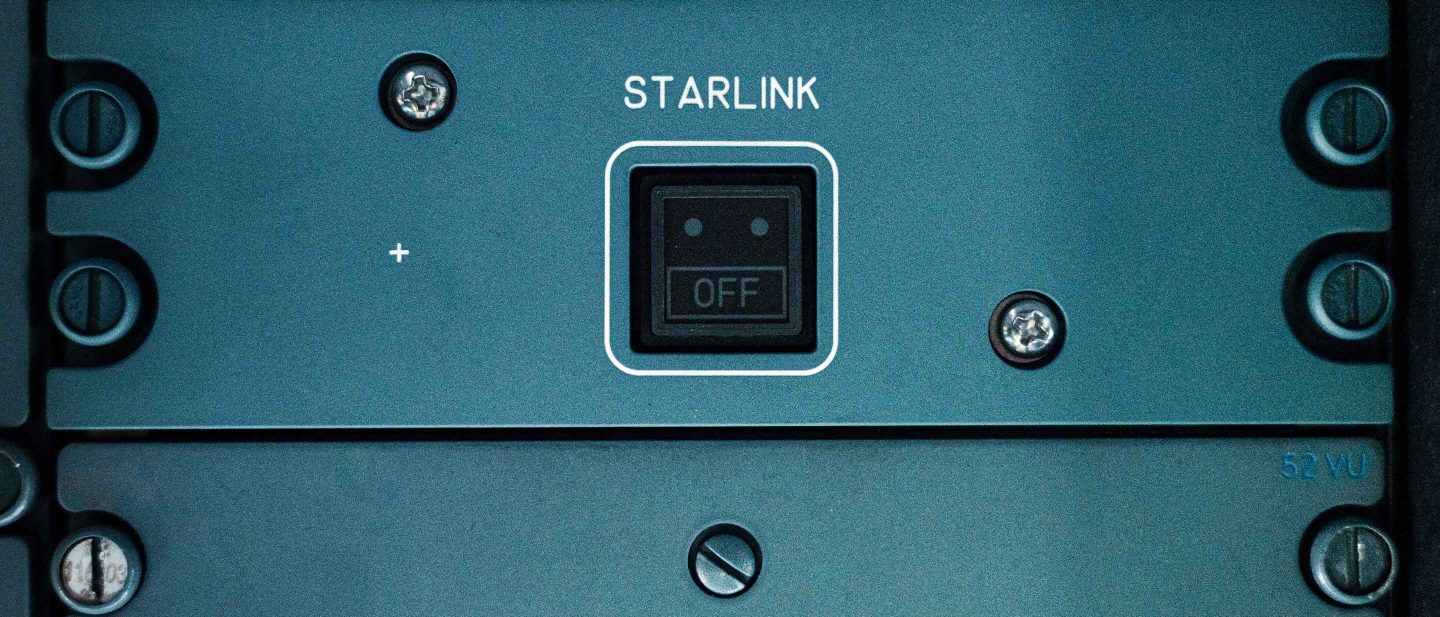
Ceiling panels in the cabin are removed to allow for the installation. The scheduled C-Check maintenance and the associated removal of the seat rows provide an opportunity for knowledge transfer and sharing experiences between other colleagues in the Lufthansa Group and Lufthansa Technik employees, as they allow the colleagues to get a close-up look at the system and how it is integrated into the cabin.
They can see what is usually hidden behind the plastic panels: a colorful bundle of cables running through the aircraft. The cable for satellite internet is thin and white and now has to be connected to the antennas through an opening in the cabin shell.
To do this, a technician – securely roped up – positions himself at the front of the fuselage, with one of the flat, tile-shaped antennas, measuring about half a square meter in size, in front of him. With a few practiced movements, the cable is plugged in, the antenna is fitted into the bracket, and the bracket, along with the antenna, is mounted on the fuselage. During flight, the system will automatically connect to the nearest Starlink satellite.
“Starlink Has More than 10,000 Satellites in Orbit”
“What sets Starlink apart from all other providers is its almost seamless coverage,” says Tim Kaya, who, as Group Senior Fleet Manager for Cabin Interiors, is responsible for integrating the system into the cabin Wi-Fi. “Starlink currently has more than 10,000 satellites in orbit; the next closest competitor has about 650.”
For an increasing number of passengers (and, from 2029, for all passengers) flying with the Lufthansa Group, this means stable internet access throughout the entire flight – be it to work, communicate with family, friends, or colleagues, or consume media content. “With Lufthansa Group Wi-Fi, they’ll experience a whole new way of traveling,” Kaya promises.
Using the service on board is free – and incredibly easy. Travelers simply need a Lufthansa Travel ID or their Miles & More service card number. You can register for the Travel ID in just a few steps on the Lufthansa website using your email address and a few details. Once on the plane, passengers just need to log in to the online portal and they’ll be connected to the internet via Wi-Fi. It’s important to remember that, as before, airplane mode must be enabled during the flight.
There are also a few rules to keep in mind when using Lufthansa Group Wi-Fi above the clouds:
- Wear headphones: to ensure a pleasant flight for all passengers, headphones are required when listening to music, watching movies, or using entertainment apps.
- No phone calls: for the same reason, phone calls and video calls are not permitted.
- No live streaming: live video and audio streaming from the aircraft – such as for social media channels – is prohibited. However, recording content for later publication is permitted.
The first official flight of the A320neo “Freising” equipped with Starlink high-speed internet took off on August 19. It headed south – above the clouds, but connected to the world.

Ready to discover the world?
Book your flight and find new inspiration – wherever the journey may take you.