


"Uniforms Are Much More Than Fashion"
Uniforms for flight attendants are first and foremost workwear – but they also reflect the spirit of their time and tell a piece of aviation history. In Lufthansa’s 100th anniversary year, the tradition continues with the seventh generation of the uniform. There's no better time to look back at the history of the workwear worn by Lufthansa flight attendants
Flight attendants have worn uniforms from the very beginning. Stewardesses and stewards – as they were still called until the 1990s – quickly became style icons and the embodiment of cosmopolitan elegance. "But uniforms are much more than just fashion; they're also workwear. They reflect social ideals and convey the company’s brand values," explains Anna-Christina Sauer, who is responsible for uniform management at Lufthansa.
The Three Constants Of The Lufthansa Uniform
According to Sauer, there have been three constants in the uniform design since Lufthansa resumed operations in 1955. "First, there is the color navy blue – the shade travelers naturally associate with the airline and one that conveys a sense of security both on the ground and in the air." The second is yellow, the brand’s signature color. The third constant is some form of headwear, which has appeared in different styles over the decades. "Since 2002, the current design has featured a pillbox hat,” Sauer explains. “It’s optional, but it reflects the timeless chic of the Lufthansa uniform."


Since 2002, the designs have been created by Strenesse. The fashion label embraces a kind of retro-futurism: dynamic, approachable, and elegant. The uniforms and accessories were designed by the brand’s legendary founder and lead designer, Gabriele Strehle. "It is the sixth generation of uniforms since 1955," explains Patrizia Hey from Lufthansa Airlines Communications. She is very familiar with Lufthansa’s history, having worked for many years in the airline's archives, and she can reveal that a seventh generation will be introduced in the near future.
This may also be of interest to you


In Lufthansa’s early years, only one man worked on board the aircraft. It wasn’t until 1938 that additional flight attendants, including women, joined to take care of passengers. What they wore had to be practical, yet elegant: the in-flight uniform consisted of a navy skirt, a white blouse paired with a dark tie or bow, and a light linen jacket with gold buttons. The Lufthansa crane emblem also proudly appeared in gold on the navy cap.

The first uniforms after Lufthansa resumed operations in 1955 were designed by Uli Richter. In his designs, the Berlin couturier avoided strict formality, drawing inspiration from the influential postwar fashion of the Parisian giant Christian Dior. A navy suit was paired with a white blouse and a jockey-style cap. For hot summer days, an alternative was the petrol-blue "tropical suit": a light blue dress with a matching cap.
Ten years later, it was a woman’s turn to design clothing for the roughly 700 stewardesses and stewards of the time – and she knew exactly what a uniform required. Ursula Tautz was the former chief stewardess and had already advised Lufthansa on fashion for several years. Her designs focused on achieving the perfect balance between formal correctness and relaxed elegance.


In 1970, the next generation of the uniform was designed by Werner Machnik, another Berliner who had gained a reputation early in his career as the city’s youngest couturier. Machnik brought a new dynamism to the Lufthansa uniform. For nine years, flight attendants wore his designs: short suits – while not especially practical for flight attendants, the mini skirt was still very much in vogue – combined with cuts whose geometric structure was reminiscent of the French designer André Courrèges. The most striking piece from this era was a bright yellow cape with a blue lining.
Toward the end of the 1970s, the look became noticeably more conservative. At this time, starting in 1979, female flight attendants were given the option of wearing pants as an alternative. A few statistics from that era illustrate the scale of the collection: the basic uniform set consisted of 33 items. Around 33,000 meters of navy fabric were used for coats, jackets, skirts, and pants, along with 9,000 meters for service dresses, 45,000 meters for blouses, and 3,000 meters for scarves.
From 1987 onward, there was a stronger focus on accessories such as the neck slip – a tie-like scarf – and both female and male flight attendants were allowed to wear rank insignia. "Accessories such as the wings pin, pocket squares, scarves, and ties help make the uniform recognizable," Sauer explains. "They also allow for a slightly more playful approach to the uniform." Shoes are not part of Lufthansa’s basic uniform kit, Sauer adds: "Casual shoes are not permitted. With the uniform, classic shoes made of black or navy smooth leather are worn to maintain the professional business look."


Sustainability Is An Important Topic For Lufthansa
Despite the wide variety of colors and cuts over the decades, functionality is always key, emphasizes Anna-Christina Sauer. "We have very complex requirements for our fabrics, particularly when it comes to performance, freedom of movement, and durability. In other words: how well can I move in them on board? Can I stretch? Can I easily reach the overhead bins?"
In recent decades, another topic has become increasingly important for Lufthansa: sustainability. And that naturally applies to uniforms as well, Sauer assures. All fabrics used comply with the OEKO-TEX Standard 100, and sustainability certifications are given the highest priority. "Sustainability is very important to us, and we have several projects in the pipeline that will improve our performance even further."
Timeless Elegance: Lufthansa Unveils New Uniforms by BOSS
In the year of its 100th anniversary, Lufthansa has introduced new uniforms for its employees in the air and on the ground. Once again, the airline has partnered with a leading German fashion house: BOSS, another homegrown brand with global reach like Lufthansa. BOSS designed the new looks according to a clear and considered design language.

The new uniform showcases the Lufthansa brand – reflecting its quality, precision, and timeless elegance – while connecting the airline’s heritage with its ambitions for the future.
Lufthansa’s signature brand codes have been translated into a contemporary, modular uniform concept. “We have retained what already works, while creating space for what's new – uniting heritage and the future in one cohesive look,” says Alida Seiler from Brand & Design Management, summarizing the design approach guided by the principle of “timeless elegance.”
A particular highlight is the cape, conceived as a modern homage to earlier uniforms. Accessories add carefully placed accents in Lufthansa yellow and help define the overall look.
Beyond style and functionality, the concept also stands out for its efficiency and sustainability: existing and new uniform pieces can be flexibly combined, enabling a seamless transition. This approach allows new items to be introduced gradually and in line with existing inventory.
According to CEO Jens Ritter, the new uniform is “a promise to our guests around the world.” It stands for “quality, reliability, and the unmistakable style our passengers experience on every journey with Lufthansa.”
Passengers flying with Lufthansa from next year onward may want to take a closer look: new garments and accessories will gradually appear, offering fresh details to discover over time.
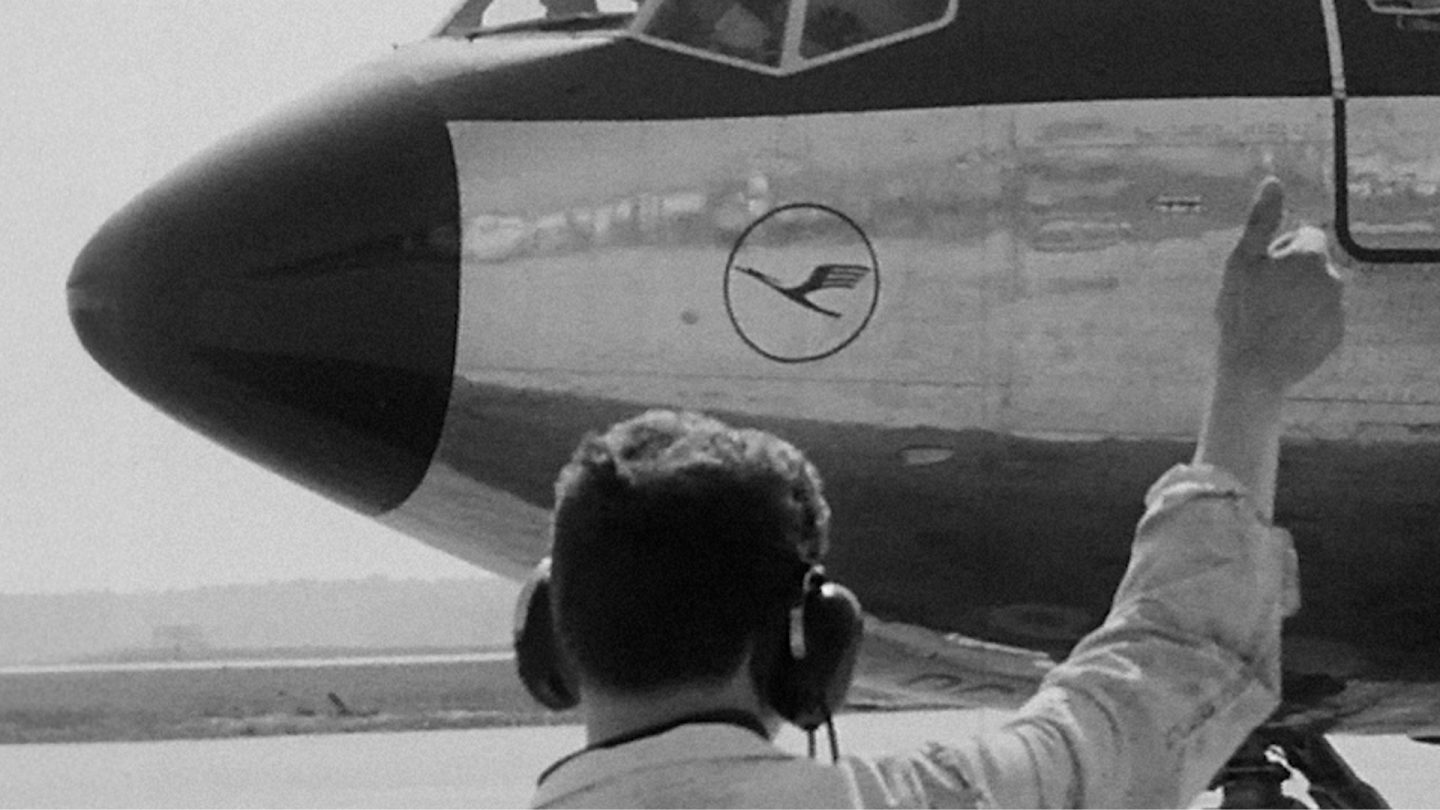
Ready for a journey through time?
In 2026, Lufthansa celebrates its 100th anniversary – explore our remarkable journey